
Auto sales grew 4.84% on-year in June; PV sales up 2.45%: FADA
Above-average monsoon rains forecasted to exceed 106% of the long-period average (LPA) in July are anticipated to enhance rural demand, benefiting the agriculture sector and two-wheeler sales in rural areas.
- Jul 7, 2025,
- Updated Jul 7, 2025 10:27 AM IST
June recorded a notable 4.84 per cent year-on-year growth across the automotive sector, with all segments showing positive performance. Notably, two-wheelers (2W) experienced a 4.73 per cent increase, while passenger vehicles (PV) and commercial vehicles (CV) marked 2.45 per cent and 6.6 per cent growth, respectively.
However, month-on-month figures tell a different story, showed Federation of Automobile Dealers Associations (FADA) data. Two-wheeler sales dipped by 12.48 per cent, largely due to financing constraints and variant shortages, which tempered the benefits from festival demand and marriage season sales. The early monsoon and rising electric vehicle adoption further influenced purchasing behaviour.
“Several dealers cited compulsory billing and forced stock lifts—often via auto-debit wholesales – leading to mandated high days of inventory aligned with festival- season targets. Overall, June demonstrated a resilient two-wheeler performance amid mixed market signals,” said FADA President CS Vigneshwar.
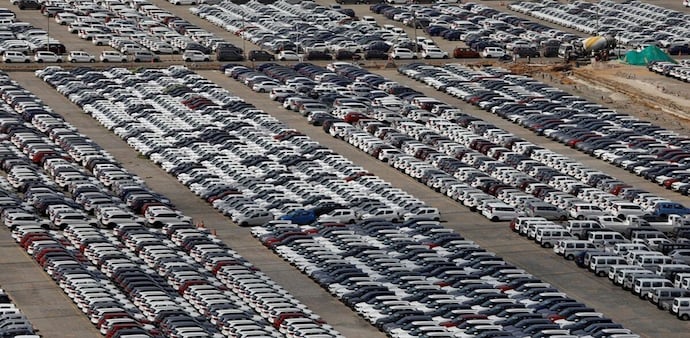
Passenger vehicle retail sales saw a 1.49 per cent month-on-month decline, yet managed a 2.45 per cent year-on-year rise. Heavy rains and liquidity constraints affected footfall and conversion rates. However, some support came from increased incentives and new booking offers. Inventory stands at 55 days, said FADA.
Commercial vehicle sales fell 2.97 per cent month-on-month, but recorded a robust 6.6 per cent year-on-year expansion. Early deliveries boosted volumes before monsoon slowdowns and liquidity issues reduced sales inquiries. New taxation and compulsory air-conditioned cabins have increased ownership costs.
Overall, June highlights a resilient automotive market, navigating economic pressures and changing market signals, while facing both growth opportunities and challenges.
NEAR-TERM OUTLOOK
Above-average monsoon rains forecasted to exceed 106% of the long-period average (LPA) in July are anticipated to enhance rural demand, benefiting the agriculture sector and two-wheeler sales in rural areas. However, these conditions may also result in logistical complexities.
Increase in early Kharif sowing and government infrastructure projects are expected to boost two-wheeler and CV sales but geopolitical tensions and potential repercussions from US tariff measures could negatively impact supply chains and consumer sentiment, said FADA.
Dealer sentiment leans towards a slowdown, with 42.8% predicting flat growth and 26.1% expecting a decline. Only 31.1% forecast growth, and booking-pipeline traction remains uneven.
Passenger vehicles face high-base effects and limited new-model launches, but festival planning and incentive schemes offer some support. Commercial vehicles are contending with higher ownership costs, despite extended order pipelines providing relief.
FADA remains cautiously optimistic, leveraging rural demand drivers and government capital expenditure while navigating monsoon-related disruptions and liquidity pressures, it said.
June recorded a notable 4.84 per cent year-on-year growth across the automotive sector, with all segments showing positive performance. Notably, two-wheelers (2W) experienced a 4.73 per cent increase, while passenger vehicles (PV) and commercial vehicles (CV) marked 2.45 per cent and 6.6 per cent growth, respectively.
However, month-on-month figures tell a different story, showed Federation of Automobile Dealers Associations (FADA) data. Two-wheeler sales dipped by 12.48 per cent, largely due to financing constraints and variant shortages, which tempered the benefits from festival demand and marriage season sales. The early monsoon and rising electric vehicle adoption further influenced purchasing behaviour.
“Several dealers cited compulsory billing and forced stock lifts—often via auto-debit wholesales – leading to mandated high days of inventory aligned with festival- season targets. Overall, June demonstrated a resilient two-wheeler performance amid mixed market signals,” said FADA President CS Vigneshwar.
Passenger vehicle retail sales saw a 1.49 per cent month-on-month decline, yet managed a 2.45 per cent year-on-year rise. Heavy rains and liquidity constraints affected footfall and conversion rates. However, some support came from increased incentives and new booking offers. Inventory stands at 55 days, said FADA.
Commercial vehicle sales fell 2.97 per cent month-on-month, but recorded a robust 6.6 per cent year-on-year expansion. Early deliveries boosted volumes before monsoon slowdowns and liquidity issues reduced sales inquiries. New taxation and compulsory air-conditioned cabins have increased ownership costs.
Overall, June highlights a resilient automotive market, navigating economic pressures and changing market signals, while facing both growth opportunities and challenges.
NEAR-TERM OUTLOOK
Above-average monsoon rains forecasted to exceed 106% of the long-period average (LPA) in July are anticipated to enhance rural demand, benefiting the agriculture sector and two-wheeler sales in rural areas. However, these conditions may also result in logistical complexities.
Increase in early Kharif sowing and government infrastructure projects are expected to boost two-wheeler and CV sales but geopolitical tensions and potential repercussions from US tariff measures could negatively impact supply chains and consumer sentiment, said FADA.
Dealer sentiment leans towards a slowdown, with 42.8% predicting flat growth and 26.1% expecting a decline. Only 31.1% forecast growth, and booking-pipeline traction remains uneven.
Passenger vehicles face high-base effects and limited new-model launches, but festival planning and incentive schemes offer some support. Commercial vehicles are contending with higher ownership costs, despite extended order pipelines providing relief.
FADA remains cautiously optimistic, leveraging rural demand drivers and government capital expenditure while navigating monsoon-related disruptions and liquidity pressures, it said.