
BT Explainer: Why thorium-based reactors are decades away from deployment?
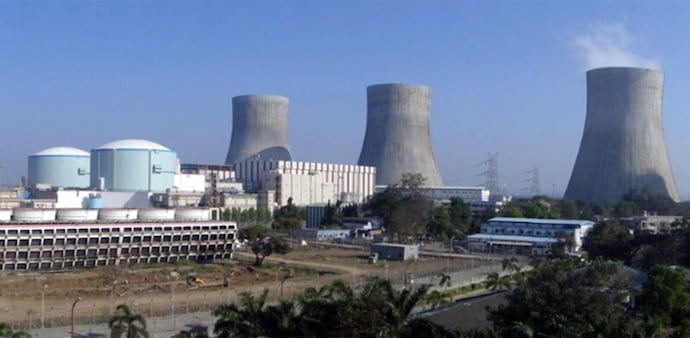
The Kalpakkam fast-breeder reactor, achieving first criticality, brings India closer to its nuclear roadmap. The third phase of deploying thorium-based reactors will take a few decades
- Apr 12, 2026,
- Updated Apr 12, 2026 11:58 AM IST
It has been 10 years since the government accorded in-principle approval for the Tarapur Maharashtra Site (TMS) to locate an Advanced Heavy Water Reactor (AWHR) using thorium-based fuel, and it remains in the research and development phase.
Experts have been emphasising that India should expedite work on loading thorium in reactors to ensure energy independence amidst the Middle East conflict. Despite having 25% of the world's thorium reserves and decades of research and development, India has not been able to achieve success in using it as a feedstock in nuclear reactors.
Last year, a US-based start-up, Clean Core Thorium Energy, received a license to sell its thorium fuel for powering India’s existing Pressurised Heavy Water Reactors (PHWR) and is awaiting approval from the government. India completed fuel fabrication, reprocessing, and irradiation studies, but commercial deployment of thorium-based fuel was registered in the US.
Must Read: 'Nuclear without meltdowns': China’s secret weapon is now online
What is the progress?
The Government, in December, 2016, has accorded in-principle approval for the Tarapur Maharashtra Site (TMS) for locating AHWR designed by the Bhabha Atomic Research Centre for carrying out experiments to further validate the physics design features of the advanced reactors.
This 300 MWe reactor using thorium-based fuel will serve as a technology demonstrator not only for the thorium fuel cycle technologies, but also for several advanced passive safety features.
In order to facilitate an early scrutiny of the innovative features of the design from the safety considerations, a Pre-Licensing Design Safety appraisal of the reactor has been completed by the Atomic Energy Regulatory Board.
India aims to reach 22 gigawatts of nuclear capacity by 2032, and 100 GW by 2047. Thorium remains the key to achieving these targets, also ensuring the meeting of the country’s rising energy demand. Thorium reactors are expected to generate significantly lower quantities of long-lived nuclear waste compared to uranium-based systems, strengthening their environmental case.
Why decades away?
Although thorium reserves in India are very high, large-scale deployment of commercial thorium-based reactors cannot be done now. This is because thorium does not contain any fissile isotope (unlike Uranium), therefore, commercial utilisation of thorium, on a significant commercial scale, can begin only when an abundant supply of fissile materials, either Plutonium or Uranium-233, is available.
This can be done after an adequate inventory of Plutonium becomes available from our Fast Breeder Reactors (FBRs), constituting the second stage of the Indian nuclear power programme. Therefore, large-scale thorium utilisation is contemplated after a few decades of large-scale deployment of FBRs. The Prototype Fast Breeder Reactor (PFBR) at Kalpakkam achieved criticality on April 6, 2026.
Development of technologies pertaining to the utilisation of thorium has been a part of ongoing R&D activities in the Department of Atomic Energy so that a mature technology is in place, well before the beginning of the large-scale deployment of the thorium-based reactors.
Reason for delay?
Former Atomic Energy Chairman Dr Anil Kakodkar, who led India’s nuclear energy programme, has batted for nuclear power reactors as the future for India’s energy safety. He says that AWHR has been experimentally tested, reviewed, and qualified for deployment, but what stopped it was not science, but prioritisation.
"At that time, plutonium had competing requirements, and fast reactors had to be given higher importance," he mentioned in a recent TV interview, adding that phase is now largely behind India.
The three-stage nuclear programme was devised when the availability of uranium was less. Access to imported Uranium increased over the years, thus putting off the urgency to focus on thorium, requiring complex breeding and reprocessing. This slowed the funding, institutional caution set in, competing reactor priorities, and handling high gamma radiation from thorium-based spent fuel made thorium's future goal rather than a present mission.
What is the way forward?
India’s thorium reserves would be enough to generate “358,000 GWe-yr of electrical energy and can easily meet the energy requirements during the next century and beyond,” according to a 2004 analysis by BARC.
It is still not too late, and India must decisively move thorium from laboratory to limited‑scale commercialisation by time‑bound commissioning of AHWR‑class reactors and integrating them into the 500 GW non‑fossil roadmap, according to experts.
Kakodar says the country's aspiration of becoming a Viksit Bharat is inseparable from large-scale thorium utilisation and that all required resources be channelized to tap into the natural resource for the country’s energy security.
It has been 10 years since the government accorded in-principle approval for the Tarapur Maharashtra Site (TMS) to locate an Advanced Heavy Water Reactor (AWHR) using thorium-based fuel, and it remains in the research and development phase.
Experts have been emphasising that India should expedite work on loading thorium in reactors to ensure energy independence amidst the Middle East conflict. Despite having 25% of the world's thorium reserves and decades of research and development, India has not been able to achieve success in using it as a feedstock in nuclear reactors.
Last year, a US-based start-up, Clean Core Thorium Energy, received a license to sell its thorium fuel for powering India’s existing Pressurised Heavy Water Reactors (PHWR) and is awaiting approval from the government. India completed fuel fabrication, reprocessing, and irradiation studies, but commercial deployment of thorium-based fuel was registered in the US.
Must Read: 'Nuclear without meltdowns': China’s secret weapon is now online
What is the progress?
The Government, in December, 2016, has accorded in-principle approval for the Tarapur Maharashtra Site (TMS) for locating AHWR designed by the Bhabha Atomic Research Centre for carrying out experiments to further validate the physics design features of the advanced reactors.
This 300 MWe reactor using thorium-based fuel will serve as a technology demonstrator not only for the thorium fuel cycle technologies, but also for several advanced passive safety features.
In order to facilitate an early scrutiny of the innovative features of the design from the safety considerations, a Pre-Licensing Design Safety appraisal of the reactor has been completed by the Atomic Energy Regulatory Board.
India aims to reach 22 gigawatts of nuclear capacity by 2032, and 100 GW by 2047. Thorium remains the key to achieving these targets, also ensuring the meeting of the country’s rising energy demand. Thorium reactors are expected to generate significantly lower quantities of long-lived nuclear waste compared to uranium-based systems, strengthening their environmental case.
Why decades away?
Although thorium reserves in India are very high, large-scale deployment of commercial thorium-based reactors cannot be done now. This is because thorium does not contain any fissile isotope (unlike Uranium), therefore, commercial utilisation of thorium, on a significant commercial scale, can begin only when an abundant supply of fissile materials, either Plutonium or Uranium-233, is available.
This can be done after an adequate inventory of Plutonium becomes available from our Fast Breeder Reactors (FBRs), constituting the second stage of the Indian nuclear power programme. Therefore, large-scale thorium utilisation is contemplated after a few decades of large-scale deployment of FBRs. The Prototype Fast Breeder Reactor (PFBR) at Kalpakkam achieved criticality on April 6, 2026.
Development of technologies pertaining to the utilisation of thorium has been a part of ongoing R&D activities in the Department of Atomic Energy so that a mature technology is in place, well before the beginning of the large-scale deployment of the thorium-based reactors.
Reason for delay?
Former Atomic Energy Chairman Dr Anil Kakodkar, who led India’s nuclear energy programme, has batted for nuclear power reactors as the future for India’s energy safety. He says that AWHR has been experimentally tested, reviewed, and qualified for deployment, but what stopped it was not science, but prioritisation.
"At that time, plutonium had competing requirements, and fast reactors had to be given higher importance," he mentioned in a recent TV interview, adding that phase is now largely behind India.
The three-stage nuclear programme was devised when the availability of uranium was less. Access to imported Uranium increased over the years, thus putting off the urgency to focus on thorium, requiring complex breeding and reprocessing. This slowed the funding, institutional caution set in, competing reactor priorities, and handling high gamma radiation from thorium-based spent fuel made thorium's future goal rather than a present mission.
What is the way forward?
India’s thorium reserves would be enough to generate “358,000 GWe-yr of electrical energy and can easily meet the energy requirements during the next century and beyond,” according to a 2004 analysis by BARC.
It is still not too late, and India must decisively move thorium from laboratory to limited‑scale commercialisation by time‑bound commissioning of AHWR‑class reactors and integrating them into the 500 GW non‑fossil roadmap, according to experts.
Kakodar says the country's aspiration of becoming a Viksit Bharat is inseparable from large-scale thorium utilisation and that all required resources be channelized to tap into the natural resource for the country’s energy security.