
Closing women's workforce gap may be key to India's sustained economic growth, says Axis Bank study
Study finds 125 million educated women remain outside the workforce
- Mar 9, 2026,
- Updated Mar 9, 2026 5:09 PM IST
India aspires to become a developed nation by 2047. However, if India is to sustain economic growth of 7% over the next 25 years, ensuring more women join the formal workforce and raising women participation in paid work will be crucial, argues a study by Axis Bank.
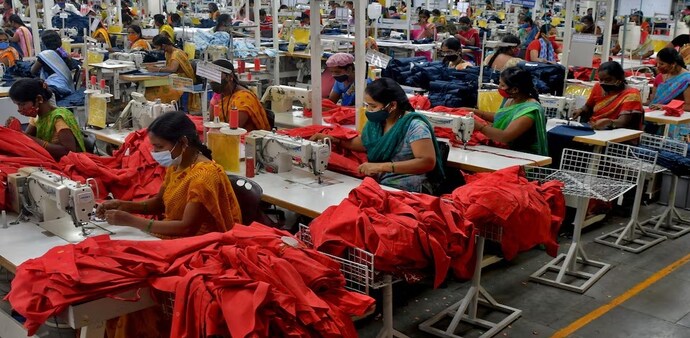
Currently, India has one of the lowest female labour force participation rates in paid work among G20 economies, found the study, and as much as 60% of the women in paid work are in informal arrangements without contracts or social security benefits. Close to 125 million educated women are outside the workforce, with 60% of graduates opting stay out of paid work, it pointed.
“The window of growth for us is very narrow. We need to grow at 9% a year per capita for us to be rich from about 25 years from now. This can’t be done if all hands are not on deck. One of our biggest challenge is there are two few women participating in paid work,” opined Neelkanth Mishra, chief economist at Axis Bank.
He pointed that India had made significant progress in improving household productivity, with electricity access, piped water, clean cooking fuel, better housing, etc. However, there was a need to raise demand for labour, improve urban infrastructure further, remove outdated legal barriers and work on childcare facilities and workplace flexibility to get the women in the workforce.
Concerns around safety, mobility, childcare and inflexible job structures, continues to hold women back, the report stated.
Mishra also stressed on the need to address challenges with job design, childcare support and re‑entry pathways for women post wedding or maternity breaks to accelerate participation.
But will the growing use of artificial intelligence over time hurt jobs? To the contrary, Mishra believes AI will probable open even more opportunities, to even those, who didn’t have access to technology earlier.
“We should view AI much more positively and I am actually encouraged that even from the women’s participation side, we will start seeing much more action,” said Mishra.
He pointed to a recent advertisement which shows how a poor woman with the help from AI is able to run a cricket academy and believes one will see such remarkable changes happening in the next ten years.
“People who didn’t have technology education are now better equipped to use technology. Therefore, this is far more an enabling factor, than a disabling factor, especially in economy,” stressed Mishra. He said there was a need to create more labour-intensive jobs, while also significantly improving urban mobility, which would help increase women participation.
India aspires to become a developed nation by 2047. However, if India is to sustain economic growth of 7% over the next 25 years, ensuring more women join the formal workforce and raising women participation in paid work will be crucial, argues a study by Axis Bank.
Currently, India has one of the lowest female labour force participation rates in paid work among G20 economies, found the study, and as much as 60% of the women in paid work are in informal arrangements without contracts or social security benefits. Close to 125 million educated women are outside the workforce, with 60% of graduates opting stay out of paid work, it pointed.
“The window of growth for us is very narrow. We need to grow at 9% a year per capita for us to be rich from about 25 years from now. This can’t be done if all hands are not on deck. One of our biggest challenge is there are two few women participating in paid work,” opined Neelkanth Mishra, chief economist at Axis Bank.
He pointed that India had made significant progress in improving household productivity, with electricity access, piped water, clean cooking fuel, better housing, etc. However, there was a need to raise demand for labour, improve urban infrastructure further, remove outdated legal barriers and work on childcare facilities and workplace flexibility to get the women in the workforce.
Concerns around safety, mobility, childcare and inflexible job structures, continues to hold women back, the report stated.
Mishra also stressed on the need to address challenges with job design, childcare support and re‑entry pathways for women post wedding or maternity breaks to accelerate participation.
But will the growing use of artificial intelligence over time hurt jobs? To the contrary, Mishra believes AI will probable open even more opportunities, to even those, who didn’t have access to technology earlier.
“We should view AI much more positively and I am actually encouraged that even from the women’s participation side, we will start seeing much more action,” said Mishra.
He pointed to a recent advertisement which shows how a poor woman with the help from AI is able to run a cricket academy and believes one will see such remarkable changes happening in the next ten years.
“People who didn’t have technology education are now better equipped to use technology. Therefore, this is far more an enabling factor, than a disabling factor, especially in economy,” stressed Mishra. He said there was a need to create more labour-intensive jobs, while also significantly improving urban mobility, which would help increase women participation.