
Diversification beyond US helps India keep export volumes stable
India’s merchandise exports rose to $38.51 billion in December from $38.13 billion in November, while imports increased to $63.55 billion from $62.66 billion, official data showed.
- Jan 15, 2026,
- Updated Jan 15, 2026 5:18 PM IST
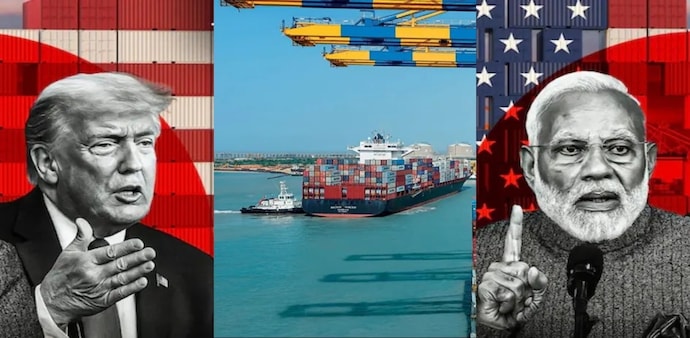
India’s strategy to diversify its export markets beyond the United States has helped keep overall shipment volumes steady, even as trade headwinds emerged after higher US tariffs announced in late August. India’s merchandise exports rose to $38.51 billion in December from $38.13 billion in November, while imports increased to $63.55 billion from $62.66 billion, official data showed.
The modest rise in exports comes amid a calibrated push by the government and industry to deepen trade ties with markets such as China, Russia, the Middle East and parts of Europe, supported by incentives and a pipeline of proposed free trade agreements, including with the European Union.
Commerce Secretary Rajesh Agrawal said India remains on track to post a strong export performance in the current financial year. “We are confident of crossing $850 billion of exports in the current financial year,” he told reporters in New Delhi.
While shipments to the US softened marginally on a month-on-month basis, the broader trend remains positive. Merchandise exports to the United States edged down to $6.89 billion in December from $6.92 billion in November. However, exports to the U.S. rose 9.75% year-on-year to $65.88 billion in the first nine months of the financial year. “We have maintained a positive trajectory with the U.S. in the first nine months, while also diversifying our markets,” Agrawal said, pointing to growing export ties with China, the UAE, Malaysia and Hong Kong.
Sectoral data underline the impact of diversification. Smartphone exports recorded a sharp jump, rising by $5.7 billion in April–November 2025 compared with the same period last year, marking a 44% year-on-year surge. While the U.S. remains the largest market, exporters have expanded shipments to the UAE, China, Portugal and Spain, and entered new destinations such as Slovakia, Israel, Latvia, Vietnam and South Korea.
Pharmaceutical exports also posted steady gains, reaching $23.1 billion in April–December 2025, up from $21.7 billion a year earlier. Beyond the U.S., incremental growth came from markets including the Netherlands, Australia, Canada and Russia.
Marine exports climbed to $6.6 billion during April–December 2025 from $5.7 billion in the same period last year. Although the U.S. continues to be the largest buyer, exports to Vietnam and Belgium surged by 99.9% and 90.3% year-on-year, respectively. Shipments to China rose to $1.056 billion in April–November 2025, registering a 20% annual growth.
“Our industry has shown resilience and held on to supply chains,” Agrawal said, adding that upcoming free trade agreements would open up more opportunities for Indian exporters and further reduce dependence on any single market.
India’s strategy to diversify its export markets beyond the United States has helped keep overall shipment volumes steady, even as trade headwinds emerged after higher US tariffs announced in late August. India’s merchandise exports rose to $38.51 billion in December from $38.13 billion in November, while imports increased to $63.55 billion from $62.66 billion, official data showed.
The modest rise in exports comes amid a calibrated push by the government and industry to deepen trade ties with markets such as China, Russia, the Middle East and parts of Europe, supported by incentives and a pipeline of proposed free trade agreements, including with the European Union.
Commerce Secretary Rajesh Agrawal said India remains on track to post a strong export performance in the current financial year. “We are confident of crossing $850 billion of exports in the current financial year,” he told reporters in New Delhi.
While shipments to the US softened marginally on a month-on-month basis, the broader trend remains positive. Merchandise exports to the United States edged down to $6.89 billion in December from $6.92 billion in November. However, exports to the U.S. rose 9.75% year-on-year to $65.88 billion in the first nine months of the financial year. “We have maintained a positive trajectory with the U.S. in the first nine months, while also diversifying our markets,” Agrawal said, pointing to growing export ties with China, the UAE, Malaysia and Hong Kong.
Sectoral data underline the impact of diversification. Smartphone exports recorded a sharp jump, rising by $5.7 billion in April–November 2025 compared with the same period last year, marking a 44% year-on-year surge. While the U.S. remains the largest market, exporters have expanded shipments to the UAE, China, Portugal and Spain, and entered new destinations such as Slovakia, Israel, Latvia, Vietnam and South Korea.
Pharmaceutical exports also posted steady gains, reaching $23.1 billion in April–December 2025, up from $21.7 billion a year earlier. Beyond the U.S., incremental growth came from markets including the Netherlands, Australia, Canada and Russia.
Marine exports climbed to $6.6 billion during April–December 2025 from $5.7 billion in the same period last year. Although the U.S. continues to be the largest buyer, exports to Vietnam and Belgium surged by 99.9% and 90.3% year-on-year, respectively. Shipments to China rose to $1.056 billion in April–November 2025, registering a 20% annual growth.
“Our industry has shown resilience and held on to supply chains,” Agrawal said, adding that upcoming free trade agreements would open up more opportunities for Indian exporters and further reduce dependence on any single market.