
'Don't single out gold': Arvind Panagariya on what India should really do now
Arvind Panagariya backed Prime Minister Narendra Modi's public appeals for behavioural changes such as reduced travel and work from home, but questioned selective duty hikes on gold imports.
- May 17, 2026,
- Updated May 17, 2026 11:54 AM IST
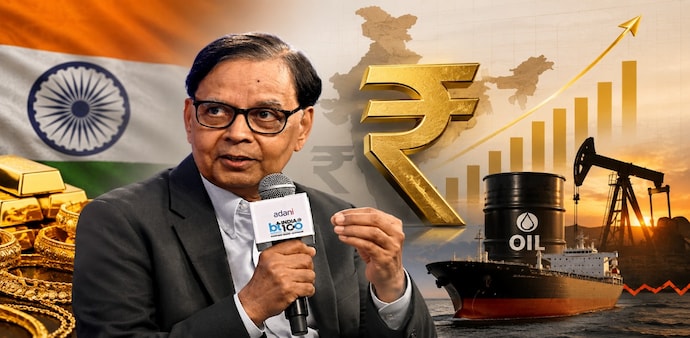
Finance Commission Chairman Arvind Panagariya has cautioned against targeting gold imports through higher duties, arguing that allowing the rupee to depreciate would be a more effective way to manage India's widening current account pressures.
Panagariya backed Prime Minister Narendra Modi's public appeals for behavioural changes such as reduced travel and work from home, but questioned selective duty hikes on gold imports.
"I'm perfectly okay with the moral suasion that the Prime Minister has resorted to," Panagariya said in an exclusive interview with India Today TV. "For any leader, that is the first line of defense when he sees some clouds on the horizon."
He compared the appeal to former Prime Minister Lal Bahadur Shastri's 1965 call for Indians to observe weekly fasts during food shortages.
Don't Miss: More oil shock ahead? Temporary US waiver for Russian crude expires
'Gold duties are a blunt instrument'
Panagariya, who has also served as the 1st Vice Chairman of NITI Aayog from January 2015 to August 2017, said the government appeared concerned about the current account deficit, but argued that exchange rate adjustments - not commodity-specific duties - were the right policy response.
"I'm not as okay with the gold kind of hiking of duties and all," he said. "Let the rupee depreciate, which will make imports a little more expensive in rupees across the board, and the depreciation will also make exports more attractive."
The economist said targeting one commodity distorted the broader adjustment process. "The objective probably is correct that one needs to watch out for what is happening to the current account, but the instrument of singling out gold to me seems to be a little kind of blunt."
The government recently imposed a 5% duty on gold and silver findings and 5.4% on platinum findings as part of efforts to curb non-essential imports amid pressure on foreign exchange reserves and rising oil prices.
India's gold imports have already climbed to a record $72 billion.
Don't Miss: 'Indian love for gold is difficult to understand' - NITI Aayog VC Dr. Ashok Lahiri | India Today Exclusive
'Gold smuggling may see a spike'
Panagariya acknowledged that higher duties could reduce gold imports, but warned that they could also encourage smuggling and informal trade.
"Duty, which increases the price of gold, will have a tendency to reduce gold imports. There is no doubt," he said. "And it will also have the impact of possibly what you call informal, but to me, the plain language is that gold smuggling may see a little bit of a spike as well."
The eminent economist argued that market-driven price signals should determine import demand rather than targeted restrictions. "How does one know $72 billion is the right amount and 73 is not or 71 is not," he said. "Let the prices be fair to everybody across different commodities and let the economic agents decide how much they want to import."
On Modi's austerity push
Prime Minister Modi has pushed for fuel-saving measures amid the prolonged West Asia conflict and rising global crude prices. He has urged citizens to avoid unnecessary travel and reduce fuel consumption. Several companies have expanded work-from-home arrangements, while governments have adopted austerity measures, including reducing official convoys.
Panagariya said such appeals could still influence behaviour. "All depends on the effectiveness of the leader," he said when asked how these steps would help the economy. "To the extent that there are many citizens who are motivated by these considerations, some effect will happen."
He described moral suasion as "completely voluntary" and said governments often resort to such measures during crises. "This was an instrument that Mahatma Gandhi had employed very, very effectively during the freedom movement," he said.
'Allow prices to rise'
Panagariya, however, repeatedly argued that broader price mechanisms remained more effective than administrative or sector-specific interventions.
"I would like to rather allow that (petrol) price to rise and then automatically, all Indian citizens will cut back responding to the price hike," he said, referring to petrol prices. "Maybe the government fears a little bit of inflationary impact of that, and so has chosen other instruments. The oil price will apply to everybody, and everybody will then get into cutting the non-essentials, transportation and other usage of energy."
He pointed to the United States, where gasoline prices had risen sharply after the West Asia conflict. "The gasoline price in the United States is hitting about $6. That’s about a 50% increase," he said. "Compared to that, the Indian government has managed the petrol price in India quite well."
Still, he maintained that exchange rate flexibility remained India's strongest tool to manage external imbalances.
"The correct solution is to work on all margins. The depreciation of the rupee will work on all industries, both goods and services. It is going to discourage imports, encourage exports - and encouragement of exports will bring in more foreign exchange. Discouragement to imports will reduce the demand for foreign exchange, current account deficit will shrink. And that is an instrument we have applied for many years now."
"Since 1991 liberalisation, we have relied on the exchange rate as the instrument to manage our current account deficits very, very effectively," he added.
Finance Commission Chairman Arvind Panagariya has cautioned against targeting gold imports through higher duties, arguing that allowing the rupee to depreciate would be a more effective way to manage India's widening current account pressures.
Panagariya backed Prime Minister Narendra Modi's public appeals for behavioural changes such as reduced travel and work from home, but questioned selective duty hikes on gold imports.
"I'm perfectly okay with the moral suasion that the Prime Minister has resorted to," Panagariya said in an exclusive interview with India Today TV. "For any leader, that is the first line of defense when he sees some clouds on the horizon."
He compared the appeal to former Prime Minister Lal Bahadur Shastri's 1965 call for Indians to observe weekly fasts during food shortages.
Don't Miss: More oil shock ahead? Temporary US waiver for Russian crude expires
'Gold duties are a blunt instrument'
Panagariya, who has also served as the 1st Vice Chairman of NITI Aayog from January 2015 to August 2017, said the government appeared concerned about the current account deficit, but argued that exchange rate adjustments - not commodity-specific duties - were the right policy response.
"I'm not as okay with the gold kind of hiking of duties and all," he said. "Let the rupee depreciate, which will make imports a little more expensive in rupees across the board, and the depreciation will also make exports more attractive."
The economist said targeting one commodity distorted the broader adjustment process. "The objective probably is correct that one needs to watch out for what is happening to the current account, but the instrument of singling out gold to me seems to be a little kind of blunt."
The government recently imposed a 5% duty on gold and silver findings and 5.4% on platinum findings as part of efforts to curb non-essential imports amid pressure on foreign exchange reserves and rising oil prices.
India's gold imports have already climbed to a record $72 billion.
Don't Miss: 'Indian love for gold is difficult to understand' - NITI Aayog VC Dr. Ashok Lahiri | India Today Exclusive
'Gold smuggling may see a spike'
Panagariya acknowledged that higher duties could reduce gold imports, but warned that they could also encourage smuggling and informal trade.
"Duty, which increases the price of gold, will have a tendency to reduce gold imports. There is no doubt," he said. "And it will also have the impact of possibly what you call informal, but to me, the plain language is that gold smuggling may see a little bit of a spike as well."
The eminent economist argued that market-driven price signals should determine import demand rather than targeted restrictions. "How does one know $72 billion is the right amount and 73 is not or 71 is not," he said. "Let the prices be fair to everybody across different commodities and let the economic agents decide how much they want to import."
On Modi's austerity push
Prime Minister Modi has pushed for fuel-saving measures amid the prolonged West Asia conflict and rising global crude prices. He has urged citizens to avoid unnecessary travel and reduce fuel consumption. Several companies have expanded work-from-home arrangements, while governments have adopted austerity measures, including reducing official convoys.
Panagariya said such appeals could still influence behaviour. "All depends on the effectiveness of the leader," he said when asked how these steps would help the economy. "To the extent that there are many citizens who are motivated by these considerations, some effect will happen."
He described moral suasion as "completely voluntary" and said governments often resort to such measures during crises. "This was an instrument that Mahatma Gandhi had employed very, very effectively during the freedom movement," he said.
'Allow prices to rise'
Panagariya, however, repeatedly argued that broader price mechanisms remained more effective than administrative or sector-specific interventions.
"I would like to rather allow that (petrol) price to rise and then automatically, all Indian citizens will cut back responding to the price hike," he said, referring to petrol prices. "Maybe the government fears a little bit of inflationary impact of that, and so has chosen other instruments. The oil price will apply to everybody, and everybody will then get into cutting the non-essentials, transportation and other usage of energy."
He pointed to the United States, where gasoline prices had risen sharply after the West Asia conflict. "The gasoline price in the United States is hitting about $6. That’s about a 50% increase," he said. "Compared to that, the Indian government has managed the petrol price in India quite well."
Still, he maintained that exchange rate flexibility remained India's strongest tool to manage external imbalances.
"The correct solution is to work on all margins. The depreciation of the rupee will work on all industries, both goods and services. It is going to discourage imports, encourage exports - and encouragement of exports will bring in more foreign exchange. Discouragement to imports will reduce the demand for foreign exchange, current account deficit will shrink. And that is an instrument we have applied for many years now."
"Since 1991 liberalisation, we have relied on the exchange rate as the instrument to manage our current account deficits very, very effectively," he added.