
FM Sitharaman: Too soon to comment on impact of US tariff changes on India
FM says India is on a clear path to getting trade deals; gold and silver imports have not crossed such a high proportion
- Feb 23, 2026,
- Updated Feb 23, 2026 2:56 PM IST
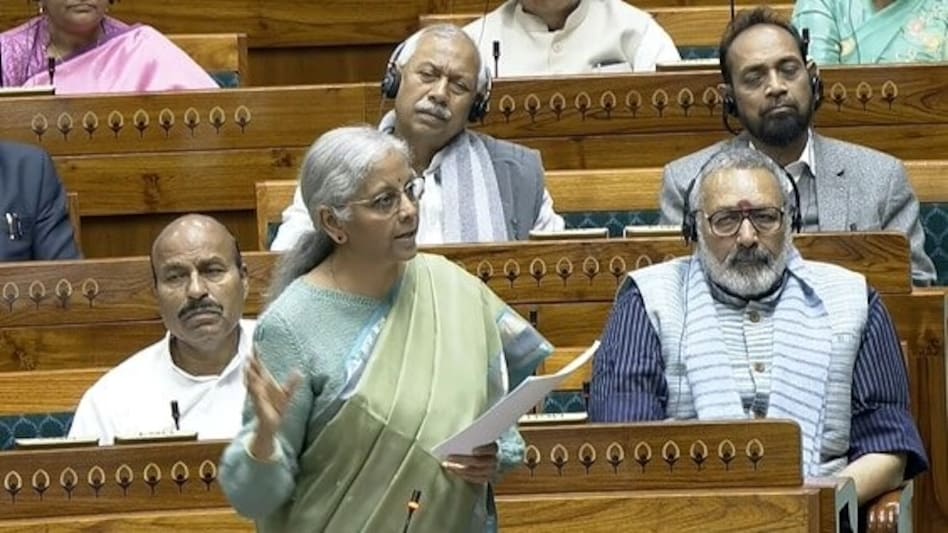
Union Finance Minister Nirmala Sitharaman on Monday said that it is too soon to comment on the impact of the changes in the US tariff on the Indian economy, in light of the recent US Supreme Court ruling striking down the reciprocal tariffs. She underlined that India has a clear path on getting trade deals done with various countries.
“The commerce ministry is reviewing the situation. The delegation will have to take a call when they want to go for further negotiations,” she said while addressing a press conference after the after the customary post-Budget meeting of the Central Board of Directors of the RBI.
After the US Supreme Court struck down the reciprocal tariffs levied by US President Donald Trump, the President hiked tariffs on imports from all countries to 10% and later to 15%. A delegation led by India’s chief negotiator Darpan Jain, which was to discuss the legal text of the bilateral trade agreement, postponed its visit to the US after the verdict.
The finance minister said external uncertainty is always a worry. “Uncertainties have always been there… whenever the (India-US BTA) agreement gets done, it gets done, and I don’t see that being the only reason to abate any uncertainty. Uncertainties can come and go. So that’s all right, we are on a very clear path of wanting to have trade deals,” she said.
“So, therefore, our attempt to have a trade agreement will go on with countries,” she said adding that India wants the economy to have the advantage of trading globally and being able to reach global markets.
On the record high prices of gold and silver that is also leading to a higher import bill, the minister said that while the government is monitoring the issue, it “has not reached such an alarming proportion”. Attributing the sharp rise in gold and silver prices to purchases by central banks across the world, she noted that there is an element of seasonality in purchases by Indian households of the precious metals, which is during festivals and weddings.
RBI Governor Sanjay Malhotra also underlined that India has sufficient reserves and has a strong external and macroeconomic situation. “We are not unduly concerned about that, especially because our external sector continues to be very robust and strong. The current account deficit is still very, very manageable, as per our projections, it's within or about 1% of GDP,” he told reporters.
He pointed out that between April and December 2025, in value terms, the quantity of gold imported was not very different from that in the same period in 2024. However, in January 2026 there has been a sudden spurt in both the value and volume of imports of gold, which is being analysed.
“If you look at numbers from April to December, the quantity of gold in value terms, there was hardly any increase… in value terms didn't increase despite increase in prices because whatever was the increase in prices was offset more or less by the decrease in the volumes of imported gold,” he said.
On the issue of net foreign direct investments inflows into India being negative, the FM pointed out that in theory when the economy is doing well, foreign investment should be coming in. “What are the other reasons which are holding them back? Certainly, they are not economic or commercial reasons. They are not they are not reasons based on the economy and its strength. They are something else. They are probably strategic or due to global politics,” she said.
The RBI Governor pointed out that on a gross basis, FDI has increased and was up by 14-15% last year. The net FDI inflows have been negative and falling due to higher repatriations,” he pointed out.
Union Finance Minister Nirmala Sitharaman on Monday said that it is too soon to comment on the impact of the changes in the US tariff on the Indian economy, in light of the recent US Supreme Court ruling striking down the reciprocal tariffs. She underlined that India has a clear path on getting trade deals done with various countries.
“The commerce ministry is reviewing the situation. The delegation will have to take a call when they want to go for further negotiations,” she said while addressing a press conference after the after the customary post-Budget meeting of the Central Board of Directors of the RBI.
After the US Supreme Court struck down the reciprocal tariffs levied by US President Donald Trump, the President hiked tariffs on imports from all countries to 10% and later to 15%. A delegation led by India’s chief negotiator Darpan Jain, which was to discuss the legal text of the bilateral trade agreement, postponed its visit to the US after the verdict.
The finance minister said external uncertainty is always a worry. “Uncertainties have always been there… whenever the (India-US BTA) agreement gets done, it gets done, and I don’t see that being the only reason to abate any uncertainty. Uncertainties can come and go. So that’s all right, we are on a very clear path of wanting to have trade deals,” she said.
“So, therefore, our attempt to have a trade agreement will go on with countries,” she said adding that India wants the economy to have the advantage of trading globally and being able to reach global markets.
On the record high prices of gold and silver that is also leading to a higher import bill, the minister said that while the government is monitoring the issue, it “has not reached such an alarming proportion”. Attributing the sharp rise in gold and silver prices to purchases by central banks across the world, she noted that there is an element of seasonality in purchases by Indian households of the precious metals, which is during festivals and weddings.
RBI Governor Sanjay Malhotra also underlined that India has sufficient reserves and has a strong external and macroeconomic situation. “We are not unduly concerned about that, especially because our external sector continues to be very robust and strong. The current account deficit is still very, very manageable, as per our projections, it's within or about 1% of GDP,” he told reporters.
He pointed out that between April and December 2025, in value terms, the quantity of gold imported was not very different from that in the same period in 2024. However, in January 2026 there has been a sudden spurt in both the value and volume of imports of gold, which is being analysed.
“If you look at numbers from April to December, the quantity of gold in value terms, there was hardly any increase… in value terms didn't increase despite increase in prices because whatever was the increase in prices was offset more or less by the decrease in the volumes of imported gold,” he said.
On the issue of net foreign direct investments inflows into India being negative, the FM pointed out that in theory when the economy is doing well, foreign investment should be coming in. “What are the other reasons which are holding them back? Certainly, they are not economic or commercial reasons. They are not they are not reasons based on the economy and its strength. They are something else. They are probably strategic or due to global politics,” she said.
The RBI Governor pointed out that on a gross basis, FDI has increased and was up by 14-15% last year. The net FDI inflows have been negative and falling due to higher repatriations,” he pointed out.