
From Noida to Manesar: Anger over low pay sparks labour unrest, call for uniform minimum wages in four states
Trade union leaders highlight the surging cost of living, prices of LPG cylinders, say need to protect workers’ rights, greater accountability of employers
- Apr 14, 2026,
- Updated Apr 14, 2026 6:16 PM IST
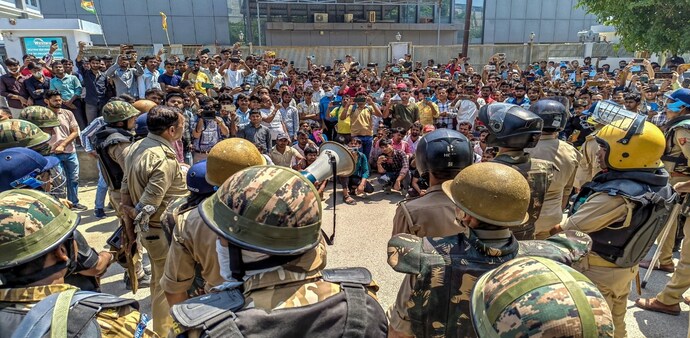
Labour unrest sweeping industrial belts in Manesar and Noida for higher wages and better working conditions has made Haryana and Uttar Pradesh hike minimum wages. But a common issue that has come up now is the need for uniform minimum wages across the National Capital Region as these workers shuttle across industrial units in Haryana, Delhi, Rajasthan and Uttar Pradesh.
Don't Miss: Why Noida got the biggest wage hike in UP after protests
“The minimum wages in the four states vary. In Delhi, the minimum wage is Rs 19,846, in Haryana it is Rs 15,220, in UP it is Rs 11,313, and in Rajasthan, it is Rs 7,410,” said Jai Bhagwan, General Secretary, Confederation of Indian Trade Unions, Haryana.
CITU has been supporting the industrial strikes in Haryana and has called for a demonstration on April 16.
Bhagwan said these are not isolated events. Before the unrest in Manesar and Noida, there was also a strike at a refinery in Panipat. There have also been problems in Bharatpur, Alwar, Rewari and Neemrana, all of which are part of the industrial belt around NCR.
The recent surge of strikes is being attributed to high inflation and the rising prices of LPG cylinders—because of the disruptions caused by the war in West Asia—which leave these workers with the bare minimum to subsist upon.
“After PF, workers are left with just about Rs 10,000 per month. With this salary, they have to pay room rent and for food. Now gas cylinder prices have shot up so much that hardly any money is left for subsistence,” he says. Labour unions in Haryana are now seeking a minimum wage of Rs 23,196 per month.
Trade union leaders also point out that these are issues that have been long in the making and note that they have raised these continuously and underlined the need to protect workers’ rights, along with greater accountability of employers.
Harbhajan Singh Sidhu, General Secretary, Hind Mazdoor Sabha, says, “We have been flagging these issues continuously. Why give a free hand to employers? Labour also needs protection.” He points out that HMS is a non-political trade union. “We want to ensure that there is no industrial unrest, give full rights to workers,” he underlines.
The Bharatiya Mazdoor Sangh, affiliated to the Rashtriya Swayamsevak Sangh, also said the labour unrest in Manesar and Noida is a matter of serious concern and said it must be viewed with responsibility, balance and commitment for long-term industrial harmony. However, it said that the idea of a completely uniform wage structure across the country is neither practical nor economically sustainable.
“It is equally important to acknowledge that the current unrest reflects genuine concerns of the workers. Issues such as wage disparities within similar industrial clusters, rising cost of living, excessive contractualisation, and lack of effective grievance redressal mechanisms have contributed to dissatisfaction,” it said.
Labour unrest sweeping industrial belts in Manesar and Noida for higher wages and better working conditions has made Haryana and Uttar Pradesh hike minimum wages. But a common issue that has come up now is the need for uniform minimum wages across the National Capital Region as these workers shuttle across industrial units in Haryana, Delhi, Rajasthan and Uttar Pradesh.
Don't Miss: Why Noida got the biggest wage hike in UP after protests
“The minimum wages in the four states vary. In Delhi, the minimum wage is Rs 19,846, in Haryana it is Rs 15,220, in UP it is Rs 11,313, and in Rajasthan, it is Rs 7,410,” said Jai Bhagwan, General Secretary, Confederation of Indian Trade Unions, Haryana.
CITU has been supporting the industrial strikes in Haryana and has called for a demonstration on April 16.
Bhagwan said these are not isolated events. Before the unrest in Manesar and Noida, there was also a strike at a refinery in Panipat. There have also been problems in Bharatpur, Alwar, Rewari and Neemrana, all of which are part of the industrial belt around NCR.
The recent surge of strikes is being attributed to high inflation and the rising prices of LPG cylinders—because of the disruptions caused by the war in West Asia—which leave these workers with the bare minimum to subsist upon.
“After PF, workers are left with just about Rs 10,000 per month. With this salary, they have to pay room rent and for food. Now gas cylinder prices have shot up so much that hardly any money is left for subsistence,” he says. Labour unions in Haryana are now seeking a minimum wage of Rs 23,196 per month.
Trade union leaders also point out that these are issues that have been long in the making and note that they have raised these continuously and underlined the need to protect workers’ rights, along with greater accountability of employers.
Harbhajan Singh Sidhu, General Secretary, Hind Mazdoor Sabha, says, “We have been flagging these issues continuously. Why give a free hand to employers? Labour also needs protection.” He points out that HMS is a non-political trade union. “We want to ensure that there is no industrial unrest, give full rights to workers,” he underlines.
The Bharatiya Mazdoor Sangh, affiliated to the Rashtriya Swayamsevak Sangh, also said the labour unrest in Manesar and Noida is a matter of serious concern and said it must be viewed with responsibility, balance and commitment for long-term industrial harmony. However, it said that the idea of a completely uniform wage structure across the country is neither practical nor economically sustainable.
“It is equally important to acknowledge that the current unrest reflects genuine concerns of the workers. Issues such as wage disparities within similar industrial clusters, rising cost of living, excessive contractualisation, and lack of effective grievance redressal mechanisms have contributed to dissatisfaction,” it said.