
Global food security faces fresh risks, but India's grain buffer offers a cushion
The government is also relying on the Food Corporation of India’s ability to intervene in the market if required. Under the Open Market Sale Scheme, FCI can release surplus wheat and rice into the open market to augment supplies, stabilise prices and contain inflation.
- Oct 8, 2026,
- Updated Oct 8, 2026 12:20 PM IST
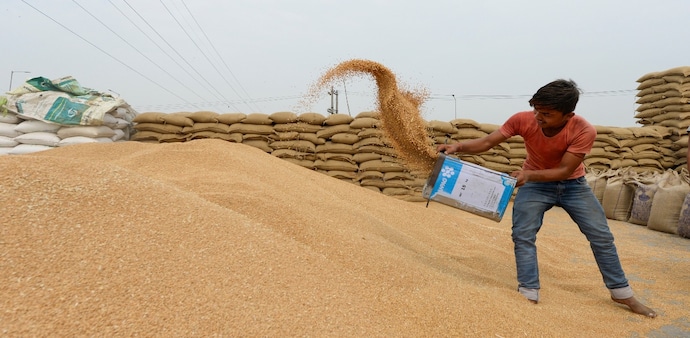
India has a substantial buffer of wheat and rice stocks, with the Central Pool holding 925.85 lakh metric tonnes (LMT) as of July 1, 2026, more than twice the prescribed stocking norm of 411.20 LMT, government data showed.
The stock position comes at a time when global food markets are facing pressure from higher fertiliser costs, elevated shipping expenses and geopolitical disruptions, including the situation around the Strait of Hormuz.
Wheat and rice stocks in the Central Pool stood at 925.85 lakh metric tonnes (LMT) as of July 1, 2026, against the prescribed stocking norm of 411.20 LMT, according to government data. This means stocks were more than 2.2 times the buffer requirement, with a surplus of 514.65 LMT.
Wheat accounted for 522.74 LMT, against a norm of 275.80 LMT, while rice stocks stood at 403.11 LMT, against a norm of 135.40 LMT. Compared with July 1, 2025, total wheat and rice stocks were up nearly 26%, with wheat stocks alone rising around 46%.
The cushion has remained substantial even after the seasonal drawdown. FCI data shows that as of September 1, the Central Pool had 479.92 LMT of wheat and 390.53 LMT of rice, taking total stocks to 870.45 LMT.
The September stock was still almost 2.8 times the October 1 stocking norm of 307.70 LMT. The FCI data also showed 307.51 LMT of unmilled paddy with FCI and state agencies, equivalent to 206.03 LMT of rice at a 67% out-turn ratio.
The strong stock position has been supported by a better wheat procurement season. The Commission for Agricultural Costs and Prices (CACP), in its Price Policy for Rabi Crops, Marketing Season 2027-28, said wheat procurement had risen from 26.2 million tonnes in RMS 2023-24 to 26.6 million tonnes in RMS 2025-26. Procurement in RMS 2026-27 had reached around 33.8 million tonnes by June 15, 2026, compared with 30.2 million tonnes a year earlier.
Wheat production has also strengthened. CACP's third advance estimate puts 2025-26 wheat production at 120.7 million tonnes, compared with 110.6 million tonnes in 2024-25.
“Rice and wheat procurement is stable, prices might swing due to global market volatility but we are constantly monitoring developments. Won’t let farmers get impacted,” government sources said.
The government is also relying on the Food Corporation of India’s ability to intervene in the market if required. Under the Open Market Sale Scheme, FCI can release surplus wheat and rice into the open market to augment supplies, stabilise prices and contain inflation. The large stock position therefore gives the government some room to respond if global volatility starts feeding into domestic food prices.
This buffer assumes greater significance amid rising global food-security concerns. Finance Minister Nirmala Sitharaman has flagged high fertiliser prices and disruptions around the Strait of Hormuz as challenges to global food security, as countries face difficulties in affording agricultural inputs and shipping costs remain elevated.
The CACP has similarly pointed to geopolitical tensions and supply-chain disruptions as factors that can cause volatility in global agricultural commodity markets.
The latest MSP decision also shows how the government is balancing food security with farm returns. For Rabi Marketing Season 2027-28, wheat MSP has been increased by ₹25 to ₹2,610 per quintal. In comparison, MSP for masur has risen by ₹390 to ₹7,390, rapeseed and mustard by ₹413 to ₹6,613, and safflower by ₹675 to ₹7,215.
The CACP's recommended MSPs provide at least a 50% margin over the relevant cost of production and are based on factors including production costs, demand-supply conditions, domestic and international prices, inter-crop parity and terms of trade.
For wheat, the MSP of ₹2,610 represents a 106% margin over the CACP's estimated cost of ₹1,264 per quintal. The corresponding margin is 92% for masur and 96% for rapeseed and mustard.
Meanwhile, procurement planning remains active. The government has fixed the 2026-27 kharif paddy procurement estimate at 708.64 LMT in paddy terms, while continuing to review procurement, storage and logistics with states and FCI.
For now, India's grain position provides a significant cushion against an external food shock. The bigger challenge is ensuring that a prolonged rise in fertiliser, energy and freight costs does not eventually translate into higher cultivation costs and undermine the economics of the next harvest.
India has a substantial buffer of wheat and rice stocks, with the Central Pool holding 925.85 lakh metric tonnes (LMT) as of July 1, 2026, more than twice the prescribed stocking norm of 411.20 LMT, government data showed.
The stock position comes at a time when global food markets are facing pressure from higher fertiliser costs, elevated shipping expenses and geopolitical disruptions, including the situation around the Strait of Hormuz.
Wheat and rice stocks in the Central Pool stood at 925.85 lakh metric tonnes (LMT) as of July 1, 2026, against the prescribed stocking norm of 411.20 LMT, according to government data. This means stocks were more than 2.2 times the buffer requirement, with a surplus of 514.65 LMT.
Wheat accounted for 522.74 LMT, against a norm of 275.80 LMT, while rice stocks stood at 403.11 LMT, against a norm of 135.40 LMT. Compared with July 1, 2025, total wheat and rice stocks were up nearly 26%, with wheat stocks alone rising around 46%.
The cushion has remained substantial even after the seasonal drawdown. FCI data shows that as of September 1, the Central Pool had 479.92 LMT of wheat and 390.53 LMT of rice, taking total stocks to 870.45 LMT.
The September stock was still almost 2.8 times the October 1 stocking norm of 307.70 LMT. The FCI data also showed 307.51 LMT of unmilled paddy with FCI and state agencies, equivalent to 206.03 LMT of rice at a 67% out-turn ratio.
The strong stock position has been supported by a better wheat procurement season. The Commission for Agricultural Costs and Prices (CACP), in its Price Policy for Rabi Crops, Marketing Season 2027-28, said wheat procurement had risen from 26.2 million tonnes in RMS 2023-24 to 26.6 million tonnes in RMS 2025-26. Procurement in RMS 2026-27 had reached around 33.8 million tonnes by June 15, 2026, compared with 30.2 million tonnes a year earlier.
Wheat production has also strengthened. CACP's third advance estimate puts 2025-26 wheat production at 120.7 million tonnes, compared with 110.6 million tonnes in 2024-25.
“Rice and wheat procurement is stable, prices might swing due to global market volatility but we are constantly monitoring developments. Won’t let farmers get impacted,” government sources said.
The government is also relying on the Food Corporation of India’s ability to intervene in the market if required. Under the Open Market Sale Scheme, FCI can release surplus wheat and rice into the open market to augment supplies, stabilise prices and contain inflation. The large stock position therefore gives the government some room to respond if global volatility starts feeding into domestic food prices.
This buffer assumes greater significance amid rising global food-security concerns. Finance Minister Nirmala Sitharaman has flagged high fertiliser prices and disruptions around the Strait of Hormuz as challenges to global food security, as countries face difficulties in affording agricultural inputs and shipping costs remain elevated.
The CACP has similarly pointed to geopolitical tensions and supply-chain disruptions as factors that can cause volatility in global agricultural commodity markets.
The latest MSP decision also shows how the government is balancing food security with farm returns. For Rabi Marketing Season 2027-28, wheat MSP has been increased by ₹25 to ₹2,610 per quintal. In comparison, MSP for masur has risen by ₹390 to ₹7,390, rapeseed and mustard by ₹413 to ₹6,613, and safflower by ₹675 to ₹7,215.
The CACP's recommended MSPs provide at least a 50% margin over the relevant cost of production and are based on factors including production costs, demand-supply conditions, domestic and international prices, inter-crop parity and terms of trade.
For wheat, the MSP of ₹2,610 represents a 106% margin over the CACP's estimated cost of ₹1,264 per quintal. The corresponding margin is 92% for masur and 96% for rapeseed and mustard.
Meanwhile, procurement planning remains active. The government has fixed the 2026-27 kharif paddy procurement estimate at 708.64 LMT in paddy terms, while continuing to review procurement, storage and logistics with states and FCI.
For now, India's grain position provides a significant cushion against an external food shock. The bigger challenge is ensuring that a prolonged rise in fertiliser, energy and freight costs does not eventually translate into higher cultivation costs and undermine the economics of the next harvest.