
'Gross FDI will decline...': Shankar Sharma on why India's capital inflows aren't stable
'What most people don't know probably is that our FDI is not the way it is perceived: around 70-75% of it is VC PE money,' says Shankar Sharma
- Jun 3, 2026,
- Updated Jun 3, 2026 2:23 PM IST
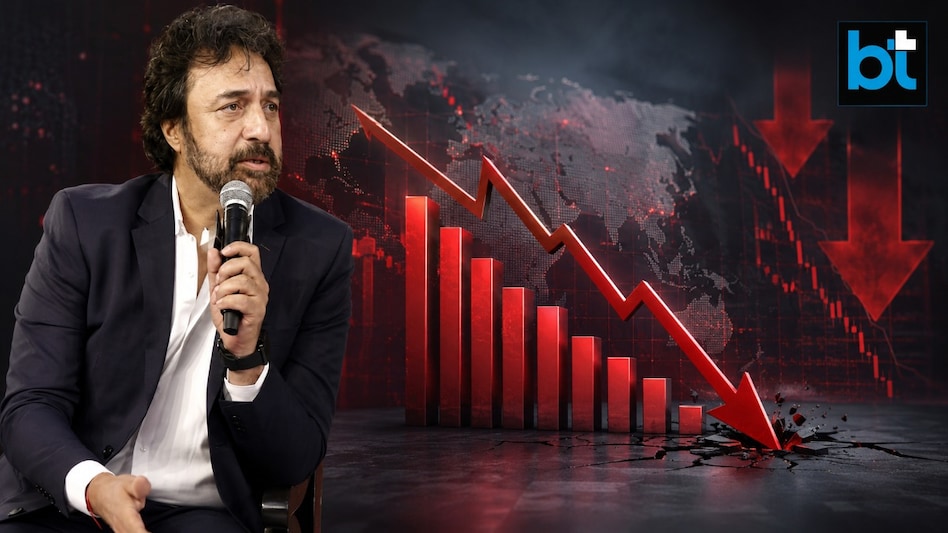
Ace investor Shankar Sharma on Tuesday weighed in on the debate over the country's foreign direct investment (FDI) numbers, arguing that a large share of the FDI is actually venture capital and private equity money that cannot be considered stable, long-term capital.
Sharma challenged the view that strong gross FDI inflows alone are sufficient to judge India's investment attractiveness, saying the nature of the capital flowing into the country is often overlooked.
"What most people don't know probably is that our FDI is not the way it is perceived: around 70-75% of it is VC PE money," Sharma wrote in a detailed post on X. "By no means can that be called stable capital. It is completely frisky and promiscuous."
Don't Miss: 'FDI isn't down, there is a confusion': Arvind Panagariya explains what critics are missing
There is an ongoing debate over whether India's investment health should be assessed through gross FDI inflows or net FDI, which accounts for repatriation and outbound flows.
The debate intensified after net FDI plunged 96% in FY25, prompting criticism from some economists and market observers. Defenders of the government's position, including RBI Governor Sanjay Malhotra and economist Arvind Panagariya, have argued that gross FDI remains the more relevant metric and continues to be robust.
Panagariya has pointed out that gross FDI stood at $81 billion in 2024-25 and rose to nearly $94 billion in 2025-26, suggesting India's appeal to global investors remains intact.
Sharma, however, argued that the composition of FDI matters because venture capital and private equity investors ultimately seek exits through capital markets.
"And that is exactly why to look at gross FDI and then say that net FDI will improve because poor stock market conditions will not allow exits, is under-analysed," he said.
Must Read: Why FIIs may continue to avoid India - Kotak explains, flags key risks for stock markets
According to Sharma, today's inflows can translate into much larger outflows in the future when investors cash out their gains. "VC PE capital will almost always result in a low net FDI figure down the road when they exit at multiples of their initial investments in aggregate," he said.
To illustrate the point, Sharma said $50 billion of VC and PE inflows today could become "$110-125 billion USD exit" five to eight years later if investments compound at about 12% annually in dollar terms.
He also argued that prolonged weakness in Indian equities could eventually hurt future FDI inflows. "If Indian equity markets go into a prolonged bear market, then you can be pretty sure that gross FDI will also decline because the path to exits is critical for VC PEs, and they are the majority of our FDI."
"They will not commit more capital to a country with poor equity markets. So our FDI is entwined with our FII and equity markets," he added.
Sharma also took aim at the notion that manufacturing investments are necessarily sticky capital, saying: "(By the way, ab to even old mfrg cos exit eg LG, Hyundai, now Coke. Where else will they find idiots in these large numbers?)"
Import cover debate
The investor also addressed another ongoing discussion around India's foreign exchange reserves and import cover.
Responding to arguments that reserve adequacy should be measured against net imports rather than total imports, Sharma said such an approach understates risk.
"We use total imports because import cover is meant to answer a very specific stress-test question: 'How many months of all necessary import payments can the country keep making if forex inflows stop or get disrupted?'"
According to Sharma, imports represent actual foreign-currency obligations that must be paid irrespective of when export receipts arrive. "Imports are actual foreign-currency obligations that must be paid in full. Exports may bring in foreign exchange later, but that cash is not guaranteed to arrive exactly when payments are due."
Using net imports, he argued, could create a false sense of security. "If you used net imports, a country with large exports could look safer even if it still has huge gross import bills every month."
To illustrate the point, Sharma gave the example of a country importing $100 billion a month and exporting $80 billion. Even though net imports would be only $20 billion, the country would still need $100 billion upfront to pay suppliers.
He noted that central banks and institutions such as the IMF traditionally use import cover as a reserve adequacy measure because it is a conservative liquidity metric. "A good shorthand is: reserves must pay gross bills, not just the net difference after receipts."
Calling for caution in external-sector management, Sharma said foreign exchange crises leave little room for error. "Macro management is all about being very, very conservative because the external sector cannot tolerate any slip-ups: the world is absolutely unforgiving when it comes to foreign exchange crises."
The investor also flagged continued foreign institutional investor (FII) selling, noting that overseas investors remain a significant force in Indian markets. "Meanwhile, we lost almost a billion dollars yesterday in FII selling," he wrote.
FIIs offloaded equities worth Rs 8,362.92 crore on Tuesday.
According to market data, foreign investors were net sellers of Indian equities worth ₹1.66 lakh crore, or about $17.7 billion, in 2025 - the largest annual outflow on record. Till May this year, they sold another ₹2.06 lakh crore, or roughly $21.9 billion.
"FIIs, by the way, still have around $750-850 billion still left. And that is more than 100% of our rented FX reserves," Sharma said.
Ace investor Shankar Sharma on Tuesday weighed in on the debate over the country's foreign direct investment (FDI) numbers, arguing that a large share of the FDI is actually venture capital and private equity money that cannot be considered stable, long-term capital.
Sharma challenged the view that strong gross FDI inflows alone are sufficient to judge India's investment attractiveness, saying the nature of the capital flowing into the country is often overlooked.
"What most people don't know probably is that our FDI is not the way it is perceived: around 70-75% of it is VC PE money," Sharma wrote in a detailed post on X. "By no means can that be called stable capital. It is completely frisky and promiscuous."
Don't Miss: 'FDI isn't down, there is a confusion': Arvind Panagariya explains what critics are missing
There is an ongoing debate over whether India's investment health should be assessed through gross FDI inflows or net FDI, which accounts for repatriation and outbound flows.
The debate intensified after net FDI plunged 96% in FY25, prompting criticism from some economists and market observers. Defenders of the government's position, including RBI Governor Sanjay Malhotra and economist Arvind Panagariya, have argued that gross FDI remains the more relevant metric and continues to be robust.
Panagariya has pointed out that gross FDI stood at $81 billion in 2024-25 and rose to nearly $94 billion in 2025-26, suggesting India's appeal to global investors remains intact.
Sharma, however, argued that the composition of FDI matters because venture capital and private equity investors ultimately seek exits through capital markets.
"And that is exactly why to look at gross FDI and then say that net FDI will improve because poor stock market conditions will not allow exits, is under-analysed," he said.
Must Read: Why FIIs may continue to avoid India - Kotak explains, flags key risks for stock markets
According to Sharma, today's inflows can translate into much larger outflows in the future when investors cash out their gains. "VC PE capital will almost always result in a low net FDI figure down the road when they exit at multiples of their initial investments in aggregate," he said.
To illustrate the point, Sharma said $50 billion of VC and PE inflows today could become "$110-125 billion USD exit" five to eight years later if investments compound at about 12% annually in dollar terms.
He also argued that prolonged weakness in Indian equities could eventually hurt future FDI inflows. "If Indian equity markets go into a prolonged bear market, then you can be pretty sure that gross FDI will also decline because the path to exits is critical for VC PEs, and they are the majority of our FDI."
"They will not commit more capital to a country with poor equity markets. So our FDI is entwined with our FII and equity markets," he added.
Sharma also took aim at the notion that manufacturing investments are necessarily sticky capital, saying: "(By the way, ab to even old mfrg cos exit eg LG, Hyundai, now Coke. Where else will they find idiots in these large numbers?)"
Import cover debate
The investor also addressed another ongoing discussion around India's foreign exchange reserves and import cover.
Responding to arguments that reserve adequacy should be measured against net imports rather than total imports, Sharma said such an approach understates risk.
"We use total imports because import cover is meant to answer a very specific stress-test question: 'How many months of all necessary import payments can the country keep making if forex inflows stop or get disrupted?'"
According to Sharma, imports represent actual foreign-currency obligations that must be paid irrespective of when export receipts arrive. "Imports are actual foreign-currency obligations that must be paid in full. Exports may bring in foreign exchange later, but that cash is not guaranteed to arrive exactly when payments are due."
Using net imports, he argued, could create a false sense of security. "If you used net imports, a country with large exports could look safer even if it still has huge gross import bills every month."
To illustrate the point, Sharma gave the example of a country importing $100 billion a month and exporting $80 billion. Even though net imports would be only $20 billion, the country would still need $100 billion upfront to pay suppliers.
He noted that central banks and institutions such as the IMF traditionally use import cover as a reserve adequacy measure because it is a conservative liquidity metric. "A good shorthand is: reserves must pay gross bills, not just the net difference after receipts."
Calling for caution in external-sector management, Sharma said foreign exchange crises leave little room for error. "Macro management is all about being very, very conservative because the external sector cannot tolerate any slip-ups: the world is absolutely unforgiving when it comes to foreign exchange crises."
The investor also flagged continued foreign institutional investor (FII) selling, noting that overseas investors remain a significant force in Indian markets. "Meanwhile, we lost almost a billion dollars yesterday in FII selling," he wrote.
FIIs offloaded equities worth Rs 8,362.92 crore on Tuesday.
According to market data, foreign investors were net sellers of Indian equities worth ₹1.66 lakh crore, or about $17.7 billion, in 2025 - the largest annual outflow on record. Till May this year, they sold another ₹2.06 lakh crore, or roughly $21.9 billion.
"FIIs, by the way, still have around $750-850 billion still left. And that is more than 100% of our rented FX reserves," Sharma said.