
GST Council to take up proposal of MDR on UPI
Sources underline MDR is not a tax or cess levied by govt, to be used by payment ecosystem
- Sep 24, 2026,
- Updated Sep 24, 2026 8:24 PM IST
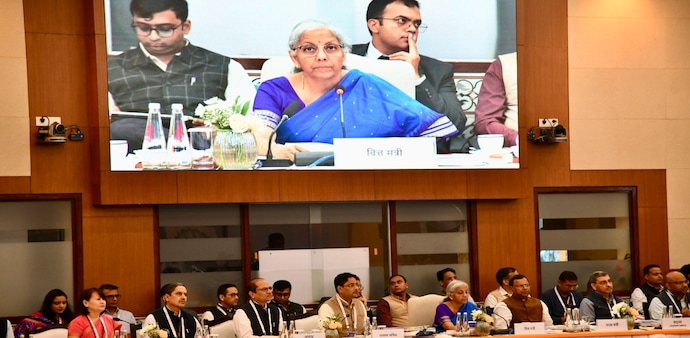
The Goods and Services Tax Council is expected to take up the issue of GST on the merchant discount rate levied on UPI payments.
While it is not clear if the issue will be taken up in the upcoming meeting of the GST Council on October 7, government sources indicated that the issue needs to be discussed to ensure that merchants do not face any additional problem in levying MDR on UPI.
GST at the rate of 18% is levied on MDR charges, but merchants can adjust it as Input Tax Credit.
"The matter will be put up to the Council at an opportune time. Since the common is also involved in payments, it is hoped that the Council will see the reason and logic and take a favourable view on the issue," said the source.
Don't Miss: Govt, IBA to work on mechanism to ensure UPI MDR isn't passed on to consumers
The comments come at a time when MDR of 0.4% is set to be charged on UPI payments above Rs 2,000 by persons to merchants. The charge will be effective from October 15.
Meanwhile, underlining that the MDR on UPI is not a tax or a cess or surcharge, sources underlined that the funds collected will be used by payment infrastructure providers and not be used by the government.
"MDR will stay within the payment ecosystem. Not a single rupee collected will go to the Consolidated Fund of India," they underlined.
For eligible merchant transactions that attract 0.4% MDR, 40% of the amount collected will go to the issuing bank or customer's bank, 30% to the merchant acquirer, 20% to the UPI app, and 10% to the payer PSP bank.
Must Watch: UPI Charges Explained | NPCI CEO Dilip Asbe on Future of Digital Payments
Underlining that customers will not be impacted by the move, sources noted that MDR is also charged on credit and debit card payments. These do not have to be absorbed by individual customers, they pointed out.
"For UPI payments to continue efficiently, some charges need to be levied. Individuals will not be impacted on MDR just like it is the case with credit and debit card payments," they said.
It is also felt that despite MDR, UPI will continue to see robust growth due to the ease and convenience of payments. Fears that cash may make a resurgence, may not be correct, sources said.
An awareness campaign is also being undertaken by the Indian Banks' Association to inform customers and merchants about the impact of the move.
The Goods and Services Tax Council is expected to take up the issue of GST on the merchant discount rate levied on UPI payments.
While it is not clear if the issue will be taken up in the upcoming meeting of the GST Council on October 7, government sources indicated that the issue needs to be discussed to ensure that merchants do not face any additional problem in levying MDR on UPI.
GST at the rate of 18% is levied on MDR charges, but merchants can adjust it as Input Tax Credit.
"The matter will be put up to the Council at an opportune time. Since the common is also involved in payments, it is hoped that the Council will see the reason and logic and take a favourable view on the issue," said the source.
Don't Miss: Govt, IBA to work on mechanism to ensure UPI MDR isn't passed on to consumers
The comments come at a time when MDR of 0.4% is set to be charged on UPI payments above Rs 2,000 by persons to merchants. The charge will be effective from October 15.
Meanwhile, underlining that the MDR on UPI is not a tax or a cess or surcharge, sources underlined that the funds collected will be used by payment infrastructure providers and not be used by the government.
"MDR will stay within the payment ecosystem. Not a single rupee collected will go to the Consolidated Fund of India," they underlined.
For eligible merchant transactions that attract 0.4% MDR, 40% of the amount collected will go to the issuing bank or customer's bank, 30% to the merchant acquirer, 20% to the UPI app, and 10% to the payer PSP bank.
Must Watch: UPI Charges Explained | NPCI CEO Dilip Asbe on Future of Digital Payments
Underlining that customers will not be impacted by the move, sources noted that MDR is also charged on credit and debit card payments. These do not have to be absorbed by individual customers, they pointed out.
"For UPI payments to continue efficiently, some charges need to be levied. Individuals will not be impacted on MDR just like it is the case with credit and debit card payments," they said.
It is also felt that despite MDR, UPI will continue to see robust growth due to the ease and convenience of payments. Fears that cash may make a resurgence, may not be correct, sources said.
An awareness campaign is also being undertaken by the Indian Banks' Association to inform customers and merchants about the impact of the move.