
‘I don’t take critics like Ashneer Grover seriously’: PhonePe CEO Samir Nigam responds to UPI MDR criticism
UPI’s proposed MDR on select transactions has triggered a fresh debate over the cost and sustainability of India’s digital payments ecosystem. PhonePe CEO Sameer Nigam defended the framework, while former BharatPe co-founder Ashneer Grover questioned the need to charge for UPI transactions.
- Sep 17, 2026,
- Updated Sep 17, 2026 11:58 AM IST
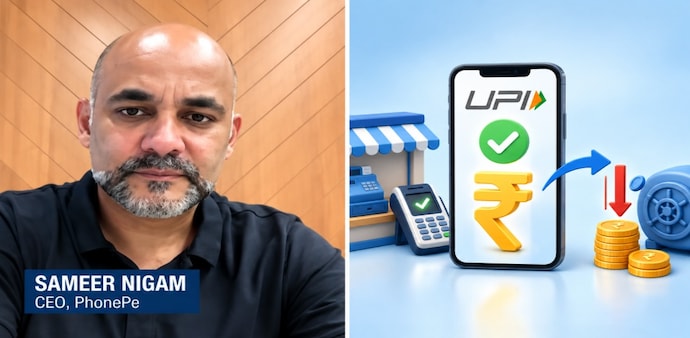
UPI MDR: PhonePe CEO Sameer Nigam has defended the proposed Merchant Discount Rate (MDR) on select UPI transactions, arguing that the new framework remains significantly cheaper than card payments and includes caps for several high-volume categories. His comments came after former BharatPe co-founder Ashneer Grover criticised the move and questioned whether charging for UPI could undermine one of India’s biggest digital payments success stories.
Under the proposed framework, UPI transactions above ₹2,000 account for only around 4% of transactions by volume but represent nearly 66% of transaction value. Nigam said the headline numbers need to be viewed alongside the exemptions and caps built into the MDR structure.
Nigam said UPI had not always been a zero-MDR system. “When UPI started there was an MDR of 0.65%,” he said, adding that the government made UPI MDR-free in 2020. According to Nigam, the rapid growth of UPI before the change showed that free transactions were not necessarily a prerequisite for adoption.
He also pointed to the cost of alternative payment networks. “We now have almost 60 lakh or 6 million merchants with POS devices in the country accepting credit cards, RuPay cards, wallets each with an interchange of 1 and a half to 2 and a half%,” Nigam said. “So UPI remains at 0.4% the lowest MDR in the world not in India of all networks out there.”
Nigam said 95–96% of UPI merchant transactions are below ₹2,000 and therefore would not attract the proposed MDR. He cited everyday payments such as groceries, rickshaws and public transport as examples.
What Grover said
Grover, speaking to CNN-News18, criticised the prospect of introducing charges on UPI, arguing that it could discourage merchants and consumers from using the platform. He questioned why charges were being considered for a payment system that has helped accelerate digital payments in India.
“Why are you interfering with something that is already working? Why do you have to interfere with everything? Free UPI is the only UPI. If you start charging for UPI, you can say ‘Tata, bye-bye’ to it. It is over,” Grover said.
He also questioned the ₹2,000 threshold, pointing to the disproportionate share of transaction value represented by higher-value payments.
MUST READ: Congress opposes UPI charges now. But 5 of its MPs backed Finance panel's MDR push
Merchants cannot pass MDR to customers
Nigam, while speaking to India Today, said merchants are legally prohibited from directly passing the UPI MDR on to customers. “Any such charge linked to paying UPI MDR is illegal through the Gazette notification itself and the NPCI circular explicitly again confirms that,” he said.
He added that several categories have been given a ₹5 cap, including insurance, petrol and bill payments, while stock broking carries an MDR of 0.02%.
On criticism that MDR amounts to a tax-funded system, Nigam said the alternative was continued government subsidy. “We don't want subsidies from the government. We stand on our own feet. We raise equity. We raise debt as a business and we are running for-profit businesses,” he said.
On Grover, Nigam said: “I don't take him seriously,” before arguing that zero MDR was an unusual arrangement globally and that the industry needed a sustainable commercial model as transaction volumes expanded.
UPI MDR: PhonePe CEO Sameer Nigam has defended the proposed Merchant Discount Rate (MDR) on select UPI transactions, arguing that the new framework remains significantly cheaper than card payments and includes caps for several high-volume categories. His comments came after former BharatPe co-founder Ashneer Grover criticised the move and questioned whether charging for UPI could undermine one of India’s biggest digital payments success stories.
Under the proposed framework, UPI transactions above ₹2,000 account for only around 4% of transactions by volume but represent nearly 66% of transaction value. Nigam said the headline numbers need to be viewed alongside the exemptions and caps built into the MDR structure.
Nigam said UPI had not always been a zero-MDR system. “When UPI started there was an MDR of 0.65%,” he said, adding that the government made UPI MDR-free in 2020. According to Nigam, the rapid growth of UPI before the change showed that free transactions were not necessarily a prerequisite for adoption.
He also pointed to the cost of alternative payment networks. “We now have almost 60 lakh or 6 million merchants with POS devices in the country accepting credit cards, RuPay cards, wallets each with an interchange of 1 and a half to 2 and a half%,” Nigam said. “So UPI remains at 0.4% the lowest MDR in the world not in India of all networks out there.”
Nigam said 95–96% of UPI merchant transactions are below ₹2,000 and therefore would not attract the proposed MDR. He cited everyday payments such as groceries, rickshaws and public transport as examples.
What Grover said
Grover, speaking to CNN-News18, criticised the prospect of introducing charges on UPI, arguing that it could discourage merchants and consumers from using the platform. He questioned why charges were being considered for a payment system that has helped accelerate digital payments in India.
“Why are you interfering with something that is already working? Why do you have to interfere with everything? Free UPI is the only UPI. If you start charging for UPI, you can say ‘Tata, bye-bye’ to it. It is over,” Grover said.
He also questioned the ₹2,000 threshold, pointing to the disproportionate share of transaction value represented by higher-value payments.
MUST READ: Congress opposes UPI charges now. But 5 of its MPs backed Finance panel's MDR push
Merchants cannot pass MDR to customers
Nigam, while speaking to India Today, said merchants are legally prohibited from directly passing the UPI MDR on to customers. “Any such charge linked to paying UPI MDR is illegal through the Gazette notification itself and the NPCI circular explicitly again confirms that,” he said.
He added that several categories have been given a ₹5 cap, including insurance, petrol and bill payments, while stock broking carries an MDR of 0.02%.
On criticism that MDR amounts to a tax-funded system, Nigam said the alternative was continued government subsidy. “We don't want subsidies from the government. We stand on our own feet. We raise equity. We raise debt as a business and we are running for-profit businesses,” he said.
On Grover, Nigam said: “I don't take him seriously,” before arguing that zero MDR was an unusual arrangement globally and that the industry needed a sustainable commercial model as transaction volumes expanded.