
India-EU trade deal: What it means, what's next
India-EU FTA: European Commission President Ursula von der Leyen along with and President of the European Council Antonio Luís Santos da Costa will be chief guests at the Republic Day celebrations.
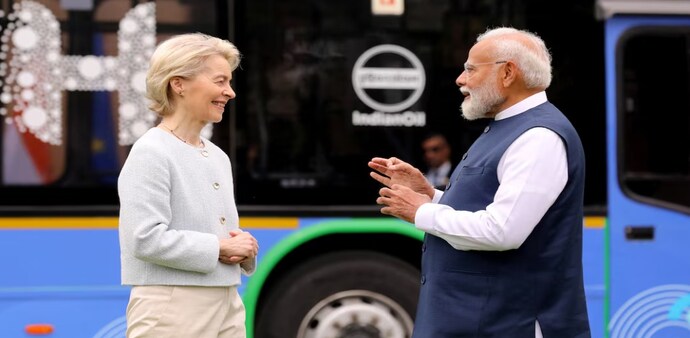
- Jan 25, 2026,
- Updated Jan 25, 2026 2:09 PM IST
Nearly two decades or 18 years in the making, the free trade agreement between India and the European Union is set to bring significant gains for both amid the ongoing global trade tensions due to the US tariff policies. Ahead of the visit to New Delhi, European Commission President Ursula von der Leyen posted on X about the proposed free trade agreement calling it the “mother of all trade deals”. In a post, she further said, “We are closing in on the EU-India Free Trade Agreement. See you soon in Delhi.”
She along with and President of the European Council Antonio Luís Santos da Costa will be chief guests at the Republic Day celebrations. Expectations are that negotiations for the deal could be concluded on January 27 where the two will co-chair the 16th India-EU Summit hosted by Prime Minister Narendra Modi, giving a big boost to bilateral ties and trade. “At the summit, leaders are expected to adopt a joint EU-India comprehensive strategic agenda, which aims to increase strategic cooperation between both sides in four areas, reinforced by enablers across pillars -- prosperity and sustainability, technology and innovation, security and defence, connectivity and global issues,” said a statement by the European Council. India, which has been facing 50 per cent US tariffs since the middle of 2025, has been working hard to diversify exports and has been negotiating trade deals with several countries and this would in fact be the ninth deal in four years. For the EU, India’s huge market provides a huge opportunity for its products. Madhavi Arora, Lead Economist, Emkay Global Financial Services noted that the impending India–EU FTA comes at a crucial juncture—of global trade fragmentation, rising protectionism, US–India trade frictions, and heightened global uncertainty. “The deal could act as an effective counter-cyclical buffer by improving India’s export participation in global value chains, expanding market access, and supporting supply-chain diversification,” she said in a note. With EU accounting for nearly 17 per cent of India’s goods exports, the agency estimates that a possible bilateral alignment could lift India’s exports to the EU by close to $50 billion by 2031, led by medium-tech manufacturing. Understanding the trade ties Both trade in goods as well as foreign direct investment between India and the EU have been strong over the last several years. As per official data, bilateral trade volume reached approximately $136 billion in 2024-25, making the EU India's largest goods trading partner. Between 2019 and 2024, India-EU bilateral trade in services grew steadily, with Indian exports rising from €19 billion to €37 billion and EU exports to India increasing to €29 billion. As of 2024, over 931,607 Indians resided in the EU, including 16,268 Blue Card holders, and in the past 20 years, more than 6,000 Indian students received Erasmus Mundus scholarships, highlighting India–EU mobility and educational ties. “India–EU relations have evolved into a strong and forward-looking partnership based on shared values, growing economic ties, and common strategic interests. Rising trade, steady EU investments, and cooperation in areas such as connectivity, clean energy, digital technologies, security, and labour mobility reflect a partnership that is producing clear and practical outcomes,” said an official statement. For Indian consumers, the FTA could lead to cheaper and easier access to cars, wines and spirits from the EU. Top exports from India to the EU included petroleum products, textiles, electronics and computer machinery. Top imports from the EU also included computer machinery, electronics, aircrafts, medical devices and gems and jewellery. India’s cumulative FDI inflows from EU during April 2000 to September 2024 were $117.4 billion with 6,000 EU firms present in India. FDI from EU represented 16.6% of the cumulative amount of FDI Equity Inflow from all countries which stood at $708.6 billion. “For India, the agreement promises restored market access, tariff relief for labor-intensive exports, and new opportunities in services; for the EU, it offers scale, growth, and supply-chain diversification beyond China,” said Ajay Srivastava, founder, Global Trade Research Initiative (GTRI). A recent report by Barclays India also noted that India's trade complementarity index value is the highest with the EU, indicating that the proposed FTA with the EU has the highest potential for increased intra-regional merchandise trade. “We believe the India-EU FTA will certainly be a big step towards export diversification and greater trade openness with a large bloc,” it said. The note by Emkay Global Financial Services pointed out that average EU tariffs on Indian manufactured goods currently range at 6–10% (textiles/apparel up, to nearly 12%, footwear to 8-16%, auto components to 4-6%). Improved market access, visa facilitation, and enhanced mobility under the FTA could act as a multiplier for services exports. “On imports, lower tariffs on European capital goods, autos, and wines and spirits could raise imports over time, though this is likely to be offset by productivity gains and disinflationary impulse via cheaper inputs and technology diffusion,” it said. Clarity needed However, industry and experts are awaiting more clarity on several issues including the Carbon Border Adjustment Mechanism and non-tariff barriers. “India is pushing for zero-duty access for its labour-intensive sectors, such as textiles and leather. On the other hand, the EU is demanding significant duty cuts in automobiles, medical devices, wine, spirits, meat, poultry, and a strong intellectual property regime,” noted the Barclays report. The deal also carries risks—particularly from non-tariff barriers, services restrictions, and climate-linked measures such as CBAM, which could dilute the benefits of tariff liberalisation, Srivastava noted. There are already concerns over the European Union’s Generalised System of Preferences, which is effective from January 1, 2026 to December 31, 2028, and its impact on Indian exports. The commerce and industry ministry has however, clarified that the new regulation impacts only 2.66% of India’s exports to EU.
Nearly two decades or 18 years in the making, the free trade agreement between India and the European Union is set to bring significant gains for both amid the ongoing global trade tensions due to the US tariff policies. Ahead of the visit to New Delhi, European Commission President Ursula von der Leyen posted on X about the proposed free trade agreement calling it the “mother of all trade deals”. In a post, she further said, “We are closing in on the EU-India Free Trade Agreement. See you soon in Delhi.”
She along with and President of the European Council Antonio Luís Santos da Costa will be chief guests at the Republic Day celebrations. Expectations are that negotiations for the deal could be concluded on January 27 where the two will co-chair the 16th India-EU Summit hosted by Prime Minister Narendra Modi, giving a big boost to bilateral ties and trade. “At the summit, leaders are expected to adopt a joint EU-India comprehensive strategic agenda, which aims to increase strategic cooperation between both sides in four areas, reinforced by enablers across pillars -- prosperity and sustainability, technology and innovation, security and defence, connectivity and global issues,” said a statement by the European Council. India, which has been facing 50 per cent US tariffs since the middle of 2025, has been working hard to diversify exports and has been negotiating trade deals with several countries and this would in fact be the ninth deal in four years. For the EU, India’s huge market provides a huge opportunity for its products. Madhavi Arora, Lead Economist, Emkay Global Financial Services noted that the impending India–EU FTA comes at a crucial juncture—of global trade fragmentation, rising protectionism, US–India trade frictions, and heightened global uncertainty. “The deal could act as an effective counter-cyclical buffer by improving India’s export participation in global value chains, expanding market access, and supporting supply-chain diversification,” she said in a note. With EU accounting for nearly 17 per cent of India’s goods exports, the agency estimates that a possible bilateral alignment could lift India’s exports to the EU by close to $50 billion by 2031, led by medium-tech manufacturing. Understanding the trade ties Both trade in goods as well as foreign direct investment between India and the EU have been strong over the last several years. As per official data, bilateral trade volume reached approximately $136 billion in 2024-25, making the EU India's largest goods trading partner. Between 2019 and 2024, India-EU bilateral trade in services grew steadily, with Indian exports rising from €19 billion to €37 billion and EU exports to India increasing to €29 billion. As of 2024, over 931,607 Indians resided in the EU, including 16,268 Blue Card holders, and in the past 20 years, more than 6,000 Indian students received Erasmus Mundus scholarships, highlighting India–EU mobility and educational ties. “India–EU relations have evolved into a strong and forward-looking partnership based on shared values, growing economic ties, and common strategic interests. Rising trade, steady EU investments, and cooperation in areas such as connectivity, clean energy, digital technologies, security, and labour mobility reflect a partnership that is producing clear and practical outcomes,” said an official statement. For Indian consumers, the FTA could lead to cheaper and easier access to cars, wines and spirits from the EU. Top exports from India to the EU included petroleum products, textiles, electronics and computer machinery. Top imports from the EU also included computer machinery, electronics, aircrafts, medical devices and gems and jewellery. India’s cumulative FDI inflows from EU during April 2000 to September 2024 were $117.4 billion with 6,000 EU firms present in India. FDI from EU represented 16.6% of the cumulative amount of FDI Equity Inflow from all countries which stood at $708.6 billion. “For India, the agreement promises restored market access, tariff relief for labor-intensive exports, and new opportunities in services; for the EU, it offers scale, growth, and supply-chain diversification beyond China,” said Ajay Srivastava, founder, Global Trade Research Initiative (GTRI). A recent report by Barclays India also noted that India's trade complementarity index value is the highest with the EU, indicating that the proposed FTA with the EU has the highest potential for increased intra-regional merchandise trade. “We believe the India-EU FTA will certainly be a big step towards export diversification and greater trade openness with a large bloc,” it said. The note by Emkay Global Financial Services pointed out that average EU tariffs on Indian manufactured goods currently range at 6–10% (textiles/apparel up, to nearly 12%, footwear to 8-16%, auto components to 4-6%). Improved market access, visa facilitation, and enhanced mobility under the FTA could act as a multiplier for services exports. “On imports, lower tariffs on European capital goods, autos, and wines and spirits could raise imports over time, though this is likely to be offset by productivity gains and disinflationary impulse via cheaper inputs and technology diffusion,” it said. Clarity needed However, industry and experts are awaiting more clarity on several issues including the Carbon Border Adjustment Mechanism and non-tariff barriers. “India is pushing for zero-duty access for its labour-intensive sectors, such as textiles and leather. On the other hand, the EU is demanding significant duty cuts in automobiles, medical devices, wine, spirits, meat, poultry, and a strong intellectual property regime,” noted the Barclays report. The deal also carries risks—particularly from non-tariff barriers, services restrictions, and climate-linked measures such as CBAM, which could dilute the benefits of tariff liberalisation, Srivastava noted. There are already concerns over the European Union’s Generalised System of Preferences, which is effective from January 1, 2026 to December 31, 2028, and its impact on Indian exports. The commerce and industry ministry has however, clarified that the new regulation impacts only 2.66% of India’s exports to EU.