
India, Indonesia to soon hold talks on palm oil supplies
Indonesia has clarified that ban is limited to RBD palm oil and not crude or refined variants.
- Apr 26, 2022,
- Updated Apr 26, 2022 3:48 PM IST
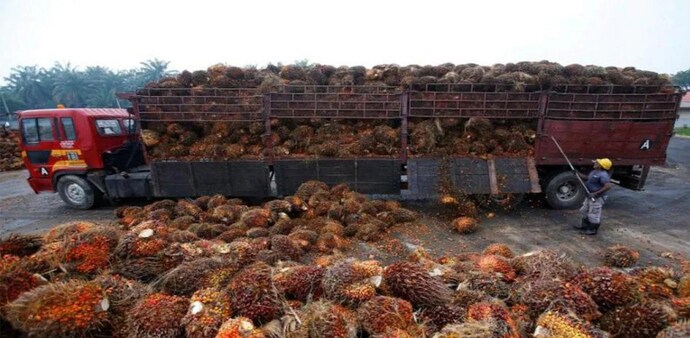
In a relief for the edible oil prices in India, Indonesia, the world’s largest producer of palm oil, has clarified that its export ban won’t be applicable to crude or refined palm oil. The ban is limited to only refined, bleached, deodorized (RBD) palmolein.
Stating this, Indian government officials told Business Today TV that India and Indonesia will soon hold talks on the issues of palm oil supplies.
The development has come as positive for Indian edible oil prices. On his part, B.V Mehta, Executive Director, Solvent Association of India (SEA) said, “It has come as a relief as Indonesia has announced that they will restrict only RBD Palmolein and freely allow exports of crude and refined palm oil."
"RBD palmolein oil ban will not impact prices of edible oil in India," Mehta added.
Between November last and March this year, imports of RBD palmolein were up at around 771,268 tons, as compared to just 24,101 tons during the same period last year following an import duty cut. SEA data states that import of vegetable oils during March 2022 was up at 1,104,570 tons, as compared to 980,243 tons in March 2021. Meanwhile, a Nomura research report acknowledged that Indonesia’s ban on palm oil exports excludes crude palm oil, but applies to RBD palmolein. “We estimate that these items accounted for 40 per cent of Indonesia’s total palm oil exports in 2021, with the majority destined for Asia.”
The biggest export markets for Indonesia are China (24.6 per cent of Indonesia’s total RBD palmolein exports), India (8.6 per cent) and the Philippines (4.3 per cent). However, this hides Asia’s dependence on Indonesia, the report added.
Using UN Comtrade data, Nomura estimates that China, India, the Philippines and South Korea source between 46-58 per cent of their total palm oil imports from Indonesia, making them more vulnerable to a supply squeeze.
On inflation, apart from the direct impact on palm oil prices, it will raise input costs for food products and personal care items, and the price of substitutes such as soybean oil. While there is uncertainty over how long the ban may last, rising food prices risk more such protectionist measures globally, and could further stoke food price inflation in Asia, the report further said.
Also read: Edible oil stocks rise up to 10% after Indonesia bans export of palm oil
Also read: Adani Wilmar stock zooms 246% in two months, how long will the rally last?
Also read: Indonesia's palm oil export ban a blow to top FMCG firms
In a relief for the edible oil prices in India, Indonesia, the world’s largest producer of palm oil, has clarified that its export ban won’t be applicable to crude or refined palm oil. The ban is limited to only refined, bleached, deodorized (RBD) palmolein.
Stating this, Indian government officials told Business Today TV that India and Indonesia will soon hold talks on the issues of palm oil supplies.
The development has come as positive for Indian edible oil prices. On his part, B.V Mehta, Executive Director, Solvent Association of India (SEA) said, “It has come as a relief as Indonesia has announced that they will restrict only RBD Palmolein and freely allow exports of crude and refined palm oil."
"RBD palmolein oil ban will not impact prices of edible oil in India," Mehta added.
Between November last and March this year, imports of RBD palmolein were up at around 771,268 tons, as compared to just 24,101 tons during the same period last year following an import duty cut. SEA data states that import of vegetable oils during March 2022 was up at 1,104,570 tons, as compared to 980,243 tons in March 2021. Meanwhile, a Nomura research report acknowledged that Indonesia’s ban on palm oil exports excludes crude palm oil, but applies to RBD palmolein. “We estimate that these items accounted for 40 per cent of Indonesia’s total palm oil exports in 2021, with the majority destined for Asia.”
The biggest export markets for Indonesia are China (24.6 per cent of Indonesia’s total RBD palmolein exports), India (8.6 per cent) and the Philippines (4.3 per cent). However, this hides Asia’s dependence on Indonesia, the report added.
Using UN Comtrade data, Nomura estimates that China, India, the Philippines and South Korea source between 46-58 per cent of their total palm oil imports from Indonesia, making them more vulnerable to a supply squeeze.
On inflation, apart from the direct impact on palm oil prices, it will raise input costs for food products and personal care items, and the price of substitutes such as soybean oil. While there is uncertainty over how long the ban may last, rising food prices risk more such protectionist measures globally, and could further stoke food price inflation in Asia, the report further said.
Also read: Edible oil stocks rise up to 10% after Indonesia bans export of palm oil
Also read: Adani Wilmar stock zooms 246% in two months, how long will the rally last?
Also read: Indonesia's palm oil export ban a blow to top FMCG firms