
India is in talks with 50 nations for trade agreements, says Piyush Goyal
Further negotiations are under way with the Eurasian Economic Union (EAEU), which consists of Russia, Armenia, Belarus, Kazakhstan, and Kyrgyzstan.
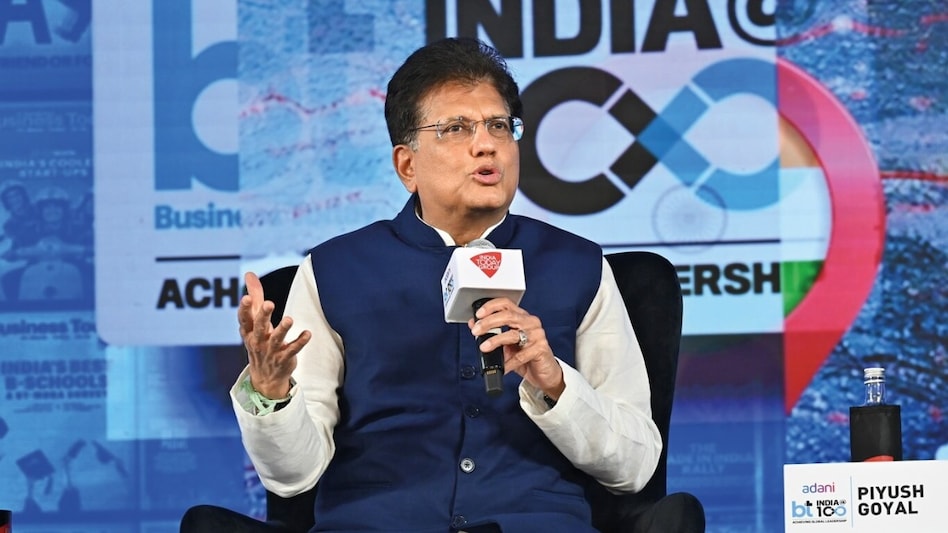
- Nov 28, 2025,
- Updated Nov 28, 2025 3:16 PM IST
India is in active discussions with approximately 50 individual countries and groupings to advance trade agreements, as confirmed by Commerce and Industry Minister Piyush Goyal during an event on Friday. These negotiations span a wide geographical spectrum, including major economies and regional blocs.
India's approach includes talks with several major blocs. The Gulf Cooperation Council (GCC), comprising Saudi Arabia, UAE, Qatar, Kuwait, Oman, and Bahrain, has expressed collective interest. Of these, India already has a comprehensive trade agreement implemented with the UAE, while discussions with Oman are approaching completion. Bahrain and Qatar have also signalled readiness to commence negotiations.
Goyal highlighted, "The whole six-nation group would like to engage. We are talking to New Zealand...We are in active discussions with the US and with the 27-nation EU," during the FICCI annual general meeting.
Negotiations with the United States are progressing, with six rounds completed for a bilateral trade agreement. Both countries aim to finalise the first phase of the agreement by the autumn of this year.
India is also reviewing existing trade pacts with the ten-member ASEAN bloc and with South Korea to achieve a greater balance within those agreements. ASEAN's member countries – Brunei, Cambodia, Indonesia, Laos, Malaysia, Myanmar, the Philippines, Singapore, Thailand, and Vietnam – have been longstanding trade partners under previous arrangements.
Further negotiations are under way with the Eurasian Economic Union (EAEU), which consists of Russia, Armenia, Belarus, Kazakhstan, and Kyrgyzstan. As of August 20, India and the EAEU signed terms of reference to guide their agreement discussions. According to the minister, "We are working with Eurasia (EAEU), which has started negotiations yesterday or the day before yesterday. We are equally engaged to start negotiations very quickly with Israel. Canada and India are looking at CEPA (comprehensive economic partnership agreement). Next week, they are going to start a conversation around that."
Elsewhere, India and Canada have agreed to resume negotiations on a comprehensive economic partnership agreement, with a mutual target of increasing bilateral trade to $50 billion by 2030, following the pause in talks in 2023.
The South African Customs Union (SACU) – comprising South Africa, Namibia, Botswana, Lesotho, and Eswatini – and the Mercosur bloc of Brazil, Argentina, Uruguay, and Paraguay have also indicated willingness to open formal negotiations with India.
The minister underscored India's strategy of associating with what he described as 'trusted' partners to fortify economic relations. He stated, "We have all seen trade being weaponised. We have all seen the importance of having trusted partners around the world," adding that India is currently engaged with a total of about 50 countries and groups in ongoing talks.
India has already implemented comprehensive trade agreements with several countries including Singapore, Japan, Korea, Malaysia, and Australia. These agreements typically focus on reducing or eliminating import duties and facilitating investment and the movement of professionals.
India is in active discussions with approximately 50 individual countries and groupings to advance trade agreements, as confirmed by Commerce and Industry Minister Piyush Goyal during an event on Friday. These negotiations span a wide geographical spectrum, including major economies and regional blocs.
India's approach includes talks with several major blocs. The Gulf Cooperation Council (GCC), comprising Saudi Arabia, UAE, Qatar, Kuwait, Oman, and Bahrain, has expressed collective interest. Of these, India already has a comprehensive trade agreement implemented with the UAE, while discussions with Oman are approaching completion. Bahrain and Qatar have also signalled readiness to commence negotiations.
Goyal highlighted, "The whole six-nation group would like to engage. We are talking to New Zealand...We are in active discussions with the US and with the 27-nation EU," during the FICCI annual general meeting.
Negotiations with the United States are progressing, with six rounds completed for a bilateral trade agreement. Both countries aim to finalise the first phase of the agreement by the autumn of this year.
India is also reviewing existing trade pacts with the ten-member ASEAN bloc and with South Korea to achieve a greater balance within those agreements. ASEAN's member countries – Brunei, Cambodia, Indonesia, Laos, Malaysia, Myanmar, the Philippines, Singapore, Thailand, and Vietnam – have been longstanding trade partners under previous arrangements.
Further negotiations are under way with the Eurasian Economic Union (EAEU), which consists of Russia, Armenia, Belarus, Kazakhstan, and Kyrgyzstan. As of August 20, India and the EAEU signed terms of reference to guide their agreement discussions. According to the minister, "We are working with Eurasia (EAEU), which has started negotiations yesterday or the day before yesterday. We are equally engaged to start negotiations very quickly with Israel. Canada and India are looking at CEPA (comprehensive economic partnership agreement). Next week, they are going to start a conversation around that."
Elsewhere, India and Canada have agreed to resume negotiations on a comprehensive economic partnership agreement, with a mutual target of increasing bilateral trade to $50 billion by 2030, following the pause in talks in 2023.
The South African Customs Union (SACU) – comprising South Africa, Namibia, Botswana, Lesotho, and Eswatini – and the Mercosur bloc of Brazil, Argentina, Uruguay, and Paraguay have also indicated willingness to open formal negotiations with India.
The minister underscored India's strategy of associating with what he described as 'trusted' partners to fortify economic relations. He stated, "We have all seen trade being weaponised. We have all seen the importance of having trusted partners around the world," adding that India is currently engaged with a total of about 50 countries and groups in ongoing talks.
India has already implemented comprehensive trade agreements with several countries including Singapore, Japan, Korea, Malaysia, and Australia. These agreements typically focus on reducing or eliminating import duties and facilitating investment and the movement of professionals.