
India-Israel FTA soon? Here's what's on the table, which goods could benefit, next round of negotiations, and more
PM Modi added that both countries could finalise a mutually beneficial free trade agreement soon.
- Feb 27, 2026,
- Updated Feb 27, 2026 8:03 AM IST
Prime Minister Narendra Modi said on Thursday that the bilateral ties between India and Israel have stood the test of time, adding that the two countries have elevated their bilateral relationship to a special strategic partnership. PM Modi added that both countries could finalise a mutually beneficial free trade agreement soon.
He also announced the establishment of a "Critical and Emerging Technology Partnership" to deepen cooperation in the tech and innovation sectors.
“Our ties have stood the test of time. Our economic cooperation continues to serve as an engine of growth, innovation, and shared prosperity. Last year, we signed a Bilateral Investment Agreement to promote mutual investments. We will also soon finalise a mutually beneficial Free Trade Agreement,” Modi said at the joint briefing.
India and Israel began the first round of negotiations on the proposed FTA in New Delhi on Tuesday. Union Commerce Minister Piyush Goyal met the Israeli delegation and said that both countries should work closely to unlock new opportunities in trade, innovation, and growth.
He also encouraged both sides to strive towards a modern, comprehensive, and future-ready trade agreement, according to a Commerce Ministry statement. In November 2025, the two countries signed the terms of reference (ToR) to launch the negotiations formally.
What all is on the table?
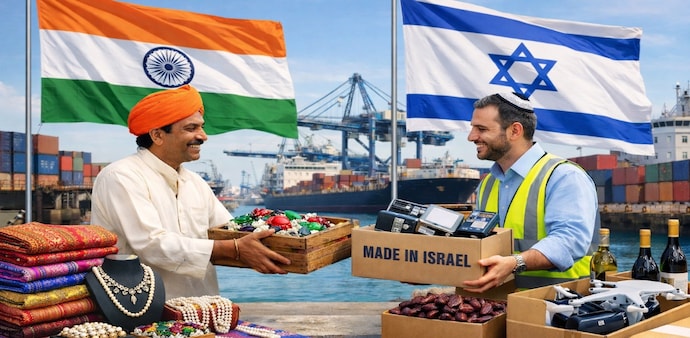
India and Israel are discussing the substantial reduction or elimination of import duties on a range of Indian exports, including textiles, apparel, pearls, precious stones, automotive diesel, chemical and mineral products, plastics, and agricultural goods.
"Total merchandise trade between the two countries stood at USD 3.62 billion in FY 2024-2025. India and Israel share complementarities across several sectors, and the FTA will be a catalyst to further enhance the bilateral trade by providing certainty and predictability to businesses, including MSMEs," the Commerce Ministry said.
Israeli exports that could benefit include high-tech machinery, medical devices, electronic equipment, fertilisers, and defence-related equipment, news agency PTI reported. Besides this, the FTA aims to ease the mobility of Indian professionals in high-skill sectors such as AI, data science, and hi-tech.
The negotiations also include "rules of origin", sanitary and phytosanitary measures for food safety, technical barriers to trade, customs procedures and trade facilitation, intellectual property rights, etc.
What does the terms of reference include?
It includes provisions for market access for goods by removing tariff and non-tariff barriers, investment facilitation, simplified customs procedures, enhanced cooperation in innovation and technology transfer and easing of norms to boost trade in services.
Next round of negotiations
India and Israel will conduct the next round of negotiations on the proposed FTA in May in Israel. The officials will continue virtual engagements between the formal rounds of negotiations to maintain momentum.
Prime Minister Narendra Modi said on Thursday that the bilateral ties between India and Israel have stood the test of time, adding that the two countries have elevated their bilateral relationship to a special strategic partnership. PM Modi added that both countries could finalise a mutually beneficial free trade agreement soon.
He also announced the establishment of a "Critical and Emerging Technology Partnership" to deepen cooperation in the tech and innovation sectors.
“Our ties have stood the test of time. Our economic cooperation continues to serve as an engine of growth, innovation, and shared prosperity. Last year, we signed a Bilateral Investment Agreement to promote mutual investments. We will also soon finalise a mutually beneficial Free Trade Agreement,” Modi said at the joint briefing.
India and Israel began the first round of negotiations on the proposed FTA in New Delhi on Tuesday. Union Commerce Minister Piyush Goyal met the Israeli delegation and said that both countries should work closely to unlock new opportunities in trade, innovation, and growth.
He also encouraged both sides to strive towards a modern, comprehensive, and future-ready trade agreement, according to a Commerce Ministry statement. In November 2025, the two countries signed the terms of reference (ToR) to launch the negotiations formally.
What all is on the table?
India and Israel are discussing the substantial reduction or elimination of import duties on a range of Indian exports, including textiles, apparel, pearls, precious stones, automotive diesel, chemical and mineral products, plastics, and agricultural goods.
"Total merchandise trade between the two countries stood at USD 3.62 billion in FY 2024-2025. India and Israel share complementarities across several sectors, and the FTA will be a catalyst to further enhance the bilateral trade by providing certainty and predictability to businesses, including MSMEs," the Commerce Ministry said.
Israeli exports that could benefit include high-tech machinery, medical devices, electronic equipment, fertilisers, and defence-related equipment, news agency PTI reported. Besides this, the FTA aims to ease the mobility of Indian professionals in high-skill sectors such as AI, data science, and hi-tech.
The negotiations also include "rules of origin", sanitary and phytosanitary measures for food safety, technical barriers to trade, customs procedures and trade facilitation, intellectual property rights, etc.
What does the terms of reference include?
It includes provisions for market access for goods by removing tariff and non-tariff barriers, investment facilitation, simplified customs procedures, enhanced cooperation in innovation and technology transfer and easing of norms to boost trade in services.
Next round of negotiations
India and Israel will conduct the next round of negotiations on the proposed FTA in May in Israel. The officials will continue virtual engagements between the formal rounds of negotiations to maintain momentum.