
India may agree to limited agriculture access in broader US trade agreement: Report
According to a Reuters report, India has agreed to purchase petroleum, defence equipment and aircraft from the United States, while also partially opening its tightly regulated agriculture sector under a trade agreement.
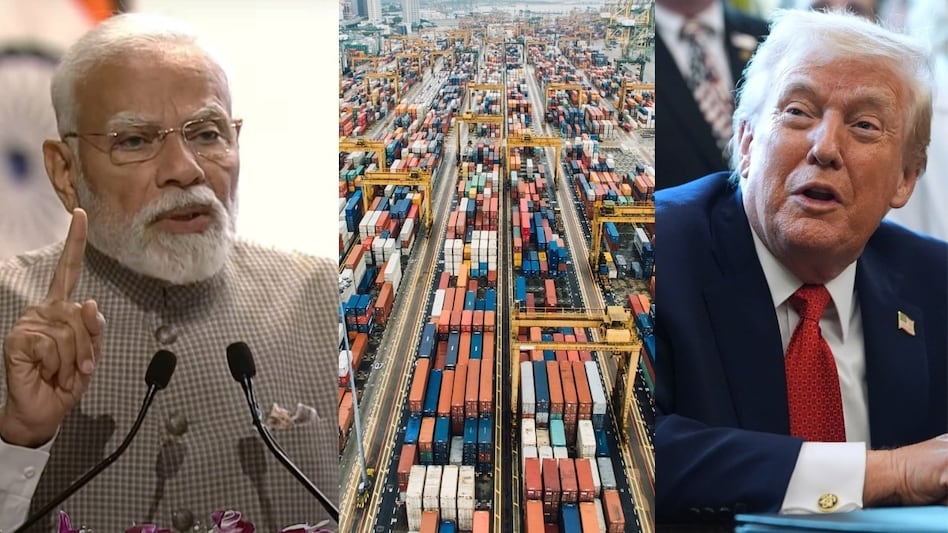
- Feb 3, 2026,
- Updated Feb 3, 2026 2:05 PM IST
Indian and the US officials have announced a comprehensive trade agreement, with Washington slashing tariffs on Indian goods to 18%. The deal, revealed on Monday, includes India’s substantial commitment to purchase US goods worth over $500 billion. Stakeholders on both sides indicated that the agreement covers a range of strategic sectors, such as petroleum, defence, electronics, pharmaceuticals, telecom products, and aircraft. The reduction of tariffs and increased market access for American products are expected to impact both economies significantly.
What the deal covers
According to a Reuters report, India has agreed to purchase petroleum, defence equipment and aircraft from the United States, while also partially opening its tightly regulated agriculture sector under a trade agreement, a government official said, as both sides move to ease months of strained relations.
The official, who requested anonymity, said India has committed to buying a range of U.S. goods, including telecom equipment and pharmaceuticals, and has offered limited market access for certain agricultural products as part of New Delhi’s obligations under the deal.
India has recently extended similar, selective access for agricultural products to the European Union under a separate trade agreement.
To meet Washington’s immediate demands and push toward concluding the first tranche of the U.S.–India trade deal, India has also reduced tariffs on imported cars, the official added.
On the agricultural front, US secretary of agriculture Brooke Rollins stated, "New US-India deal will export more American farm products to India's massive market, lifting prices, and pumping cash into rural America." Rollins further pointed to the commercial implications, noting, "In 2024, America's agricultural trade deficit with India was $1.3 billion. India's growing population is an important market for American agricultural products and today's deal will go a long way to reducing this deficit," highlighting the mutual economic benefits anticipated by both parties.
Leaders welcome development
PM Narendra Modi welcomed the development, describing himself as "delighted" by the reduced tariffs and emphasising the importance of partnership. In his official statement, Modi remarked, "leadership is vital for global peace, stability, and prosperity." He further expressed optimism about future collaboration, stating, "I look forward to working closely with him to take our partnership to unprecedented heights."
US President Donald Trump characterised the agreement as India’s commitment to "buying more than $500 billion worth" of American goods. This announcement follows a period of tariff disputes and negotiation, aiming to reset relations and foster mutual economic growth. Indian government officials confirmed that the purchases would span multiple sectors, including defence and energy, further diversifying India’s imports from the United States.
Experts react
Experts on international trade noted the strategic significance of the agreement. The phrase "Deal Is A Key Priority For Both Sides" was echoed by analysts, reflecting the bilateral focus on comprehensive economic engagement. The trade package is viewed as a response to recent tensions and as a pathway towards more stable economic relations between India and the United States.
Tariff changes form a central part of the agreement, with President Trump stating that tariffs on Indian goods would be cut to 18%, down from previous rates of up to 50%. He declared that India would also reduce import taxes on US goods to zero. Trump underscored the geopolitical dimension of the agreement, stating, "This will help END THE WAR in Ukraine, which is taking place right now, with thousands of people dying each and every week!" linking the trade deal to broader international efforts.
India’s exports to the United States increased 15.88% year-on-year to $85.5 billion during the January–November period, while imports from the U.S. totalled $46.08 billion.
Both governments have signalled that negotiations will continue towards a more comprehensive trade arrangement, potentially covering additional sectors in future talks. The agreement is widely viewed as a significant move in strengthening economic ties and resetting the tone of India-US trade relations.
Indian and the US officials have announced a comprehensive trade agreement, with Washington slashing tariffs on Indian goods to 18%. The deal, revealed on Monday, includes India’s substantial commitment to purchase US goods worth over $500 billion. Stakeholders on both sides indicated that the agreement covers a range of strategic sectors, such as petroleum, defence, electronics, pharmaceuticals, telecom products, and aircraft. The reduction of tariffs and increased market access for American products are expected to impact both economies significantly.
What the deal covers
According to a Reuters report, India has agreed to purchase petroleum, defence equipment and aircraft from the United States, while also partially opening its tightly regulated agriculture sector under a trade agreement, a government official said, as both sides move to ease months of strained relations.
The official, who requested anonymity, said India has committed to buying a range of U.S. goods, including telecom equipment and pharmaceuticals, and has offered limited market access for certain agricultural products as part of New Delhi’s obligations under the deal.
India has recently extended similar, selective access for agricultural products to the European Union under a separate trade agreement.
To meet Washington’s immediate demands and push toward concluding the first tranche of the U.S.–India trade deal, India has also reduced tariffs on imported cars, the official added.
On the agricultural front, US secretary of agriculture Brooke Rollins stated, "New US-India deal will export more American farm products to India's massive market, lifting prices, and pumping cash into rural America." Rollins further pointed to the commercial implications, noting, "In 2024, America's agricultural trade deficit with India was $1.3 billion. India's growing population is an important market for American agricultural products and today's deal will go a long way to reducing this deficit," highlighting the mutual economic benefits anticipated by both parties.
Leaders welcome development
PM Narendra Modi welcomed the development, describing himself as "delighted" by the reduced tariffs and emphasising the importance of partnership. In his official statement, Modi remarked, "leadership is vital for global peace, stability, and prosperity." He further expressed optimism about future collaboration, stating, "I look forward to working closely with him to take our partnership to unprecedented heights."
US President Donald Trump characterised the agreement as India’s commitment to "buying more than $500 billion worth" of American goods. This announcement follows a period of tariff disputes and negotiation, aiming to reset relations and foster mutual economic growth. Indian government officials confirmed that the purchases would span multiple sectors, including defence and energy, further diversifying India’s imports from the United States.
Experts react
Experts on international trade noted the strategic significance of the agreement. The phrase "Deal Is A Key Priority For Both Sides" was echoed by analysts, reflecting the bilateral focus on comprehensive economic engagement. The trade package is viewed as a response to recent tensions and as a pathway towards more stable economic relations between India and the United States.
Tariff changes form a central part of the agreement, with President Trump stating that tariffs on Indian goods would be cut to 18%, down from previous rates of up to 50%. He declared that India would also reduce import taxes on US goods to zero. Trump underscored the geopolitical dimension of the agreement, stating, "This will help END THE WAR in Ukraine, which is taking place right now, with thousands of people dying each and every week!" linking the trade deal to broader international efforts.
India’s exports to the United States increased 15.88% year-on-year to $85.5 billion during the January–November period, while imports from the U.S. totalled $46.08 billion.
Both governments have signalled that negotiations will continue towards a more comprehensive trade arrangement, potentially covering additional sectors in future talks. The agreement is widely viewed as a significant move in strengthening economic ties and resetting the tone of India-US trade relations.