
India needs to raise investment rate to 34-35% of GDP for faster growth: Economist Surjit Bhalla
India's current investment-to-GDP ratio of around 28-30% would support long-term growth of about 6.5%, says economist Surjit Bhalla
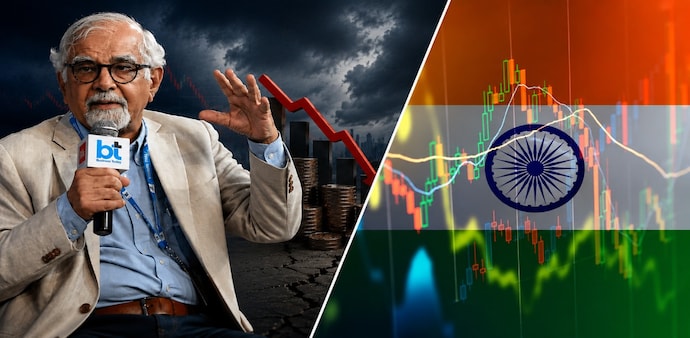
- Aug 31, 2026,
- Updated Aug 31, 2026 11:47 PM IST
India needs to significantly raise its investment rate and revive private investment if it wants to accelerate economic growth, economist Surjit Bhalla said on Monday.
Bhalla, who has also served as Executive Director for India at the International Monetary Fund (IMF), said India's current investment-to-GDP ratio of around 28-30% would support long-term growth of about 6.5%.
India's economy grew 7.8% in the first quarter of FY27.
Must Read: Global headwinds no bar: India's Q1 GDP surges 7.8% as investment & services fire on all cylinders
Investment Rate Key To Growth
"The most important policy that has been tried and tested in India and every other country in the world is that the investment rate," Bhalla said while speaking to news agency ANI.
He said India would need to raise the investment rate to around 34-35% of GDP to accelerate growth. "Now, some years you get 7%, some years you get 7.5, some years, we get even 8," Bhalla said.
The noted economist pointed to the 2004-2013 period, when India sustained an investment rate of around 34% and recorded higher economic growth.
Bhalla said the effectiveness of investment also depends on global conditions. "If global conditions are very favorable, then you may want that you can achieve a higher growth rate with a lower rate of investment," he said. "But if the global conditions are as they are now and may even get worse, then you definitely need to step up the investment rate."
In Case You Missed It: India's Manufacturing Majors: The Companies Building at Scale
Private Investment Has Declined
According to Bhalla, India's overall investment rate had remained relatively high, but its composition had changed sharply.
Private investment, he said, has declined by around 5-7 percentage points since 2011-12.
"We've had a higher investment rate. As I said, 28 to 30. But the composition has changed radically," Bhalla said.
He said a larger share of investment now comes from the government, particularly infrastructure investment, rather than private companies.
"Private investment around the world, again, in decade after decade, century after century, has a higher productivity than government investment," Bhalla said. "Because government investment is in infrastructure, and infrastructure at that time you get a boost, but its returns are low."
The economist said government investment in infrastructure was necessary and could provide an initial boost, but private investment was important for productivity gains and sustainable long-term growth. "You need government investment, but for productivity gains as well as long-term growth sustainability, you need private investment," he said.
"The private investment has declined by something like 5 to 7 percentage points since 2011-12. And that's a big gap, and unless we restore that gap, we cannot accelerate the growth rate," Bhalla added.
India needs to significantly raise its investment rate and revive private investment if it wants to accelerate economic growth, economist Surjit Bhalla said on Monday.
Bhalla, who has also served as Executive Director for India at the International Monetary Fund (IMF), said India's current investment-to-GDP ratio of around 28-30% would support long-term growth of about 6.5%.
India's economy grew 7.8% in the first quarter of FY27.
Must Read: Global headwinds no bar: India's Q1 GDP surges 7.8% as investment & services fire on all cylinders
Investment Rate Key To Growth
"The most important policy that has been tried and tested in India and every other country in the world is that the investment rate," Bhalla said while speaking to news agency ANI.
He said India would need to raise the investment rate to around 34-35% of GDP to accelerate growth. "Now, some years you get 7%, some years you get 7.5, some years, we get even 8," Bhalla said.
The noted economist pointed to the 2004-2013 period, when India sustained an investment rate of around 34% and recorded higher economic growth.
Bhalla said the effectiveness of investment also depends on global conditions. "If global conditions are very favorable, then you may want that you can achieve a higher growth rate with a lower rate of investment," he said. "But if the global conditions are as they are now and may even get worse, then you definitely need to step up the investment rate."
In Case You Missed It: India's Manufacturing Majors: The Companies Building at Scale
Private Investment Has Declined
According to Bhalla, India's overall investment rate had remained relatively high, but its composition had changed sharply.
Private investment, he said, has declined by around 5-7 percentage points since 2011-12.
"We've had a higher investment rate. As I said, 28 to 30. But the composition has changed radically," Bhalla said.
He said a larger share of investment now comes from the government, particularly infrastructure investment, rather than private companies.
"Private investment around the world, again, in decade after decade, century after century, has a higher productivity than government investment," Bhalla said. "Because government investment is in infrastructure, and infrastructure at that time you get a boost, but its returns are low."
The economist said government investment in infrastructure was necessary and could provide an initial boost, but private investment was important for productivity gains and sustainable long-term growth. "You need government investment, but for productivity gains as well as long-term growth sustainability, you need private investment," he said.
"The private investment has declined by something like 5 to 7 percentage points since 2011-12. And that's a big gap, and unless we restore that gap, we cannot accelerate the growth rate," Bhalla added.