
India-US interim trade agreement: 'No GM modified product allowed, agri sector protected,' says Piyush Goyal
He also said that the interests of India's farmers and dairy sector have been protected in the agreement.
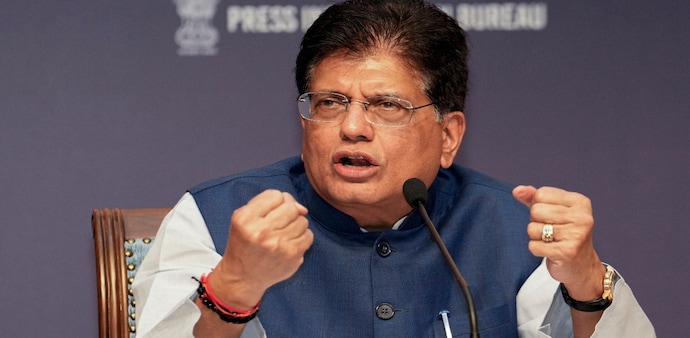
- Feb 7, 2026,
- Updated Feb 7, 2026 2:50 PM IST
Union Commerce Minister Piyush Goyal said on Saturday that no GM-modified product will come from the US to India. He also said that the interests of India's farmers and dairy sector have been protected in the agreement.
Goyal confirmed that most agricultural products, including wheat, rice, and oil seeds, will be exported to the US at zero per cent tariff. "Considering how the interests of our farmers have been protected, the interests of farmers and the dairy sector have been protected," said Goyal.
The Union Minister said that India has protected dairy, meat, poultry, soyabean, maize, rice, wheat, sugar, jowar, bajra, ragi, amarnath, banana, strawberry, cherries, citrus fruits, green tea, kabuli chana, moong, oil seeds, ethanol, and tobacco.
Other goods on which the reciprocal tariff would go down to zero per cent include coffee, coconut, coconut oil, vegetable wax, chestnut, cashew nut, avocados, banana, guava, mango, kiwi, papaya, pineapple, shiitake mushroom, vegetable plating material, barley, canary seeds, few bakery products made of cocoa and sesame seeds.
He further noted that export duties on several goods, including smartphones and pharmaceutical products, would go down to zero. He added that tariffs would also go down to zero on aircraft parts, machinery and parts, elementary parts, gems and diamonds, coins, platinum, generic pharmaceuticals, clocks and watches, and essential oils.
Certain minerals and natural resources would also attract 0 per cent tariffs. Besides this, the Minister mentioned that there is zero duty for Indian silk exports to the US.
He also said that India has the lowest tariff among all its neighbouring nations.
"Eighteen per cent is lower than the tariffs imposed by all our neighbouring countries and other countries with whom we compete, and this will greatly benefit us and our exporters in the coming days."
Speaking on the trade deal, Goyal said that the negotiations between the two countries began in February 2025. He added that the objective was to achieve a bilateral trade of $500 billion between India and the US annually.
"It seems that in the coming days, new opportunities will open up, and the United States of America, the world's largest economy, an economy of approximately thirty trillion dollars, will now open up to our exporters with most-favoured-nation status," he said.
Meanwhile, US tariffs on India stand at 25 per cent as of now and will go down to 18 per cent in 2-3 days, sources within the government told Business Today TV. They added that an executive order is expected in March with a list of all products with concessions.
The sources also hailed exemptions for generic pharmaceuticals and aircraft parts under section 232 as a "big win". They added that with this joint statement, India is expecting its exports to the US to reach $300 billion.
Union Commerce Minister Piyush Goyal said on Saturday that no GM-modified product will come from the US to India. He also said that the interests of India's farmers and dairy sector have been protected in the agreement.
Goyal confirmed that most agricultural products, including wheat, rice, and oil seeds, will be exported to the US at zero per cent tariff. "Considering how the interests of our farmers have been protected, the interests of farmers and the dairy sector have been protected," said Goyal.
The Union Minister said that India has protected dairy, meat, poultry, soyabean, maize, rice, wheat, sugar, jowar, bajra, ragi, amarnath, banana, strawberry, cherries, citrus fruits, green tea, kabuli chana, moong, oil seeds, ethanol, and tobacco.
Other goods on which the reciprocal tariff would go down to zero per cent include coffee, coconut, coconut oil, vegetable wax, chestnut, cashew nut, avocados, banana, guava, mango, kiwi, papaya, pineapple, shiitake mushroom, vegetable plating material, barley, canary seeds, few bakery products made of cocoa and sesame seeds.
He further noted that export duties on several goods, including smartphones and pharmaceutical products, would go down to zero. He added that tariffs would also go down to zero on aircraft parts, machinery and parts, elementary parts, gems and diamonds, coins, platinum, generic pharmaceuticals, clocks and watches, and essential oils.
Certain minerals and natural resources would also attract 0 per cent tariffs. Besides this, the Minister mentioned that there is zero duty for Indian silk exports to the US.
He also said that India has the lowest tariff among all its neighbouring nations.
"Eighteen per cent is lower than the tariffs imposed by all our neighbouring countries and other countries with whom we compete, and this will greatly benefit us and our exporters in the coming days."
Speaking on the trade deal, Goyal said that the negotiations between the two countries began in February 2025. He added that the objective was to achieve a bilateral trade of $500 billion between India and the US annually.
"It seems that in the coming days, new opportunities will open up, and the United States of America, the world's largest economy, an economy of approximately thirty trillion dollars, will now open up to our exporters with most-favoured-nation status," he said.
Meanwhile, US tariffs on India stand at 25 per cent as of now and will go down to 18 per cent in 2-3 days, sources within the government told Business Today TV. They added that an executive order is expected in March with a list of all products with concessions.
The sources also hailed exemptions for generic pharmaceuticals and aircraft parts under section 232 as a "big win". They added that with this joint statement, India is expecting its exports to the US to reach $300 billion.