
India-US relations poised to withstand 50% tariff pressure, affirms Commerce minister Piyush Goyal
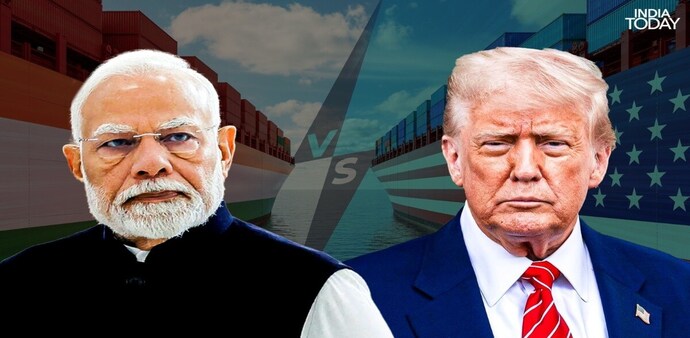
The tariffs, imposed as part of broader measures by the Trump administration, have reached a significant 50%, targeting India's trade practices, particularly its oil commerce with Russia. Despite these challenges, Goyal said he is hopeful.
- Sep 4, 2025,
- Updated Sep 4, 2025 9:25 PM IST
Union Minister Piyush Goyal has expressed confidence in the resilience of India-US relations despite recent strains caused by increased tariffs. As the two countries continue negotiations on a bilateral trade agreement (BTA), Goyal underscored the enduring strength of the partnership, even amid current geopolitical challenges. His remarks followed a period of heightened tensions after the United States imposed substantial tariffs on Indian goods, citing trade imbalances and India's continued oil imports from Russia.
The minister highlighted the ongoing discussions, noting that the bilateral trade agreement could be finalised by November. This comes after former President Donald Trump's criticisms of India's trade with Russia, which he called "a one-sided disaster." Negotiations have been underway since March, encompassing five rounds, yet recent developments saw the US double tariffs to 50% in late August, further complicating the dialogue.
Goyal remains optimistic about the potential for overcoming these hurdles. "There will be occasions when there may be certain blips in the relationship, but I think it's a very strong relationship. It can weather many storms and will continue to be a strategic friendship," he stated.
Discussing the broader context of trade negotiations, Goyal emphasised India's active engagement with multiple global partners. "We have finalised free-trade agreements with Mauritius, the UAE, Australia, European Free Trade Association (EFTA) members – Iceland, Liechtenstein, Norway, and Switzerland. We have been in negotiations with the 27-nation European Union, the UK," he noted. This underscores India's strategy to diversify its trade relationships amidst evolving global dynamics.
Amid these developments, Goyal pointed out that "a little bit" of geopolitical issues have overshadowed trade matters in negotiations with the US. Despite these challenges, he remains hopeful about concluding the BTA, illustrating India's commitment to maintaining robust international trade ties.
Reflecting on past challenges, Goyal drew parallels to previous instances of diplomatic tensions, such as during India’s nuclear tests in 1998, which led to US sanctions. "The US and India have been friends and allies for decades, but it has had its moments. For example, when we did the nuclear tests (Pokran-II) in 1998, the United States had put sanctions on India. But we were able to weather that storm," he recalled. Such historical context offers a perspective on the enduring nature of India-US relations.
The recent imposition of tariffs is part of broader US actions against several countries, with India specifically facing a total of 50% tariffs following its decision to maintain oil trade with Russia. These measures have caused a temporary setback in relations, but both countries continue to engage in dialogue to find common ground.
While the talks have seen delays, Goyal remains proactive about advancing India's trade interests worldwide. "There is so much happening and each relationship has its own strengths," he remarked, indicating optimism for future bilateral and multilateral engagements. This sentiment is reflective of India's broader trade strategy, which seeks to balance geopolitical influences with economic objectives.
Union Minister Piyush Goyal has expressed confidence in the resilience of India-US relations despite recent strains caused by increased tariffs. As the two countries continue negotiations on a bilateral trade agreement (BTA), Goyal underscored the enduring strength of the partnership, even amid current geopolitical challenges. His remarks followed a period of heightened tensions after the United States imposed substantial tariffs on Indian goods, citing trade imbalances and India's continued oil imports from Russia.
The minister highlighted the ongoing discussions, noting that the bilateral trade agreement could be finalised by November. This comes after former President Donald Trump's criticisms of India's trade with Russia, which he called "a one-sided disaster." Negotiations have been underway since March, encompassing five rounds, yet recent developments saw the US double tariffs to 50% in late August, further complicating the dialogue.
Goyal remains optimistic about the potential for overcoming these hurdles. "There will be occasions when there may be certain blips in the relationship, but I think it's a very strong relationship. It can weather many storms and will continue to be a strategic friendship," he stated.
Discussing the broader context of trade negotiations, Goyal emphasised India's active engagement with multiple global partners. "We have finalised free-trade agreements with Mauritius, the UAE, Australia, European Free Trade Association (EFTA) members – Iceland, Liechtenstein, Norway, and Switzerland. We have been in negotiations with the 27-nation European Union, the UK," he noted. This underscores India's strategy to diversify its trade relationships amidst evolving global dynamics.
Amid these developments, Goyal pointed out that "a little bit" of geopolitical issues have overshadowed trade matters in negotiations with the US. Despite these challenges, he remains hopeful about concluding the BTA, illustrating India's commitment to maintaining robust international trade ties.
Reflecting on past challenges, Goyal drew parallels to previous instances of diplomatic tensions, such as during India’s nuclear tests in 1998, which led to US sanctions. "The US and India have been friends and allies for decades, but it has had its moments. For example, when we did the nuclear tests (Pokran-II) in 1998, the United States had put sanctions on India. But we were able to weather that storm," he recalled. Such historical context offers a perspective on the enduring nature of India-US relations.
The recent imposition of tariffs is part of broader US actions against several countries, with India specifically facing a total of 50% tariffs following its decision to maintain oil trade with Russia. These measures have caused a temporary setback in relations, but both countries continue to engage in dialogue to find common ground.
While the talks have seen delays, Goyal remains proactive about advancing India's trade interests worldwide. "There is so much happening and each relationship has its own strengths," he remarked, indicating optimism for future bilateral and multilateral engagements. This sentiment is reflective of India's broader trade strategy, which seeks to balance geopolitical influences with economic objectives.