
'Mother of all reforms...': Arvind Panagariya says new labour codes end decades of rigid, job-stifling rules
The replacement of 29 archaic labour laws with four unified codes marks a significant reform in India’s regulatory landscape, expected to attract larger investments and create job opportunities.
- Nov 22, 2025,
- Updated Nov 22, 2025 12:27 PM IST
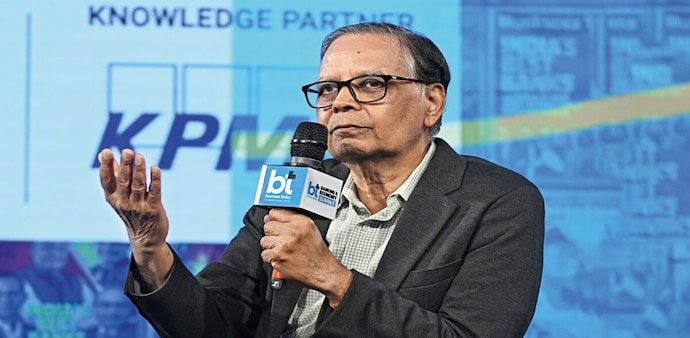
Arvind Panagariya, Chairman of the 16th Finance Commission, called the rollout of India’s four labour codes the “Mother of all reforms,” arguing that decades of rigid labour laws had hindered the creation of productive factory jobs and kept workers in low-productivity sectors.
His remarks came as the government implemented the most sweeping reset of India’s labour system since Independence on November 21, 2025. The four codes—covering wages, industrial relations, social security, and occupational safety and health—replace 29 separate laws and establish a unified, modern framework to govern the country’s workforce.
In a column in a newspaper, Panagariya said this shift represents a substantial reform in the country’s approach to labour regulation, aiming to modernise the legal framework governing employment and industry. The move is expected to benefit employers and workers alike by removing outdated restrictions and simplifying compliance, with the broader goal of fostering a more business-friendly environment and spurring job creation.
He said the consolidation of these laws eliminates regulatory bottlenecks that previously discouraged investment and entrepreneurship. The new unified codes are seen as a strategic step toward enabling larger factories and manufacturing units to operate with greater flexibility, particularly in states willing to further relax labour provisions. Such states may become more attractive destinations for substantial investments and industrial activity.
Government officials have noted that this action aligns with India’s broader economic objectives. They argue that a modernised labour system is crucial for supporting the country’s aspirations to become a global manufacturing hub. The unified codes are anticipated to help streamline operations for businesses, especially those looking to scale up production and employment.
He furthe said the previous 29 regulations were often criticised for their complexity and rigidity, which many viewed as barriers to economic dynamism. By junking these archaic and anti-entrepreneurship laws, the government seeks to remove hurdles that have historically hampered both investment and job growth. The current reform is, therefore, positioned as a decisive intervention in India’s ongoing economic transformation.
The new labour codes are the result of a sustained policy push, with the government having faced calls for modernisation for several decades. For advocates of reform, this development represents the culmination of years of debate and analysis on the need to align India’s regulatory structure with contemporary economic realities.
Analysts expect that both employers and employees will benefit from the enhanced clarity and simplicity of the new codes. The expectation is that these reforms will reduce compliance burdens on businesses while ensuring workers’ rights are better defined and protected within a streamlined legal framework.
State-level implementation remains a critical factor for the overall success of the new labour codes. Observers anticipate that states making additional relaxations within the framework of the new codes could enjoy a competitive advantage in attracting investment and generating employment opportunities, especially in large-scale manufacturing.
The replacement of the old laws lays the foundation for continued reform and economic growth. By moving away from outdated regulations towards a unified and simpler legal environment, India aims to create conditions conducive to sustained industrial expansion and enhanced job creation across the country.
Arvind Panagariya, Chairman of the 16th Finance Commission, called the rollout of India’s four labour codes the “Mother of all reforms,” arguing that decades of rigid labour laws had hindered the creation of productive factory jobs and kept workers in low-productivity sectors.
His remarks came as the government implemented the most sweeping reset of India’s labour system since Independence on November 21, 2025. The four codes—covering wages, industrial relations, social security, and occupational safety and health—replace 29 separate laws and establish a unified, modern framework to govern the country’s workforce.
In a column in a newspaper, Panagariya said this shift represents a substantial reform in the country’s approach to labour regulation, aiming to modernise the legal framework governing employment and industry. The move is expected to benefit employers and workers alike by removing outdated restrictions and simplifying compliance, with the broader goal of fostering a more business-friendly environment and spurring job creation.
He said the consolidation of these laws eliminates regulatory bottlenecks that previously discouraged investment and entrepreneurship. The new unified codes are seen as a strategic step toward enabling larger factories and manufacturing units to operate with greater flexibility, particularly in states willing to further relax labour provisions. Such states may become more attractive destinations for substantial investments and industrial activity.
Government officials have noted that this action aligns with India’s broader economic objectives. They argue that a modernised labour system is crucial for supporting the country’s aspirations to become a global manufacturing hub. The unified codes are anticipated to help streamline operations for businesses, especially those looking to scale up production and employment.
He furthe said the previous 29 regulations were often criticised for their complexity and rigidity, which many viewed as barriers to economic dynamism. By junking these archaic and anti-entrepreneurship laws, the government seeks to remove hurdles that have historically hampered both investment and job growth. The current reform is, therefore, positioned as a decisive intervention in India’s ongoing economic transformation.
The new labour codes are the result of a sustained policy push, with the government having faced calls for modernisation for several decades. For advocates of reform, this development represents the culmination of years of debate and analysis on the need to align India’s regulatory structure with contemporary economic realities.
Analysts expect that both employers and employees will benefit from the enhanced clarity and simplicity of the new codes. The expectation is that these reforms will reduce compliance burdens on businesses while ensuring workers’ rights are better defined and protected within a streamlined legal framework.
State-level implementation remains a critical factor for the overall success of the new labour codes. Observers anticipate that states making additional relaxations within the framework of the new codes could enjoy a competitive advantage in attracting investment and generating employment opportunities, especially in large-scale manufacturing.
The replacement of the old laws lays the foundation for continued reform and economic growth. By moving away from outdated regulations towards a unified and simpler legal environment, India aims to create conditions conducive to sustained industrial expansion and enhanced job creation across the country.