
India's new oil security plan: Half of ONGC's Mangaluru storage to be kept as strategic reserve
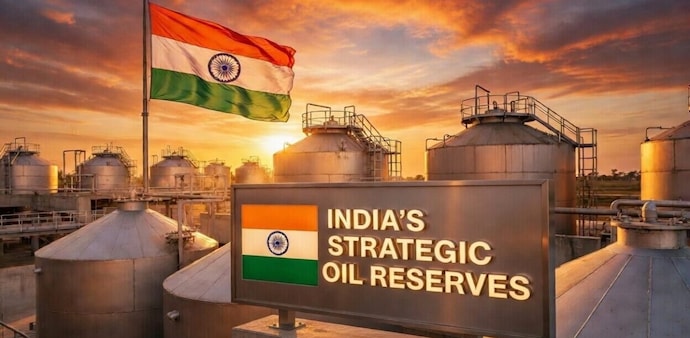
The upcoming Mangaluru facility will have a total storage capacity of 1.75 million tonnes, with half of it reserved as strategic petroleum reserves (SPR). The project is being fully funded by ONGC
- Aug 3, 2026,
- Updated Aug 3, 2026 8:29 PM IST
The Centre on Monday said half of the 1.75 million-tonne petroleum storage facility being developed by state-run Oil and Natural Gas Corporation (ONGC) at Mangaluru will be earmarked for India's strategic petroleum reserves. The remaining capacity will be used for commercial operations.
Replying to a question in the Rajya Sabha, Minister of State for Petroleum and Natural Gas Suresh Gopi said the facility will strengthen India's energy security while also supporting commercial storage operations.
The upcoming Mangaluru facility will have a total storage capacity of 1.75 million tonnes, with half of it reserved as strategic petroleum reserves (SPR). The project is being fully funded by ONGC.
Don't Miss: 'India needs much larger oil reserves': Montek Singh Ahluwalia as Hormuz crisis returns
INDIA'S EXISTING STRATEGIC RESERVES
The minister said the government, through Indian Strategic Petroleum Reserve Limited (ISPRL), has already established Phase-I strategic petroleum reserve facilities with a combined capacity of 5.33 million tonnes of crude oil.
These include: Visakhapatnam 1.33 million tonnes; Mangaluru 1.5 million tonnes; and Padur (Karnataka) 2.5 million tonnes.
Beyond these underground reserves, India also maintains crude oil and petroleum product storage across its broader energy infrastructure. This includes offshore facilities, refineries, pipeline systems spanning more than 35,000 km, terminals and above-ground storage tanks.
"Collectively, India holds a national capacity for storage of crude oil and petroleum products equivalent to meet 74 days of its net crude import requirement," Gopi said.
Don't Miss: India mulls national reserve policy to raise crude storage capacity to 100-150 days: Industry sources
EXPANSION UNDERWAY
The Union Cabinet had approved in July 2021 two additional commercial-cum-strategic petroleum reserve projects with a combined storage capacity of 6.5 million tonnes in Odisha and Karnataka.
The minister said the government is continuously assessing new locations for setting up additional strategic petroleum reserves.
WHY STRATEGIC RESERVES ARE BACK IN FOCUS
The issue of India's strategic petroleum reserves gained attention during the Strait of Hormuz crisis. The closure of the strait disrupted oil supply from Gulf countries and pushed global prices higher.
While India did not witness any shortage, there were concerns about the country's emergency crude stockpiles and energy security.
Former Planning Commission Deputy Chairman Montek Singh Ahluwalia, during an interview recently, argued that the Hormuz crisis underscored the need for India to build significantly larger strategic reserves under its own control rather than relying on global emergency supplies.
"In this particular case, the crisis was a global crisis. There was a shortage everywhere, and the international strategic reserves were being used. But it's possible that we might face a crisis that just affects us. For that, you can't necessarily rely on international reserves," Ahluwalia said in a conversation with Nidhi Razdan for DeKoder.
"So, we need much larger Indian reserves under Indian control. And that basically means building up storage capacity in different parts of the country," he added.
The Centre on Monday said half of the 1.75 million-tonne petroleum storage facility being developed by state-run Oil and Natural Gas Corporation (ONGC) at Mangaluru will be earmarked for India's strategic petroleum reserves. The remaining capacity will be used for commercial operations.
Replying to a question in the Rajya Sabha, Minister of State for Petroleum and Natural Gas Suresh Gopi said the facility will strengthen India's energy security while also supporting commercial storage operations.
The upcoming Mangaluru facility will have a total storage capacity of 1.75 million tonnes, with half of it reserved as strategic petroleum reserves (SPR). The project is being fully funded by ONGC.
Don't Miss: 'India needs much larger oil reserves': Montek Singh Ahluwalia as Hormuz crisis returns
INDIA'S EXISTING STRATEGIC RESERVES
The minister said the government, through Indian Strategic Petroleum Reserve Limited (ISPRL), has already established Phase-I strategic petroleum reserve facilities with a combined capacity of 5.33 million tonnes of crude oil.
These include: Visakhapatnam 1.33 million tonnes; Mangaluru 1.5 million tonnes; and Padur (Karnataka) 2.5 million tonnes.
Beyond these underground reserves, India also maintains crude oil and petroleum product storage across its broader energy infrastructure. This includes offshore facilities, refineries, pipeline systems spanning more than 35,000 km, terminals and above-ground storage tanks.
"Collectively, India holds a national capacity for storage of crude oil and petroleum products equivalent to meet 74 days of its net crude import requirement," Gopi said.
Don't Miss: India mulls national reserve policy to raise crude storage capacity to 100-150 days: Industry sources
EXPANSION UNDERWAY
The Union Cabinet had approved in July 2021 two additional commercial-cum-strategic petroleum reserve projects with a combined storage capacity of 6.5 million tonnes in Odisha and Karnataka.
The minister said the government is continuously assessing new locations for setting up additional strategic petroleum reserves.
WHY STRATEGIC RESERVES ARE BACK IN FOCUS
The issue of India's strategic petroleum reserves gained attention during the Strait of Hormuz crisis. The closure of the strait disrupted oil supply from Gulf countries and pushed global prices higher.
While India did not witness any shortage, there were concerns about the country's emergency crude stockpiles and energy security.
Former Planning Commission Deputy Chairman Montek Singh Ahluwalia, during an interview recently, argued that the Hormuz crisis underscored the need for India to build significantly larger strategic reserves under its own control rather than relying on global emergency supplies.
"In this particular case, the crisis was a global crisis. There was a shortage everywhere, and the international strategic reserves were being used. But it's possible that we might face a crisis that just affects us. For that, you can't necessarily rely on international reserves," Ahluwalia said in a conversation with Nidhi Razdan for DeKoder.
"So, we need much larger Indian reserves under Indian control. And that basically means building up storage capacity in different parts of the country," he added.