


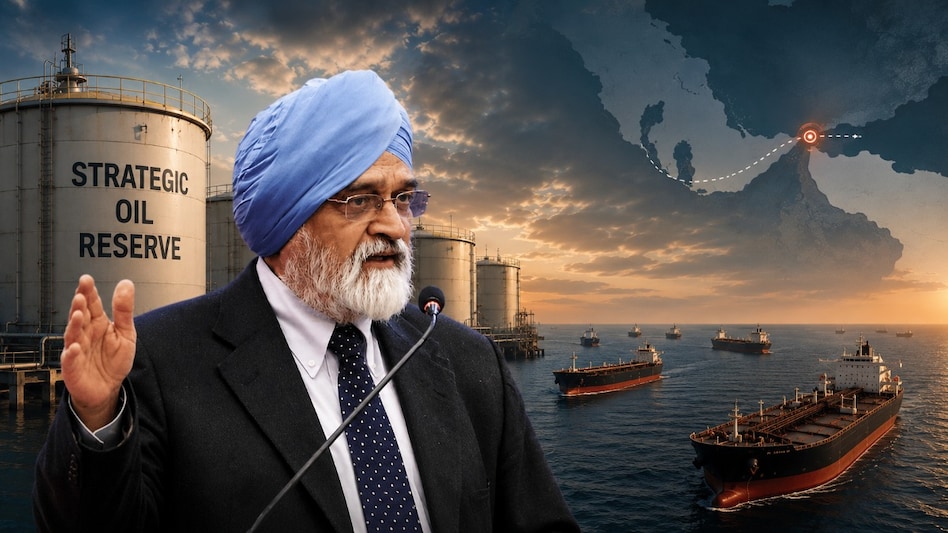
 India needs more strategic oil storage under its own control, says Montek Singh Ahluwalia
Former Planning Commission Deputy Chairman Montek Singh Ahluwalia has said India must significantly expand its strategic petroleum reserves under its own control. He argues that the West Asia crisis shows the risks of relying on concentrated supply routes and limited emergency stockpiles.
"In this particular case, the crisis was a global crisis. There was a shortage everywhere, and the international strategic reserves were being used. But it's possible that we might face a crisis that just affects us. For that, you can't necessarily rely on international reserves," the eminent economist said in a conversation with Nidhi Razdan for DeKoder.

 FM Sitharaman: Need to keep building resilience, not a one time exercise
  ‘Next financial crisis may not start in a bank’: Sanjay Malhotra flags new systemic risks amid global shocks
 Nayara Energy hikes fuel prices: Petrol up Rs 5, diesel Rs 3 amid crude, retail fuel losses
 'US took 100 years, India needs just one decade to develop': Nara Lokesh at Pan-IIT AP Summit 2026
 US faces G20 pushback on excess capacity, forced labour as trade divisions widen
 Is Now the Best Time to Invest in Bonds? RBI Rate Hike Impact Explained
 Bond Laddering Explained: How To Manage Interest Rate Risk & Keep Your Money Flexible
 Market Correction: Which Sectors Could Hold Up as Global Risks Pressure Indian Stocks?
 5-10 Year Wealth Creation: How Should Investors Build Their Long-Term Portfolio?
 How Much Should You Invest In Bonds At Different Stages Of Life? 20/60 Investing Rule Explained
 Stock market sell-off: Nifty, Sensex log 8th straight weekly loss; key levels & top triggers now
 IPO boom: 69 Indian companies raise Rs 90,500 crore in Q3 despite stock market sell-off; what's next
 TCS, Infosys, HCL Tech, TechM, Wipro, LTM, Coforge, HEXT: Fresh target, Q2 previews for IT stocks
 Carlsberg India IPO: SEBI approves confidential filing; beer maker moves closer to listing
 Suzlon, KPIT Tech, RIL, IRFC, HDFC Bank, Infy: 56% Nifty500 stocks in bear grip amid market sell-off
 Asian Games 2026: India’s men’s hockey team wins gold, books place at LA Olympics 2028
 India’s R&D gap: FM Sitharaman says ₹1 lakh crore scheme must boost private-sector innovation
 ‘Big relief’ for online gaming: Sanjit Bangar flags sharp GST demand cuts, no director penalties
 Captain Smit Machchhar hailed as 'Captain courageous': Shah Rukh Khan, Ranveer Singh and Bollywood stars praise pilotIs Now the Best Time to Invest in Bonds? RBI Rate Hike Impact Explained












