
'Judicial system is in an unbelievable mess': Montek Singh Ahluwalia calls for urgent reform
Unfortunately, I don't think the central government can set it right, says Montek Singh Ahluwalia
- Aug 24, 2026,
- Updated Aug 24, 2026 3:17 PM IST
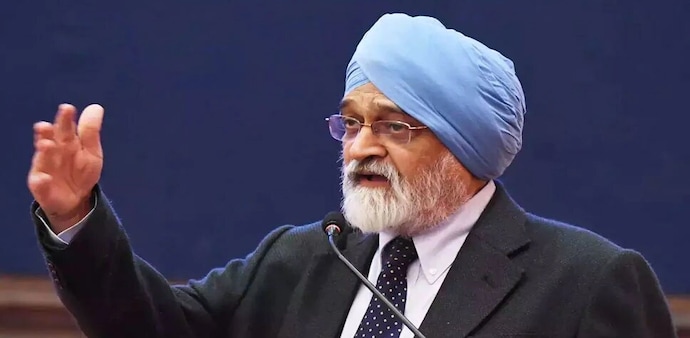
India's judicial system is "in an unbelievable mess" and reform may have to be led by the Supreme Court rather than the central government, former Planning Commission Deputy Chairman Montek Singh Ahluwalia has said.
In an interview with ThePrint, Ahluwalia, who played a key role in India’s 1991 economic reforms, was asked whether land and judicial reforms were the need of the hour, as the mounting number of pending court cases was hurting medium-sized industries.
The noted economist said land and judicial reforms remained important, but the Centre had limited ability to fix the judicial system.
"Quite honestly, the judicial system is in an unbelievable mess. Unfortunately, I don't think the central government can set it right. Given the system we have, that reform has to come out of the judiciary," Ahluwalia said.
"I may be wrong on this, but this is not something that the prime minister can sign off on. So, I don't know who should take the lead. Maybe the Supreme Court should take the lead and do it," he added.
Don't Miss: 'India needs much larger oil reserves': Montek Singh Ahluwalia as Hormuz crisis returns
In September last year, Sanjeev Sanyal, member of the Prime Minister's Economic Advisory Council (EAC), said the judicial system had become the biggest obstacle to the country's goal of becoming a developed economy.
"We have somewhere between 20-25 years to become Viksit Bharat," Sanyal said during his speech at the Nyaya Nirmaan 2025 conference. "The judicial system and the legal ecosystem, but the judicial system in particular, is now, in my view, the single biggest hurdle to becoming Viksit Bharat and growing rapidly."
Over 11 Lakh Cases Pending For 20 Years
Last month, Union Minister of State for Law and Justice Arjun Ram Meghwal informed that 11,73,509 cases had been pending for more than 20 years across the Supreme Court, High Courts, and district and subordinate courts. The numbers were based on National Judicial Data Grid data as of July 16, 2026.
The Allahabad High Court had the highest number of cases pending for more than 20 years, with 1,61,598 cases. Across the SC and High Courts, 4,52,152 cases had been pending for more than two decades.
Separately, Supreme Court judge Justice MM Sundresh had said in April that 4.81 crore cases were pending across courts in the country.
'We Haven't Made Much Change In Labour Laws'
On labour reforms, Ahluwalia said the government had reduced the number of central labour laws from 27 to four, but argued that the substantive changes were limited.
One major change, he said, was the threshold for requiring government permission before reducing a company's workforce. The threshold was raised from 100 workers to 300.
The eminent economist, however, noted that the threshold had been reduced from 300 to 100 in 1980.
"What has been done now in the year 2026 is we've brought the law back to where it was in 1990," he said.
However, Ahuluwalia credited the Centre for giving states greater flexibility under the new framework. He said the law states that if a state government wants more flexibility and brings in a law to take this threshold beyond 300, the Centre will agree.
'Lobby State Governments'
Ahluwalia said states should use the flexibility to make themselves more attractive to investors. If a state wants to compete with Vietnam, Malaysia, or Indonesia for foreign investment, it should consider adopting comparable labour rules, he said.
"If I were in any state, I would say, look, if you want to be competitive and attract foreign investment, you should be able to say, 'Look, I'm better than Vietnam, better than Malaysia, and better than Indonesia. I should have comparable labour laws.’ So why don't we, as a state, raise the threshold from 300 to 1,000 or even 5,000?"
The economist suggested states could raise the threshold to 1,000 or even 5,000 workers. "I would strongly advise some state governments to do that," he said.
Ahluwalia also urged the industry to focus more on state governments rather than concentrating its lobbying efforts in New Delhi.
"I think more people, industry in particular, need to, now, start lobbying state governments. They're used to lobbying the central government. At the end of the budget, they have these discussions. They should realise that half the compliances that businesses have to go through are state government compliances, not central government."
India's judicial system is "in an unbelievable mess" and reform may have to be led by the Supreme Court rather than the central government, former Planning Commission Deputy Chairman Montek Singh Ahluwalia has said.
In an interview with ThePrint, Ahluwalia, who played a key role in India’s 1991 economic reforms, was asked whether land and judicial reforms were the need of the hour, as the mounting number of pending court cases was hurting medium-sized industries.
The noted economist said land and judicial reforms remained important, but the Centre had limited ability to fix the judicial system.
"Quite honestly, the judicial system is in an unbelievable mess. Unfortunately, I don't think the central government can set it right. Given the system we have, that reform has to come out of the judiciary," Ahluwalia said.
"I may be wrong on this, but this is not something that the prime minister can sign off on. So, I don't know who should take the lead. Maybe the Supreme Court should take the lead and do it," he added.
Don't Miss: 'India needs much larger oil reserves': Montek Singh Ahluwalia as Hormuz crisis returns
In September last year, Sanjeev Sanyal, member of the Prime Minister's Economic Advisory Council (EAC), said the judicial system had become the biggest obstacle to the country's goal of becoming a developed economy.
"We have somewhere between 20-25 years to become Viksit Bharat," Sanyal said during his speech at the Nyaya Nirmaan 2025 conference. "The judicial system and the legal ecosystem, but the judicial system in particular, is now, in my view, the single biggest hurdle to becoming Viksit Bharat and growing rapidly."
Over 11 Lakh Cases Pending For 20 Years
Last month, Union Minister of State for Law and Justice Arjun Ram Meghwal informed that 11,73,509 cases had been pending for more than 20 years across the Supreme Court, High Courts, and district and subordinate courts. The numbers were based on National Judicial Data Grid data as of July 16, 2026.
The Allahabad High Court had the highest number of cases pending for more than 20 years, with 1,61,598 cases. Across the SC and High Courts, 4,52,152 cases had been pending for more than two decades.
Separately, Supreme Court judge Justice MM Sundresh had said in April that 4.81 crore cases were pending across courts in the country.
'We Haven't Made Much Change In Labour Laws'
On labour reforms, Ahluwalia said the government had reduced the number of central labour laws from 27 to four, but argued that the substantive changes were limited.
One major change, he said, was the threshold for requiring government permission before reducing a company's workforce. The threshold was raised from 100 workers to 300.
The eminent economist, however, noted that the threshold had been reduced from 300 to 100 in 1980.
"What has been done now in the year 2026 is we've brought the law back to where it was in 1990," he said.
However, Ahuluwalia credited the Centre for giving states greater flexibility under the new framework. He said the law states that if a state government wants more flexibility and brings in a law to take this threshold beyond 300, the Centre will agree.
'Lobby State Governments'
Ahluwalia said states should use the flexibility to make themselves more attractive to investors. If a state wants to compete with Vietnam, Malaysia, or Indonesia for foreign investment, it should consider adopting comparable labour rules, he said.
"If I were in any state, I would say, look, if you want to be competitive and attract foreign investment, you should be able to say, 'Look, I'm better than Vietnam, better than Malaysia, and better than Indonesia. I should have comparable labour laws.’ So why don't we, as a state, raise the threshold from 300 to 1,000 or even 5,000?"
The economist suggested states could raise the threshold to 1,000 or even 5,000 workers. "I would strongly advise some state governments to do that," he said.
Ahluwalia also urged the industry to focus more on state governments rather than concentrating its lobbying efforts in New Delhi.
"I think more people, industry in particular, need to, now, start lobbying state governments. They're used to lobbying the central government. At the end of the budget, they have these discussions. They should realise that half the compliances that businesses have to go through are state government compliances, not central government."