
Retail inflation in June rises to 4.81%; May IIP at three-month high of 5.2%
The govt has tasked RBI to ensure retail inflation remains at 4% with a margin of 2% on either side
- Jul 12, 2023,
- Updated Jul 12, 2023 7:43 PM IST
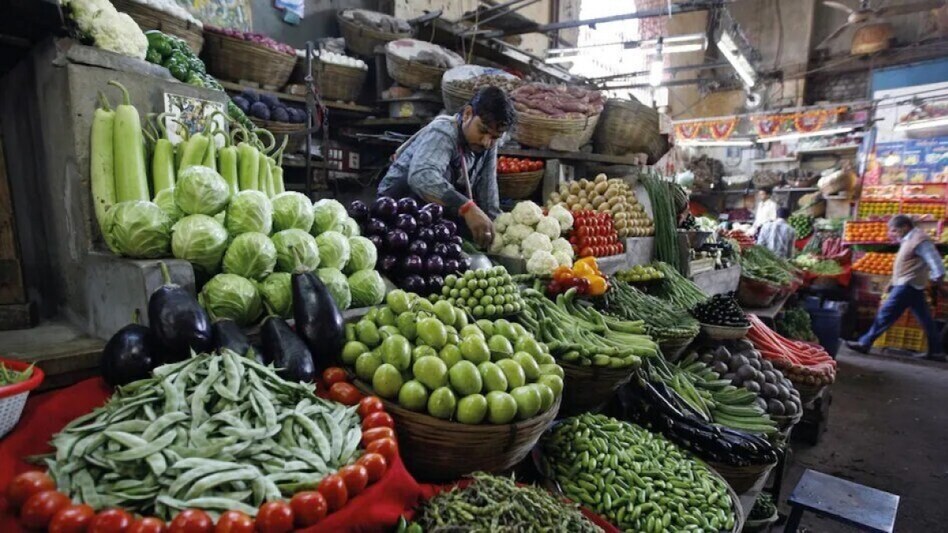
With vegetable prices registering a sharp spike, retail inflation rose marginally in June after falling for four straight months. However, industrial output rose to a three-month high of 5.2% in May, giving some comfort amidst expectations of slower economic growth this fiscal.
According to official data released on Wednesday, consumer price index (CPI) based inflation rose to 4.81% year on year in June from 4.31% in May. Retail inflation was higher at 7.01% in June 2022.
Consumer food price inflation surged to 4.49% in June from 2.96% in May. Retail inflation in the food and beverages basket also rose sharply to 4.63% in June driven by higher inflation in not only vegetables but also cereals (12.71%), eggs (7.03%), milk (8.56%), pulses (10.53%) and spices (19.19%). The major concern was vegetables where deflation moved from -8.18% in May to region last month to -0.93% in June.
With tomato prices surging, economists believe that retail inflation will rise further in July. “The food basket is beginning to bite,” said Madan Sabnavis, chief economist, Bank of Baroda. “Inflation at 4.8% is higher than our forecast of 4.5% and clearly the path ahead looks grim given the progress of monsoon and the spread across key areas in the Deccan Plateau region,” he said.
Aditi Nayar, Chief Economist, Head - Research & Outreach, ICRA said the spike in vegetable prices is set to push the CPI inflation to an uncomfortable 5.3-5.5% in July 2023. “We expect the vegetable price shock to result in the Q2 FY2024 CPI inflation exceeding the MPC's last forecast of 5.2%,” she said.
Retail inflation in miscellaneous items also rose to 5.19% in June as against 4.84% in May. However, other sub groups of clothing and footwear (6.19%), housing (4.56%), and fuel and light (3.92%) recorded a decline in June.
Core inflation remained stable at 5.2% in the month but remains relatively high compared to the comfort level of the monetary policy committee of the Reserve Bank of India.
Meanwhile, the index of industrial production expanded 5.2% in May as against 4.5% in April with all three sectors recording positive growth. IIP expanded at a much sharper pace of 19.7% in May 2022, which was due to the base effect post the Covid 19 pandemic.
In May 2023, the mining sector grew by 6.4%, manufacturing expanded by 5.7% while electricity generation grew by a modest 0.9%.
Robust growth was also registered amongst use based industries barring consumer durable and intermediate goods that saw almost flat growth at 1.1% and 1.6% respectively.
Construction goods grew by the sharpest pace at 14% in May 2023 followed by capital goods that expanded by 8.2%. Consumer non-durables grew 7.6% in the month while primary goods grew by 3.5%.
“On the whole it is a mixed bag, with infra oriented sectors doing better. We still need to see consumer spending increasing,” Sabnavis said.
India Ratings & Research said, going forward, IIP is expected to grow at a modest pace in the near term as indicated by high frequency indicators such as coal production, power demand, steel production, sustained government capex and expected stabilisation of inflation around 5%. “Overall, the agency expects the IIP to be range bound at 5% year on year in June 2023,” said its economists Paras Jasrai and Devendra Kumar Pant.
While the RBI is expected to maintain a pause on further rate hikes in the next policy review, rising prices could be an additional factor to be monitored. “There isn't much RBI can do in the food supply management but this adds pressure on them to stay vigilant on domestic dynamics. Global externalities have already pressed them to signal a wait-and-watch guidance and the transient food spike will only complicate their reaction function,” said Madhavi Arora, Lead Economist, Emkay Global Financial Services.
With vegetable prices registering a sharp spike, retail inflation rose marginally in June after falling for four straight months. However, industrial output rose to a three-month high of 5.2% in May, giving some comfort amidst expectations of slower economic growth this fiscal.
According to official data released on Wednesday, consumer price index (CPI) based inflation rose to 4.81% year on year in June from 4.31% in May. Retail inflation was higher at 7.01% in June 2022.
Consumer food price inflation surged to 4.49% in June from 2.96% in May. Retail inflation in the food and beverages basket also rose sharply to 4.63% in June driven by higher inflation in not only vegetables but also cereals (12.71%), eggs (7.03%), milk (8.56%), pulses (10.53%) and spices (19.19%). The major concern was vegetables where deflation moved from -8.18% in May to region last month to -0.93% in June.
With tomato prices surging, economists believe that retail inflation will rise further in July. “The food basket is beginning to bite,” said Madan Sabnavis, chief economist, Bank of Baroda. “Inflation at 4.8% is higher than our forecast of 4.5% and clearly the path ahead looks grim given the progress of monsoon and the spread across key areas in the Deccan Plateau region,” he said.
Aditi Nayar, Chief Economist, Head - Research & Outreach, ICRA said the spike in vegetable prices is set to push the CPI inflation to an uncomfortable 5.3-5.5% in July 2023. “We expect the vegetable price shock to result in the Q2 FY2024 CPI inflation exceeding the MPC's last forecast of 5.2%,” she said.
Retail inflation in miscellaneous items also rose to 5.19% in June as against 4.84% in May. However, other sub groups of clothing and footwear (6.19%), housing (4.56%), and fuel and light (3.92%) recorded a decline in June.
Core inflation remained stable at 5.2% in the month but remains relatively high compared to the comfort level of the monetary policy committee of the Reserve Bank of India.
Meanwhile, the index of industrial production expanded 5.2% in May as against 4.5% in April with all three sectors recording positive growth. IIP expanded at a much sharper pace of 19.7% in May 2022, which was due to the base effect post the Covid 19 pandemic.
In May 2023, the mining sector grew by 6.4%, manufacturing expanded by 5.7% while electricity generation grew by a modest 0.9%.
Robust growth was also registered amongst use based industries barring consumer durable and intermediate goods that saw almost flat growth at 1.1% and 1.6% respectively.
Construction goods grew by the sharpest pace at 14% in May 2023 followed by capital goods that expanded by 8.2%. Consumer non-durables grew 7.6% in the month while primary goods grew by 3.5%.
“On the whole it is a mixed bag, with infra oriented sectors doing better. We still need to see consumer spending increasing,” Sabnavis said.
India Ratings & Research said, going forward, IIP is expected to grow at a modest pace in the near term as indicated by high frequency indicators such as coal production, power demand, steel production, sustained government capex and expected stabilisation of inflation around 5%. “Overall, the agency expects the IIP to be range bound at 5% year on year in June 2023,” said its economists Paras Jasrai and Devendra Kumar Pant.
While the RBI is expected to maintain a pause on further rate hikes in the next policy review, rising prices could be an additional factor to be monitored. “There isn't much RBI can do in the food supply management but this adds pressure on them to stay vigilant on domestic dynamics. Global externalities have already pressed them to signal a wait-and-watch guidance and the transient food spike will only complicate their reaction function,” said Madhavi Arora, Lead Economist, Emkay Global Financial Services.