
Bessent's big reveal: 'I asked Europe to impose secondary tariffs on India, but they refused'
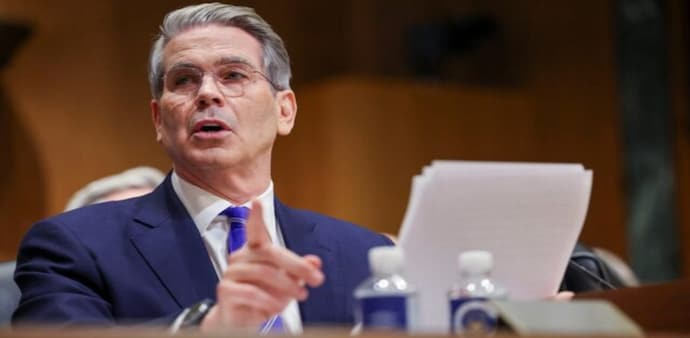
Bessent said he had personally approached European allies earlier this year to seek coordinated economic pressure on countries buying Russian energy
- Oct 18, 2026,
- Updated Oct 18, 2026 10:15 PM IST
US Treasury Secretary Scott Bessent on Sunday said Washington had asked its European allies to impose secondary tariffs on India and China over their purchases of Russian energy, but they refused.
He questioned why the United States should bear the burden of pressuring Moscow when European countries continued to buy Russian energy themselves.
Bessent said he had personally approached European allies earlier this year to seek coordinated economic pressure on countries buying Russian energy.
"So we have asked in the spring, I asked our European allies to join us in putting secondary tariffs on China, on India. They refused," Bessent said while speaking to NBC News' Meet the Press.
"So why should the U.S. bear the burden?" he asked, defending US President Donald Trump's decision to grant temporary exemptions from sanctions and tariffs linked to Russian energy purchases.
Bessent accused European countries of continuing to fund Russia's war in Ukraine through their energy purchases, even as they criticised Washington's approach towards Moscow.
"Let's look what's really happening here, the Europeans have given Russia and Vladimir Putin more money than they have given the Ukrainians," he said.
The treasury secretary claimed that Europe continued to rely heavily on Russian energy despite efforts to isolate Moscow economically.
According to him, 140 energy cargoes departed during the first six months of the year, of which 136 went to European destinations, including Belgium, Spain, France and the Netherlands.
He put the value of those shipments at more than $8 billion. "The Europeans are financing the Russian war machine," Bessent said.
The secretary also claimed that the United States imported $4 billion worth of Russian products, including $1.8 billion in fertilisers, while European imports were more than ten times higher.
Bessent defends Trump's Russian sanctions waiver
Trump signed an executive order on Friday exempting Russia from a new sanctions measure under the Graham Act, which Congress passed last month.
The order also granted waivers from 100% tariffs to the five largest purchasers of Russian oil and gas, including India and China.
The move drew criticism from Ukrainian President Volodymyr Zelenskyy, who described it as a major boost for Russian President Vladimir Putin.
Asked why Trump was easing pressure on Moscow, Bessent argued that the administration had not abandoned sanctions and that the legislation allowed the president 60 days to assess the situation.
"No sanctions were lifted Friday. No sanctions were lifted. There was a 60-day period. The only thing that has been lifted is the diesel embargo," he said.
Bessent also defended Trump's record, saying the US president had sanctioned Russia's two largest energy companies, dealing what he described as a severe blow to the country's energy industry.
"No one has been tougher on Russian sanctions than President Trump," he said.
Rubio says India cannot stop buying Russian oil overnight
On Saturday, US Secretary of State Marco Rubio defended the administration's decision to grant waivers and acknowledged India's continued dependence on Russian energy.
He said global energy markets were under pressure from multiple conflicts, including the war involving Iran, disruptions around the Strait of Hormuz, and Houthi attacks on Saudi Arabia.
Rubio also pointed to attacks on energy infrastructure during the Russia-Ukraine war, saying they were affecting global prices.
"And then you've got countries like India, for example, that have voluntarily diversified their energy portfolio, but are still getting a substantial amount of energy from Russia because it's hard to pivot from one day to the next," he said. "But they're also an important ally and partner of the United States."
US Treasury Secretary Scott Bessent on Sunday said Washington had asked its European allies to impose secondary tariffs on India and China over their purchases of Russian energy, but they refused.
He questioned why the United States should bear the burden of pressuring Moscow when European countries continued to buy Russian energy themselves.
Bessent said he had personally approached European allies earlier this year to seek coordinated economic pressure on countries buying Russian energy.
"So we have asked in the spring, I asked our European allies to join us in putting secondary tariffs on China, on India. They refused," Bessent said while speaking to NBC News' Meet the Press.
"So why should the U.S. bear the burden?" he asked, defending US President Donald Trump's decision to grant temporary exemptions from sanctions and tariffs linked to Russian energy purchases.
Bessent accused European countries of continuing to fund Russia's war in Ukraine through their energy purchases, even as they criticised Washington's approach towards Moscow.
"Let's look what's really happening here, the Europeans have given Russia and Vladimir Putin more money than they have given the Ukrainians," he said.
The treasury secretary claimed that Europe continued to rely heavily on Russian energy despite efforts to isolate Moscow economically.
According to him, 140 energy cargoes departed during the first six months of the year, of which 136 went to European destinations, including Belgium, Spain, France and the Netherlands.
He put the value of those shipments at more than $8 billion. "The Europeans are financing the Russian war machine," Bessent said.
The secretary also claimed that the United States imported $4 billion worth of Russian products, including $1.8 billion in fertilisers, while European imports were more than ten times higher.
Bessent defends Trump's Russian sanctions waiver
Trump signed an executive order on Friday exempting Russia from a new sanctions measure under the Graham Act, which Congress passed last month.
The order also granted waivers from 100% tariffs to the five largest purchasers of Russian oil and gas, including India and China.
The move drew criticism from Ukrainian President Volodymyr Zelenskyy, who described it as a major boost for Russian President Vladimir Putin.
Asked why Trump was easing pressure on Moscow, Bessent argued that the administration had not abandoned sanctions and that the legislation allowed the president 60 days to assess the situation.
"No sanctions were lifted Friday. No sanctions were lifted. There was a 60-day period. The only thing that has been lifted is the diesel embargo," he said.
Bessent also defended Trump's record, saying the US president had sanctioned Russia's two largest energy companies, dealing what he described as a severe blow to the country's energy industry.
"No one has been tougher on Russian sanctions than President Trump," he said.
Rubio says India cannot stop buying Russian oil overnight
On Saturday, US Secretary of State Marco Rubio defended the administration's decision to grant waivers and acknowledged India's continued dependence on Russian energy.
He said global energy markets were under pressure from multiple conflicts, including the war involving Iran, disruptions around the Strait of Hormuz, and Houthi attacks on Saudi Arabia.
Rubio also pointed to attacks on energy infrastructure during the Russia-Ukraine war, saying they were affecting global prices.
"And then you've got countries like India, for example, that have voluntarily diversified their energy portfolio, but are still getting a substantial amount of energy from Russia because it's hard to pivot from one day to the next," he said. "But they're also an important ally and partner of the United States."