
Slowdown will continue to go from 2022 to 2023: World Bank chief economist
According to Dr Ayhan Kose, in the near term, the world will see growth but at the same time will grapple with a steady slowdown after this year’s high growth number.
- Dec 17, 2021,
- Updated Dec 17, 2021 10:36 PM IST
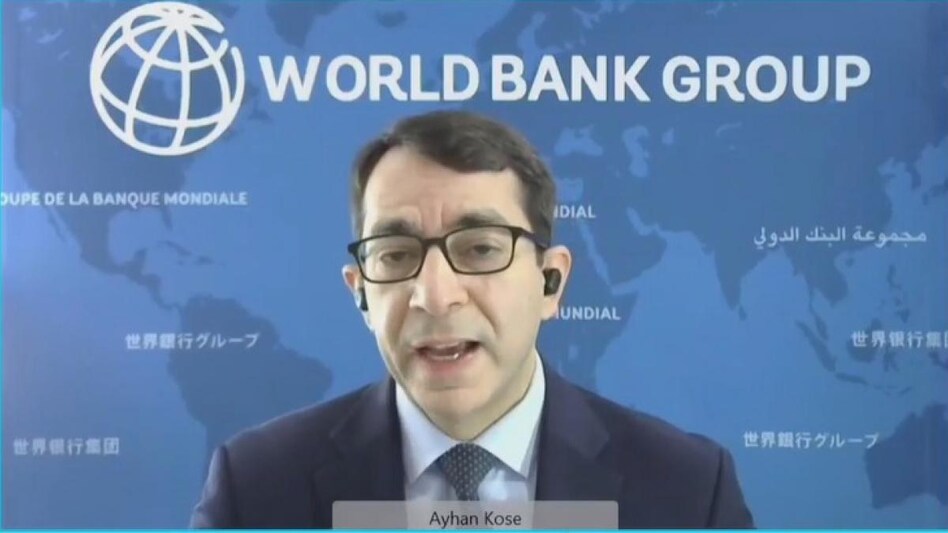
Dr Ayhan Kose, Chief Economist and Director of the Prospects Group in the Equitable Growth, Finance and Institution (EFI) practice group of the World Bank on Friday said that the slowdown will continue going ahead in the future.
“Going from 2022 to 2023, the slowdown will continue, we will see diminishing policy support and we will continue our struggle with supply bottlenecks,” Kose said while speaking at the 94th Annual General Meeting of Industry Body FICCI.
Talking about the prospect of growth in the future, he added that the incoming data is suggesting the moderation of growth at the turn of the year.
“As the incoming data suggest that the growth is moderating at the turn of the year and COVID-19 numbers are increasing again due to Omicron virus. We think the recovery will continue in 2022 but the growth is going to be more,” chief economist of World Bank added.
According to him, in the near term, the world will see growth but at the same time will grapple with a steady slowdown after this year’s high growth number.
Throwing light on the global supply side bottlenecks, Kose added, “Global supply chain was resilient in the early phase of the pandemic but as new strains emerged in 2021, and now we are witnessing a strong demand that has not been matched by similar supply due to pandemic related factory and port shutdown and whether induced logistical bottlenecks and that led to the semiconductor and chipping shortage.”
Clearing the fog around the improvement in global supply chain, Kose said that the recent data suggest little bit of moderation but it's highly likely that these supply bottlenecks will continue throughout the next year.
“May be in the next third or fourth quarter, we will see moderation in these bottlenecks,” Kose added.
Highlighting the problem of sharply increasing global inflation, Kose said that the inflation numbers are quite worrying as of now.
“At the global level, if you will look at the median inflation number, it reads 4.6 per cent, while it was around 1.2 per cent so it is a 3.4 per cent of increase,” Director of the Prospects Group in the Equitable Growth, Finance and Institutions ( EFI) practice group of the World Bank.
Attributing the reasons for a sharp rise in global inflation, Kose added that the demand and supply mismatch played a key role in the sharp increase in the median inflation. He also added that rising energy and food prices will push headline inflation numbers and Kose believes the inflation to stay elevated for the foreseeable future.
Dr Ayhan Kose, Chief Economist and Director of the Prospects Group in the Equitable Growth, Finance and Institution (EFI) practice group of the World Bank on Friday said that the slowdown will continue going ahead in the future.
“Going from 2022 to 2023, the slowdown will continue, we will see diminishing policy support and we will continue our struggle with supply bottlenecks,” Kose said while speaking at the 94th Annual General Meeting of Industry Body FICCI.
Talking about the prospect of growth in the future, he added that the incoming data is suggesting the moderation of growth at the turn of the year.
“As the incoming data suggest that the growth is moderating at the turn of the year and COVID-19 numbers are increasing again due to Omicron virus. We think the recovery will continue in 2022 but the growth is going to be more,” chief economist of World Bank added.
According to him, in the near term, the world will see growth but at the same time will grapple with a steady slowdown after this year’s high growth number.
Throwing light on the global supply side bottlenecks, Kose added, “Global supply chain was resilient in the early phase of the pandemic but as new strains emerged in 2021, and now we are witnessing a strong demand that has not been matched by similar supply due to pandemic related factory and port shutdown and whether induced logistical bottlenecks and that led to the semiconductor and chipping shortage.”
Clearing the fog around the improvement in global supply chain, Kose said that the recent data suggest little bit of moderation but it's highly likely that these supply bottlenecks will continue throughout the next year.
“May be in the next third or fourth quarter, we will see moderation in these bottlenecks,” Kose added.
Highlighting the problem of sharply increasing global inflation, Kose said that the inflation numbers are quite worrying as of now.
“At the global level, if you will look at the median inflation number, it reads 4.6 per cent, while it was around 1.2 per cent so it is a 3.4 per cent of increase,” Director of the Prospects Group in the Equitable Growth, Finance and Institutions ( EFI) practice group of the World Bank.
Attributing the reasons for a sharp rise in global inflation, Kose added that the demand and supply mismatch played a key role in the sharp increase in the median inflation. He also added that rising energy and food prices will push headline inflation numbers and Kose believes the inflation to stay elevated for the foreseeable future.