
To stay ahead, Indian manufacturers are embracing AI
PwC India study finds 59% of manufacturers expect AI to drive strategic growth over the next five years, with automation set to transform factories from the shop floor to customer service
- Jul 29, 2026,
- Updated Jul 29, 2026 6:35 PM IST
A large majority of Indian manufacturers are bullish about the use of artificial intelligence for expansion and growth, a new study by PwC India has revealed.
The survey covered Indian industrial manufacturing entities with revenues ranging from over $50 million to more than $25 billion. It found that Indian industrial manufacturers now show greater ambition toward tech enablement—both currently and in the future—than their global peers.
Don't Miss: How Indian investment overseas is gathering momentum
“59% of Indian industrial manufacturers—compared with 52% globally—believe AI will play a significant role in helping them achieve strategic goals in the next five years,” said the report titled ‘Rewriting the rules: The next chapter of Indian industrial manufacturing’.
Indian manufacturers are also expected to accelerate automation across the value chain over the next five years, led by data capture and analytics (82%), followed by quality assurance (69%), planning and forecasting (65%), and customer interactions (63%).
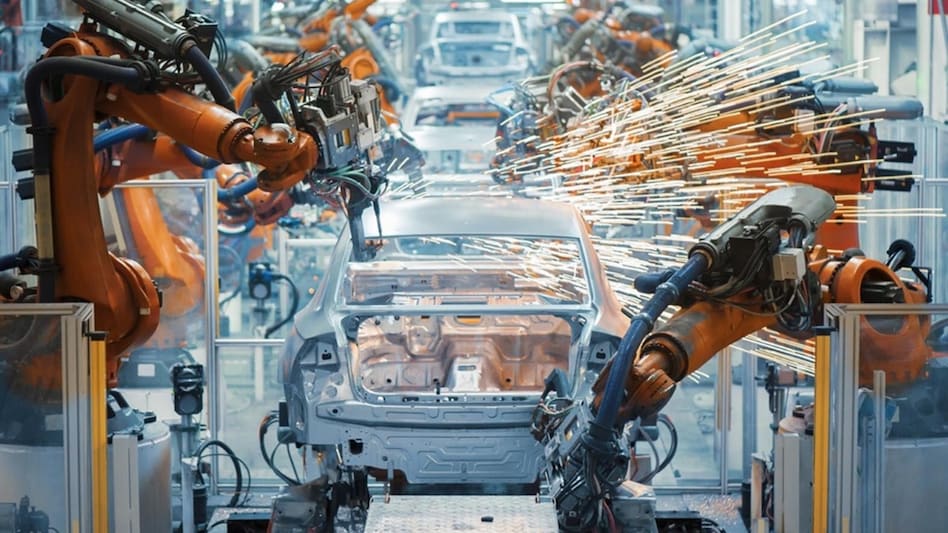
“Rising automation would extend into, and across, all parts of the value chain from front office to back office, and from R&D to the shop floor. By 2030, the proportion of manufacturers with highly automated physical production processes is expected to more than double in comparison to that in 2025,” said the report, which was released on Wednesday.
Vinod Kumar, Partner and Leader, Manufacturing Sector, PwC India, underlined that India’s manufacturing sector is entering a pivotal decade. “The opportunity is no longer simply about expanding production capacity; it is about building intelligent enterprises that use AI, automation, and data-driven decision-making to create sustainable competitive advantage. The manufacturers that thrive will be those that align technology investments with business strategy, workforce transformation, and ecosystem collaboration,” he said.
While Chinese and Indian industrial manufacturers share similar ambitions around automation, their priorities differ, the report said. Indian manufacturers are channelling automation toward customer-facing interactions and reducing friction wherever possible, whereas Chinese manufacturers are more focused on efficiency gains across procurement and shop-floor operations, it noted.
The report also revealed that 57% of Indian industrial manufacturers identify product design and development as the area within their company’s value chain likely to see the largest percentage increase in investment over the next five years. However, only 45% of the Indian executives interviewed identify investment in R&D as a strategic growth action to capture new opportunities, compared with 63% in China and 42% globally.
Moreover, only 39% of Indian executives identify R&D, product development, and product management as one of the top three capabilities that will amplify their companies’ financial performance over the next five years, compared with a staggering 76% in China.
A large majority of Indian manufacturers are bullish about the use of artificial intelligence for expansion and growth, a new study by PwC India has revealed.
The survey covered Indian industrial manufacturing entities with revenues ranging from over $50 million to more than $25 billion. It found that Indian industrial manufacturers now show greater ambition toward tech enablement—both currently and in the future—than their global peers.
Don't Miss: How Indian investment overseas is gathering momentum
“59% of Indian industrial manufacturers—compared with 52% globally—believe AI will play a significant role in helping them achieve strategic goals in the next five years,” said the report titled ‘Rewriting the rules: The next chapter of Indian industrial manufacturing’.
Indian manufacturers are also expected to accelerate automation across the value chain over the next five years, led by data capture and analytics (82%), followed by quality assurance (69%), planning and forecasting (65%), and customer interactions (63%).
“Rising automation would extend into, and across, all parts of the value chain from front office to back office, and from R&D to the shop floor. By 2030, the proportion of manufacturers with highly automated physical production processes is expected to more than double in comparison to that in 2025,” said the report, which was released on Wednesday.
Vinod Kumar, Partner and Leader, Manufacturing Sector, PwC India, underlined that India’s manufacturing sector is entering a pivotal decade. “The opportunity is no longer simply about expanding production capacity; it is about building intelligent enterprises that use AI, automation, and data-driven decision-making to create sustainable competitive advantage. The manufacturers that thrive will be those that align technology investments with business strategy, workforce transformation, and ecosystem collaboration,” he said.
While Chinese and Indian industrial manufacturers share similar ambitions around automation, their priorities differ, the report said. Indian manufacturers are channelling automation toward customer-facing interactions and reducing friction wherever possible, whereas Chinese manufacturers are more focused on efficiency gains across procurement and shop-floor operations, it noted.
The report also revealed that 57% of Indian industrial manufacturers identify product design and development as the area within their company’s value chain likely to see the largest percentage increase in investment over the next five years. However, only 45% of the Indian executives interviewed identify investment in R&D as a strategic growth action to capture new opportunities, compared with 63% in China and 42% globally.
Moreover, only 39% of Indian executives identify R&D, product development, and product management as one of the top three capabilities that will amplify their companies’ financial performance over the next five years, compared with a staggering 76% in China.