
UK-India FTA a significant achievement, says House of Lords International Agreements Committee but flags shortcomings
India and the UK signed the Comprehensive Economic and Trade Agreement (CETA) in July last year following negotiations that took place from 2022 to 2025.
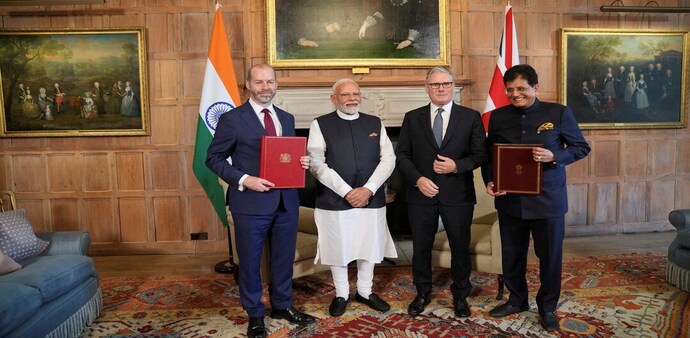
- Feb 3, 2026,
- Updated Feb 3, 2026 7:56 AM IST
Noting that the UK-India Free Trade Agreement (FTA) is a significant achievement, the House of Lords International Agreements Committee of the UK Parliament has however, said that the benefits for UK goods exporters will take some time to materialise. India and the UK signed the Comprehensive Economic and Trade Agreement (CETA) in July last year following negotiations that took place from 2022 to 2025. In its report on the deal, published on Tuesday, the House of Lords International Agreements Committee said that until recently the prospect of concluding an FTA was considered remote. The negotiations took place against a challenging geopolitical backdrop for trade, including US tariffs under President Trump. “We conclude that an FTA in this context is as much about providing stability for businesses and a platform for continued strategic cooperation as it is about offering new market access. India is an important partner for the UK in this respect,” it said. The committee however, highlighted that the deal has several shortcomings.
“Firstly, that the benefits for UK goods exporters will take some time to materialise, rendering the Agreement a longer-term strategic investment for the UK, rather than a quick win,” it said in a statement, adding that in contrast, Indian exporters will have full access to the UK market immediately. Secondly, the committee noted that to get the deal over the line, several key UK interests were disappointingly excluded from the Agreement, including legal services and investment protection. It also raised concerns about the risk that non-tariff barriers, in particular Indian quality control orders, could undermine the objectives of the Agreement. Lord Goldsmith, Chair of the House of Lords International Agreements Committee noted that the UK has reached a landmark deal with a key strategic partner at a time of considerable geopolitical turbulence and welcomed that it is compliant with World Trade Organisation rules, in light of the current challenges to the rules-based international order. “However, we must highlight that in order to get the Agreement over the line, a number of notable UK interests were omitted. For example, legal services were omitted entirely from the text, which we consider a missed opportunity,” he said in the statement. The Government did not succeed in concluding a bilateral investment treaty, he further said. “There is considerable scope for further developing the provisions for services trade and investment facilitation, and the Government should continue to engage with India on these issues,” he said, adding that it also remains to be seen how competitive UK products will remain as India opens its market more broadly, particularly in the context of its very recently signed FTA with the EU. The report further recommended that the government undertake a number of measures to support businesses in using the Agreement, especially small and medium sized enterprises, as well as setting out what increased supporting services will be provided through the High Commission in India and its regional offices. “It should also continue to engage with India to develop the relationship and address barriers to trade,” it said. The committee drew the Agreement to the special attention of the House of Lords, on the grounds that it is politically important and gives rise to issues of public policy. The report is expected to be debated in the House of Lords in early March. The committee was examining the FTA as part of the ratification process of the deal.
Noting that the UK-India Free Trade Agreement (FTA) is a significant achievement, the House of Lords International Agreements Committee of the UK Parliament has however, said that the benefits for UK goods exporters will take some time to materialise. India and the UK signed the Comprehensive Economic and Trade Agreement (CETA) in July last year following negotiations that took place from 2022 to 2025. In its report on the deal, published on Tuesday, the House of Lords International Agreements Committee said that until recently the prospect of concluding an FTA was considered remote. The negotiations took place against a challenging geopolitical backdrop for trade, including US tariffs under President Trump. “We conclude that an FTA in this context is as much about providing stability for businesses and a platform for continued strategic cooperation as it is about offering new market access. India is an important partner for the UK in this respect,” it said. The committee however, highlighted that the deal has several shortcomings.
“Firstly, that the benefits for UK goods exporters will take some time to materialise, rendering the Agreement a longer-term strategic investment for the UK, rather than a quick win,” it said in a statement, adding that in contrast, Indian exporters will have full access to the UK market immediately. Secondly, the committee noted that to get the deal over the line, several key UK interests were disappointingly excluded from the Agreement, including legal services and investment protection. It also raised concerns about the risk that non-tariff barriers, in particular Indian quality control orders, could undermine the objectives of the Agreement. Lord Goldsmith, Chair of the House of Lords International Agreements Committee noted that the UK has reached a landmark deal with a key strategic partner at a time of considerable geopolitical turbulence and welcomed that it is compliant with World Trade Organisation rules, in light of the current challenges to the rules-based international order. “However, we must highlight that in order to get the Agreement over the line, a number of notable UK interests were omitted. For example, legal services were omitted entirely from the text, which we consider a missed opportunity,” he said in the statement. The Government did not succeed in concluding a bilateral investment treaty, he further said. “There is considerable scope for further developing the provisions for services trade and investment facilitation, and the Government should continue to engage with India on these issues,” he said, adding that it also remains to be seen how competitive UK products will remain as India opens its market more broadly, particularly in the context of its very recently signed FTA with the EU. The report further recommended that the government undertake a number of measures to support businesses in using the Agreement, especially small and medium sized enterprises, as well as setting out what increased supporting services will be provided through the High Commission in India and its regional offices. “It should also continue to engage with India to develop the relationship and address barriers to trade,” it said. The committee drew the Agreement to the special attention of the House of Lords, on the grounds that it is politically important and gives rise to issues of public policy. The report is expected to be debated in the House of Lords in early March. The committee was examining the FTA as part of the ratification process of the deal.