
'We'll never allow GM products into India': Piyush Goyal draws red line amid US trade talks
"We are very sensitive to opening up to certain agricultural products, certain goods that we are very strong on, like marine products. We are very sensitive to opening our dairy," says Piyush Goyal
- Nov 3, 2026,
- Updated Nov 3, 2026 3:33 PM IST
Commerce and Industry Minister Piyush Goyal on Tuesday ruled out allowing genetically modified (GM) products into India and opening the country's dairy sector under free trade agreements. He said the government would not compromise on sensitive agricultural sectors or the interests of farmers.
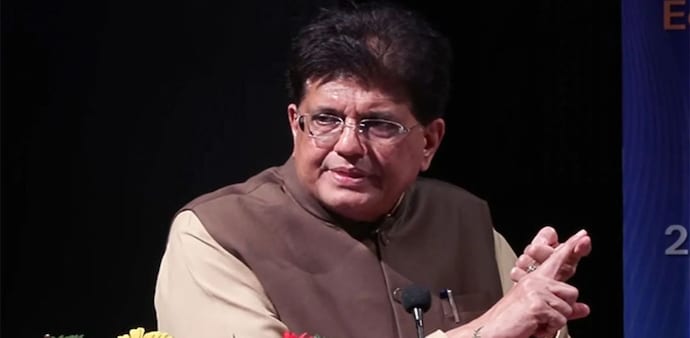
Addressing students at Kirori Mal College in Delhi, Goyal said India has consistently protected its farmers, fishermen and micro, small and medium enterprises (MSMEs) while negotiating trade agreements.
"We are very sensitive to opening up to certain agricultural produce, certain goods that we are very strong on like marine products. We are very sensitive to opening our dairy. In fact, till date, we have never opened up dairy for anybody," he said. "We are very sensitive not to allow any GM products to come to India and we have never allowed it and we'll never allow it in the future."
'We are sensitive to our religious sensitivities'
Explaining India's position on dairy imports, Goyal said the government also considers religious concerns associated with production practices in other countries.
"We are sensitive to our religious sensitivities. So very often in foreign countries, they use calf meat or Rennet while producing their dairy products. We don't allow that in India. It is strictly got to be certified...so that religious sensitivities of the large parts of India are not hurt," he said.
Rennet is an enzyme traditionally obtained from the stomach lining of young calves and used in cheese production.
Dairy and genetically modified agricultural products remain sensitive issues in trade negotiations, particularly with countries such as the US.
India has continued to protect its farmers even while signing trade deals with major economies. It concluded trade negotiations with the European Union in January 2026, while its agreement with New Zealand came into effect in October. In both cases, India kept sensitive agricultural sectors, especially dairy, protected from foreign competition.
It has taken a similar approach in trade deals with Australia and the UK. While India has allowed imports of certain agricultural and processed food products on easier terms, it has kept sectors such as dairy, cereals and poultry largely protected to safeguard domestic farmers.
Don't Miss: India's former top negotiator at WTO. Now he warns of risks in a full-fledged FTA with US
India seeks better market access for exports
While maintaining safeguards on sensitive sectors, Goyal said India was seeking preferential access for its competitive industries, including textiles, pharmaceuticals, agricultural products and gems and jewellery.
"So these are all our offensive interests, where we work to get preferential market access. Where duties imposed on goods from India will be less than from our competing nations like Indonesia, Malaysia, Vietnam, China, Philippines," he said. "Our effort is how do we get India a preferential rate over our competitors."
The minister said the objective was to create new opportunities for Indian businesses, farmers and workers through trade agreements. "Our effort is to unlock new opportunities, new employment opportunities, new opportunities for our produce where we are competitive and where our larger part of India, our MSMEs, our agricultural farmers, everybody can benefit in a big way."
(With inputs from PTI)