
Aditya L1 Mission: Isro all set to launch India's maiden solar mission from Sriharikota
Aditya-L1 is Isro's first space-based observatory-class mission to study the Sun. The spacecraft is expected to cover 1.5 million km distance to L1 point in nearly four months.
- Sep 2, 2023,
- Updated Sep 2, 2023 10:46 AM IST
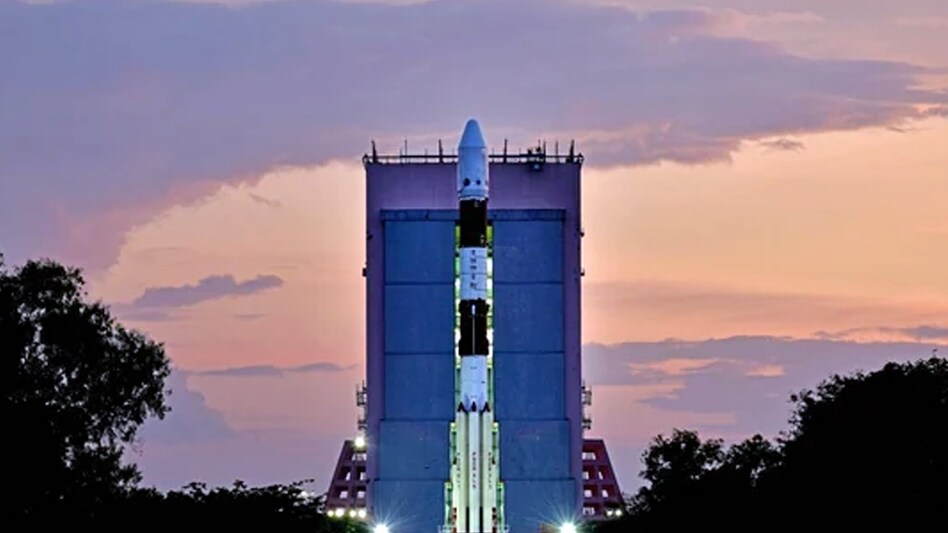
Aditya L1 launch update: Days after its spectacular Chandrayaan-3 Moon mission, the Indian Space Research Organisation is all set to aim for the Sun with its maiden solar expedition. The space agency will shoot its Polar Satellite Launch Vehicle (PSLV) that will carry the Aditya-L1 mission on a 125-day voyage. The mission will be launched from the second launch pad at Satish Dhawan Space Centre at 11.50 am on Saturday.
The solar mission is being carried out to study the Sun from a vantage point at the Sun-Earth Lagrange point (L1), approximately 1.5 million kilometres from Earth.
On Friday, the Isro said that the countdown for the launch of Aditya L1 onboard PSLV C57 began at Andhra Pradesh's Sriharikota, which houses the Satish Dhawan Space Centre.
“The Sun is a giant sphere of gas and Aditya-L1 would study the outer atmosphere of the Sun. Aditya-L1 will neither land on the Sun nor approach the Sun any closer,” the space agency said on Friday.
All about Aditya L1 Mission
Isro has designed Aditya-L1 to look into the solar corona and conduct in-situ observations of the solar wind Sun-Earth Lagrange point (L1), which is about 1.5 million kilometres from the Earth.
The 1,480 kg spacecraft will be carried by workhorse PSLV and put in a highly elliptical orbit of 235 km x 19,500 km around the Earth. Chandrayaan-1 in 2008 and Mangalyaan in 2013 were also launched using PSLV.
The Aditya-L1 is loaded with seven payloads and will send data to Earth. The Visible Emission Line Coronagraph (VELC) is the most significant payload.
It is expected to capture around 1,440 solar images daily for analysis. The propulsion system, including the Liquid Apogee Motor (LAM), plays a vital role in reaching the intended orbit.
Isro has said that there are five Lagrangian points between the Sun and the Earth, and the L1 point in the Halo orbit would provide a greater advantage of continuously viewing the Sun. The L1 position will allow continuous observation of the Sun without eclipses.
In layman's terms, L1 is a point in space where the gravitational forces of two celestial bodies, the Sun and Earth here, are at a balance or equilibrium. This will allow an object placed there to remain relatively stable with respect to both celestial bodies.
After launch
After its launch on Saturday, Aditya-L1 will stay Earth-bound orbits for 16 days. During that period, it will undergo five manoeuvres to gain the necessary velocity for its journey.
Gradually, Aditya-L1 will undergo a trans-Lagrangian1 insertion manoeuvre, marking the beginning of its 110-day trajectory to the destination around the L1 Lagrange point.
After reaching the L1 point, another manoeuvre will put Aditya-L1 to an orbit around L1. This will be a balanced gravitational location between the Earth and the Sun.
The satellite will then stay there around L1 for the rest of the mission in an irregularly shaped orbit. The seven science experiments onboard will continue collecting data for the next five years.
Also read: ISRO to launch Aditya L1 mission to study Sun on September 2; when and where to watch
Also read: After conquering the Moon, ISRO eyeing missions to the Sun and Venus
Aditya L1 launch update: Days after its spectacular Chandrayaan-3 Moon mission, the Indian Space Research Organisation is all set to aim for the Sun with its maiden solar expedition. The space agency will shoot its Polar Satellite Launch Vehicle (PSLV) that will carry the Aditya-L1 mission on a 125-day voyage. The mission will be launched from the second launch pad at Satish Dhawan Space Centre at 11.50 am on Saturday.
The solar mission is being carried out to study the Sun from a vantage point at the Sun-Earth Lagrange point (L1), approximately 1.5 million kilometres from Earth.
On Friday, the Isro said that the countdown for the launch of Aditya L1 onboard PSLV C57 began at Andhra Pradesh's Sriharikota, which houses the Satish Dhawan Space Centre.
“The Sun is a giant sphere of gas and Aditya-L1 would study the outer atmosphere of the Sun. Aditya-L1 will neither land on the Sun nor approach the Sun any closer,” the space agency said on Friday.
All about Aditya L1 Mission
Isro has designed Aditya-L1 to look into the solar corona and conduct in-situ observations of the solar wind Sun-Earth Lagrange point (L1), which is about 1.5 million kilometres from the Earth.
The 1,480 kg spacecraft will be carried by workhorse PSLV and put in a highly elliptical orbit of 235 km x 19,500 km around the Earth. Chandrayaan-1 in 2008 and Mangalyaan in 2013 were also launched using PSLV.
The Aditya-L1 is loaded with seven payloads and will send data to Earth. The Visible Emission Line Coronagraph (VELC) is the most significant payload.
It is expected to capture around 1,440 solar images daily for analysis. The propulsion system, including the Liquid Apogee Motor (LAM), plays a vital role in reaching the intended orbit.
Isro has said that there are five Lagrangian points between the Sun and the Earth, and the L1 point in the Halo orbit would provide a greater advantage of continuously viewing the Sun. The L1 position will allow continuous observation of the Sun without eclipses.
In layman's terms, L1 is a point in space where the gravitational forces of two celestial bodies, the Sun and Earth here, are at a balance or equilibrium. This will allow an object placed there to remain relatively stable with respect to both celestial bodies.
After launch
After its launch on Saturday, Aditya-L1 will stay Earth-bound orbits for 16 days. During that period, it will undergo five manoeuvres to gain the necessary velocity for its journey.
Gradually, Aditya-L1 will undergo a trans-Lagrangian1 insertion manoeuvre, marking the beginning of its 110-day trajectory to the destination around the L1 Lagrange point.
After reaching the L1 point, another manoeuvre will put Aditya-L1 to an orbit around L1. This will be a balanced gravitational location between the Earth and the Sun.
The satellite will then stay there around L1 for the rest of the mission in an irregularly shaped orbit. The seven science experiments onboard will continue collecting data for the next five years.
Also read: ISRO to launch Aditya L1 mission to study Sun on September 2; when and where to watch
Also read: After conquering the Moon, ISRO eyeing missions to the Sun and Venus