
Amit Shah says sedition law to be scrapped, more stringent punishment in new provisions
Shah introduced three bills–Bharatiya Nagrik Suraksha Sanhita Bill, 2023; Bharatiya Nyaya Sanhita Bill, 2023; Bharatiya Sakshya Bill, 2023 in Lok Sabha to replace Indian Penal Code, Code of Criminal Procedure and the Indian Evidence Act, which are British-era laws.
- Aug 11, 2023,
- Updated Aug 14, 2023 2:07 PM IST
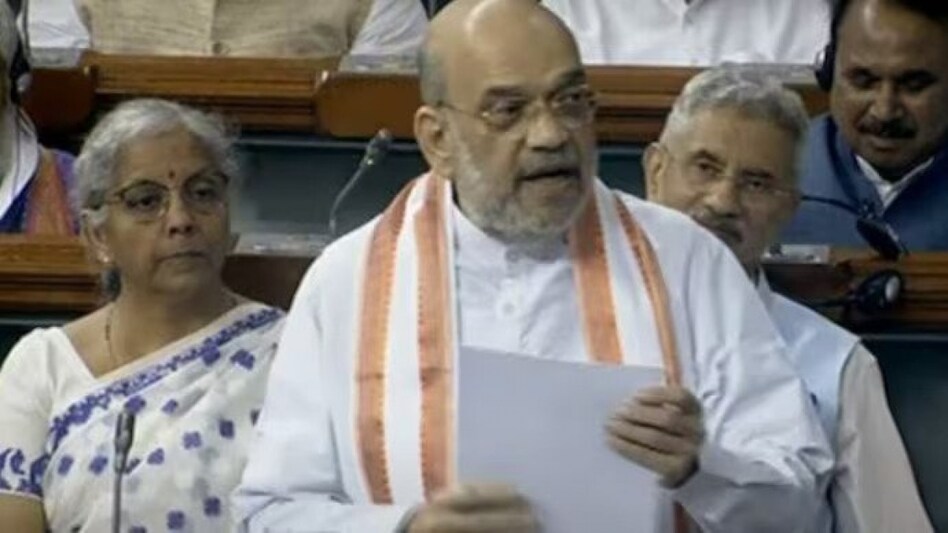
Union Home Minister Amit Shah on Friday called for scrapping the archaic sedition law and replacing it with more stringent punitive measures that complement the country's contemporary state of affairs. The announcement was made during the parliamentary session when Shah introduced three bills–Bharatiya Nagrik Suraksha Sanhita Bill, 2023; Bharatiya Nyaya Sanhita Bill, 2023; Bharatiya Sakshya Bill, 2023 in Lok Sabha to replace Indian Penal Code, Code of Criminal Procedure and the Indian Evidence Act, which are British-era laws.
Shah further said that the government is introducing a provision of capital punishment for mob lynching cases in India.
Pondering over the evolution of India, the Home Minister claimed, "The law that was thought out by the British to be used against Indians should not exist in any shape or form in our country. But it doesn't mean we should weaken our fight against anti-national elements. Rather, it should be stringent and even more punitive."
"The laws that will be repealed... the focus of that law was to protect and strengthen the British administration, the idea was to punish and not to give justice. By replacing them, the new three laws will bring the spirit to protect the rights of the Indian citizen," he added in the Lower House of Parliament.
The term 'sedition' has been eliminated from the revised draft, and the provision has been renamed Section 150 with certain modifications.
“Whoever, purposely or knowingly, by words, either spoken or written, or by signs, or by visible representation, or by electronic communication or by use of financial mean, or otherwise, excites or attempts to excite, secession or armed rebellion or subversive activities, or encourages feelings of separatist activities or endangers sovereignty or unity and integrity of India; or indulges in or commits any such act shall be punished with imprisonment for life or with imprisonment which may extend to seven years and shall also be liable to fine,” the new provision states.
Currently, sedition is punishable by life imprisonment or a prison term of up to three years. The new provision increases the three-year sentence to seven years.
The existing sedition law, section 124A, has drawn substantial flak from diverse quarters given its abuse on several occasions to muzzle free speech and curb dissent. The law stipulates life imprisonment for anybody found guilty under this legislation. Critics have long held that it is excessively draconian and often misused by authorities.
"The aim will not be to punish, it will be to provide justice. Punishment will be given to create a sentiment of stopping crime," Shah added.
Also Read: Centre to tweak some PLI schemes, expects disbursements to rise to Rs 13,000 cr in FY24
Union Home Minister Amit Shah on Friday called for scrapping the archaic sedition law and replacing it with more stringent punitive measures that complement the country's contemporary state of affairs. The announcement was made during the parliamentary session when Shah introduced three bills–Bharatiya Nagrik Suraksha Sanhita Bill, 2023; Bharatiya Nyaya Sanhita Bill, 2023; Bharatiya Sakshya Bill, 2023 in Lok Sabha to replace Indian Penal Code, Code of Criminal Procedure and the Indian Evidence Act, which are British-era laws.
Shah further said that the government is introducing a provision of capital punishment for mob lynching cases in India.
Pondering over the evolution of India, the Home Minister claimed, "The law that was thought out by the British to be used against Indians should not exist in any shape or form in our country. But it doesn't mean we should weaken our fight against anti-national elements. Rather, it should be stringent and even more punitive."
"The laws that will be repealed... the focus of that law was to protect and strengthen the British administration, the idea was to punish and not to give justice. By replacing them, the new three laws will bring the spirit to protect the rights of the Indian citizen," he added in the Lower House of Parliament.
The term 'sedition' has been eliminated from the revised draft, and the provision has been renamed Section 150 with certain modifications.
“Whoever, purposely or knowingly, by words, either spoken or written, or by signs, or by visible representation, or by electronic communication or by use of financial mean, or otherwise, excites or attempts to excite, secession or armed rebellion or subversive activities, or encourages feelings of separatist activities or endangers sovereignty or unity and integrity of India; or indulges in or commits any such act shall be punished with imprisonment for life or with imprisonment which may extend to seven years and shall also be liable to fine,” the new provision states.
Currently, sedition is punishable by life imprisonment or a prison term of up to three years. The new provision increases the three-year sentence to seven years.
The existing sedition law, section 124A, has drawn substantial flak from diverse quarters given its abuse on several occasions to muzzle free speech and curb dissent. The law stipulates life imprisonment for anybody found guilty under this legislation. Critics have long held that it is excessively draconian and often misused by authorities.
"The aim will not be to punish, it will be to provide justice. Punishment will be given to create a sentiment of stopping crime," Shah added.
Also Read: Centre to tweak some PLI schemes, expects disbursements to rise to Rs 13,000 cr in FY24