
'Let's embrace this symbol': Shashi Tharoor on 'Sengol' row as PM Modi inaugurates new Parliament House
He acknowledged the significance of the ‘Sengol’ as a symbol while also acknowledging that the staff's significance was rooted in and defined by a history of monarchy and "kingly privilege".
- May 28, 2023,
- Updated May 28, 2023 11:54 AM IST
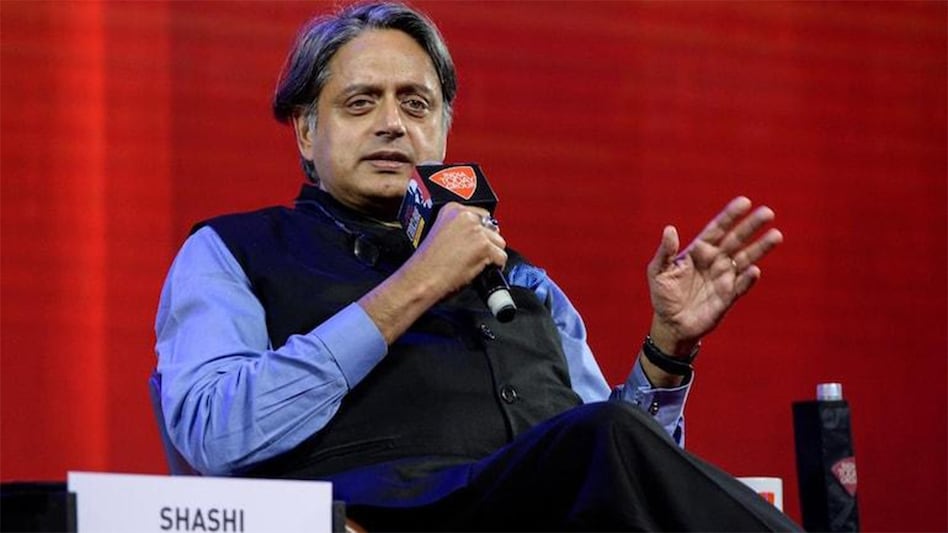
Congress MP Shashi Tharoor on Sunday shared his stance on the ongoing 'Sengol' controversy and asked the two sides to reconcile and "embrace" the symbol.
With the controversy heating up, Tharoor took to Twitter and acknowledged the arguments of the government and the opposition. He acknowledged the significance of the ‘Sengol’ as a symbol while also acknowledging that the staff's significance was rooted in and defined by a history of monarchy and "kingly privilege".
"My own view on the #sengol controversy is that both sides have good arguments," Tharoor said, adding that the government "rightly argues that the sceptre reflects a continuity of tradition by embodying sanctified sovereignty and the rule of dharma". "The Opposition rightly argues that the Constitution was adopted in the name of the people & that sovereignty abides in the people of India as represented in their Parliament, and is not a kingly privilege handed down by divine right.”
Tharoor stated that the two sides could reconcile if the Nehru-Mountbatten part of the ‘Sengol’ saga were dropped. He reiterated the Congress’s claims, stating that the tale had no proof. "The two positions are reconcilable if one simply drops the debatable red herring about the sceptre having been handed to Nehru by Mountbatten to symbolise the transfer of power, a story for which there is no proof,” he wrote.
Tharoor stated that the ‘Sengol’ should be recognised as a “traditional symbol of power” and placed in the Lok Sabha to affirm that its “sovereignty resides” with democracy and “not with any monarch”.
“Instead we should simply say that the Sengol sceptre is a traditional symbol of power & authority, and by placing it in the Lok Sabha, India is affirming that sovereignty resides there & not with any monarch,” the Congress MP wrote. "Let us embrace this symbol from the past to affirm the values of our present.”
Congress MP Shashi Tharoor on Sunday shared his stance on the ongoing 'Sengol' controversy and asked the two sides to reconcile and "embrace" the symbol.
With the controversy heating up, Tharoor took to Twitter and acknowledged the arguments of the government and the opposition. He acknowledged the significance of the ‘Sengol’ as a symbol while also acknowledging that the staff's significance was rooted in and defined by a history of monarchy and "kingly privilege".
"My own view on the #sengol controversy is that both sides have good arguments," Tharoor said, adding that the government "rightly argues that the sceptre reflects a continuity of tradition by embodying sanctified sovereignty and the rule of dharma". "The Opposition rightly argues that the Constitution was adopted in the name of the people & that sovereignty abides in the people of India as represented in their Parliament, and is not a kingly privilege handed down by divine right.”
Tharoor stated that the two sides could reconcile if the Nehru-Mountbatten part of the ‘Sengol’ saga were dropped. He reiterated the Congress’s claims, stating that the tale had no proof. "The two positions are reconcilable if one simply drops the debatable red herring about the sceptre having been handed to Nehru by Mountbatten to symbolise the transfer of power, a story for which there is no proof,” he wrote.
Tharoor stated that the ‘Sengol’ should be recognised as a “traditional symbol of power” and placed in the Lok Sabha to affirm that its “sovereignty resides” with democracy and “not with any monarch”.
“Instead we should simply say that the Sengol sceptre is a traditional symbol of power & authority, and by placing it in the Lok Sabha, India is affirming that sovereignty resides there & not with any monarch,” the Congress MP wrote. "Let us embrace this symbol from the past to affirm the values of our present.”