
Economic stability in focus: PM Modi to hold fresh review of Iran war fallout
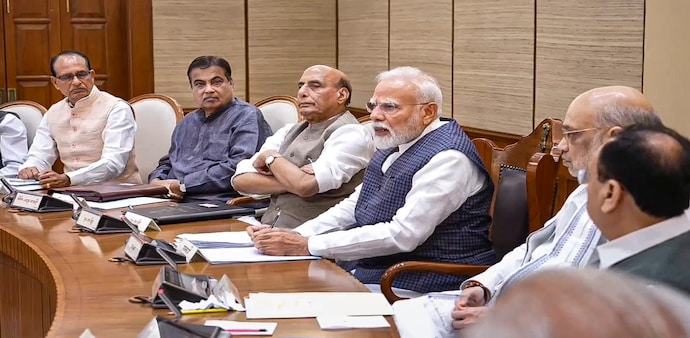
PM Modi is expected to hold a fresh review meeting with senior officials to assess the evolving situation and examine further steps to safeguard economic stability
- May 20, 2026,
- Updated May 20, 2026 5:09 PM IST
Prime Minister Narendra Modi is set to review the economic fallout of the ongoing West Asia conflict after returning from his foreign trip. The Prime Minister is expected to return to India on May 21 after completing his five-nation tour, which began in the UAE and later took him to the Netherlands, Sweden, Norway, and Italy.
The government has intensified efforts to cushion India from rising oil prices, supply-chain disruptions, and inflationary pressures triggered by the Iran war.
Sources told India Today that Modi is expected to hold a fresh review meeting with senior officials to assess the evolving situation and examine further steps to safeguard economic stability.
The review comes as the Centre has already put in place a high-powered "informal group of ministers" led by Defence Minister Rajnath Singh to monitor the crisis and recommend measures to shield the economy from disruptions linked to the conflict.
Modi will also chair a key Council of Ministers meeting on Thursday, where Union ministries are expected to present updates on governance, major policy decisions, and future action plans. The high-level meeting is also likely to review the West Asia crisis and its possible economic implications for India, with public welfare reforms, sector-focused initiatives, and governance priorities expected to remain central to the discussions.
The Modi government constituted the informal group of ministers, or IGoM, in late March after the West Asia war escalated following a US-Israel combined attack on Iran on February 28, triggering retaliatory strikes by Tehran across the Gulf region.
Union ministers Amit Shah, Nirmala Sitharaman, and Hardeep Singh Puri are among the members of the panel.
The Defence Minister chaired the 5th meeting of the IGoM on West Asia on May 11. The meeting took stock of the latest developments in the conflict, and discussed ways to bolster India's readiness to ensure its minimum effect on the people.
During the meeting, the group was informed that the country is secure, and there is no shortage of any petroleum product, even as most other nations have taken emergency measures to dramatically reduce domestic consumption.
"India has 60 days of crude oil, 60 days of Natural Gas and 45 days of LPG rolling stock. The foreign exchange reserves stand at a comfortable $703 billion," the ministry said. It, however, warned that there was a huge cost being borne by the nation as international crude prices were continuing at very high levels.
"India is among the few countries where petroleum prices have held steady through this period of global volatility, even after more than 70 days since the conflict started," the ministry said. "In many nations, prices have increased by 30 to 70 per cent."
The government informed that India's oil marketing companies have absorbed losses of close to Rs 1,000 crore a day, with under-recoveries running to nearly Rs 2 lakh crore in Q1 '26, "so that the burden of global astronomical prices is not passed to the Indian citizens."
Prime Minister Narendra Modi is set to review the economic fallout of the ongoing West Asia conflict after returning from his foreign trip. The Prime Minister is expected to return to India on May 21 after completing his five-nation tour, which began in the UAE and later took him to the Netherlands, Sweden, Norway, and Italy.
The government has intensified efforts to cushion India from rising oil prices, supply-chain disruptions, and inflationary pressures triggered by the Iran war.
Sources told India Today that Modi is expected to hold a fresh review meeting with senior officials to assess the evolving situation and examine further steps to safeguard economic stability.
The review comes as the Centre has already put in place a high-powered "informal group of ministers" led by Defence Minister Rajnath Singh to monitor the crisis and recommend measures to shield the economy from disruptions linked to the conflict.
Modi will also chair a key Council of Ministers meeting on Thursday, where Union ministries are expected to present updates on governance, major policy decisions, and future action plans. The high-level meeting is also likely to review the West Asia crisis and its possible economic implications for India, with public welfare reforms, sector-focused initiatives, and governance priorities expected to remain central to the discussions.
The Modi government constituted the informal group of ministers, or IGoM, in late March after the West Asia war escalated following a US-Israel combined attack on Iran on February 28, triggering retaliatory strikes by Tehran across the Gulf region.
Union ministers Amit Shah, Nirmala Sitharaman, and Hardeep Singh Puri are among the members of the panel.
The Defence Minister chaired the 5th meeting of the IGoM on West Asia on May 11. The meeting took stock of the latest developments in the conflict, and discussed ways to bolster India's readiness to ensure its minimum effect on the people.
During the meeting, the group was informed that the country is secure, and there is no shortage of any petroleum product, even as most other nations have taken emergency measures to dramatically reduce domestic consumption.
"India has 60 days of crude oil, 60 days of Natural Gas and 45 days of LPG rolling stock. The foreign exchange reserves stand at a comfortable $703 billion," the ministry said. It, however, warned that there was a huge cost being borne by the nation as international crude prices were continuing at very high levels.
"India is among the few countries where petroleum prices have held steady through this period of global volatility, even after more than 70 days since the conflict started," the ministry said. "In many nations, prices have increased by 30 to 70 per cent."
The government informed that India's oil marketing companies have absorbed losses of close to Rs 1,000 crore a day, with under-recoveries running to nearly Rs 2 lakh crore in Q1 '26, "so that the burden of global astronomical prices is not passed to the Indian citizens."