
In a first, Indian Railways to roll out hybrid financing framework for pvt developers
In a first such initiative by the Railways, the HyBOT model has been designed to substantially curtail the risk exposure of private participants in railway projects as well as expand invest investor base in the sector.
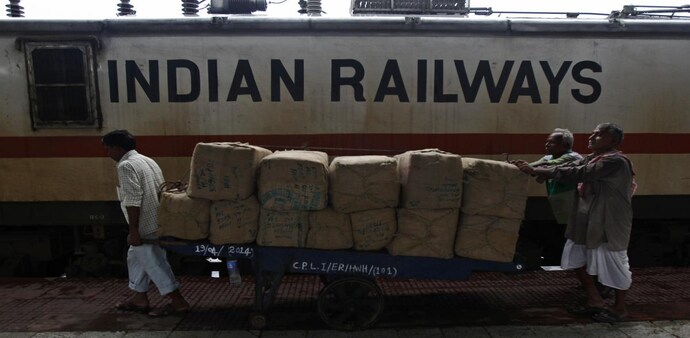
- Dec 13, 2021,
- Updated Dec 13, 2021 8:23 PM IST
There’s some good news on the horizon for private developers bidding for Indian Railways’ public-private partnership (PPP) projects. The railway ministry proposes to share in their financing risks through the hybrid built, operate, transfer or HyBOT model.
This will be the first such structure offered under PPP by Asia’s second-largest rail transporter.
“The PPP model has evolved well in the country in sectors such as roads & highways, ports and airports. However, the railway could not move in that direction,” union railway minister Ashwini Vaishnaw said during a panel discussion.
The minister said that this challenge arose largely due to the very complex nature of the railway industry with its several attendant subsystems such as rolling stock, signalling, stations, etc.
The HyBOT model had, therefore, been designed by the railways to resolve challenges arising out of such complexities by ensuring the commercial viability of all subsystems.
“It is a structure in which the initial capital investment risk is significantly covered, followed by having a very risk balanced allocation during the operation & maintenance phase,” he asserted during an annual gathering of the industry chamber Confederation of the Indian Industry (CII) in association with the Department for Promotion of Industry and Internal Trade (DIPP).
Making railways sector attractive to investments
The minister opined that the success of the proposed model had the potential of making India’s railway sector attractive to larger number of investors.
“This can open up a huge channel of investments in Railways, in my understanding. Let us try out the first project and see how the response of the industry is before we take this forward in a big way,” he remarked.
The first such hybrid structure, the hybrid annuity model (HAM), was approved to fast-track highway construction under PPP in 2016. Under this mix of the engineering, procurement and construction (EPC) and build-operate-transfer (BOT) models, the government contributes 40 per cent of the project cost in the first five years through annual payments or annuity.
The remainder 60 per cent that is raised by the developer, is recovered from the National Highway Authority of India (NHAI) as a variable annuity upon the project’s completion.
Availability of funds within a stipulated timeframe and easing of issues associated with banks on loan disbursements, have made HAM the preferred contract for NHAI. According to a CRISIL estimate, 51 per cent of the projects awarded in the first of FY2021-22 have been done under HAM.
The minister also invited the industry to start preparing to bid for renewable energy projects of 40 GW in the coming two to three years as part of the Indian Railways’ plan to turn carbon neutral by 2030.
Also Read: Mumbai-Ahmedabad bullet train: Work on 342-km route in Gujarat underway
Also Read: NTPC, AAI, NHAI's infrastructure assets identified for monetisation: Govt
There’s some good news on the horizon for private developers bidding for Indian Railways’ public-private partnership (PPP) projects. The railway ministry proposes to share in their financing risks through the hybrid built, operate, transfer or HyBOT model.
This will be the first such structure offered under PPP by Asia’s second-largest rail transporter.
“The PPP model has evolved well in the country in sectors such as roads & highways, ports and airports. However, the railway could not move in that direction,” union railway minister Ashwini Vaishnaw said during a panel discussion.
The minister said that this challenge arose largely due to the very complex nature of the railway industry with its several attendant subsystems such as rolling stock, signalling, stations, etc.
The HyBOT model had, therefore, been designed by the railways to resolve challenges arising out of such complexities by ensuring the commercial viability of all subsystems.
“It is a structure in which the initial capital investment risk is significantly covered, followed by having a very risk balanced allocation during the operation & maintenance phase,” he asserted during an annual gathering of the industry chamber Confederation of the Indian Industry (CII) in association with the Department for Promotion of Industry and Internal Trade (DIPP).
Making railways sector attractive to investments
The minister opined that the success of the proposed model had the potential of making India’s railway sector attractive to larger number of investors.
“This can open up a huge channel of investments in Railways, in my understanding. Let us try out the first project and see how the response of the industry is before we take this forward in a big way,” he remarked.
The first such hybrid structure, the hybrid annuity model (HAM), was approved to fast-track highway construction under PPP in 2016. Under this mix of the engineering, procurement and construction (EPC) and build-operate-transfer (BOT) models, the government contributes 40 per cent of the project cost in the first five years through annual payments or annuity.
The remainder 60 per cent that is raised by the developer, is recovered from the National Highway Authority of India (NHAI) as a variable annuity upon the project’s completion.
Availability of funds within a stipulated timeframe and easing of issues associated with banks on loan disbursements, have made HAM the preferred contract for NHAI. According to a CRISIL estimate, 51 per cent of the projects awarded in the first of FY2021-22 have been done under HAM.
The minister also invited the industry to start preparing to bid for renewable energy projects of 40 GW in the coming two to three years as part of the Indian Railways’ plan to turn carbon neutral by 2030.
Also Read: Mumbai-Ahmedabad bullet train: Work on 342-km route in Gujarat underway
Also Read: NTPC, AAI, NHAI's infrastructure assets identified for monetisation: Govt