
Charging your e-scooter at home is riskier than you think — here's how to do it safely
Only 55% of Indian EV owners have safe home charging setups. Here are the critical dos and don'ts — from MCB and RCCB requirements to why extension cords and adapters are dangerous.
- Jul 21, 2026,
- Updated Jul 21, 2026 4:09 PM IST
- 1/6
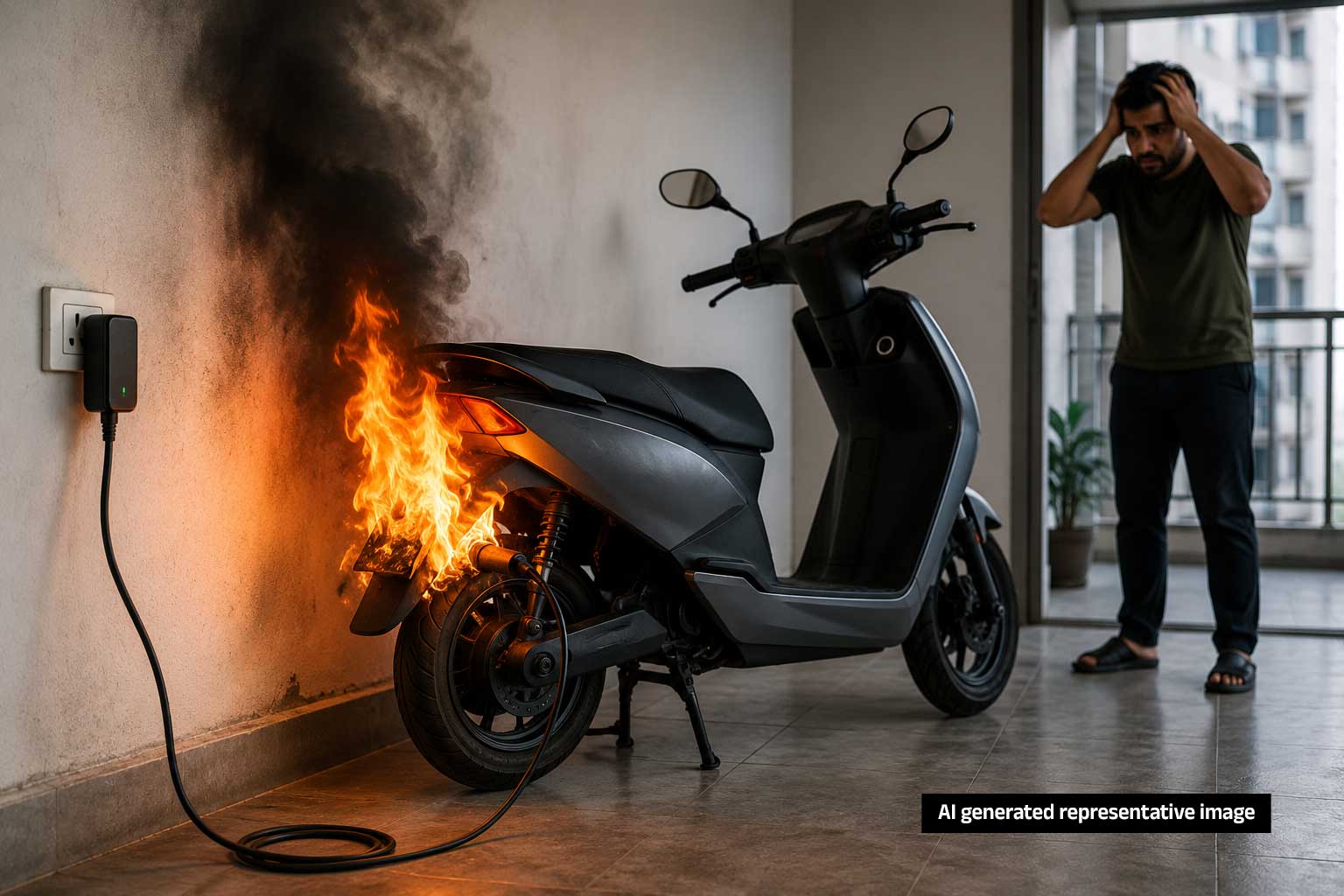
As demand for electric scooters rises across India, confusion about safe home charging persists. A recent fire incident in Noida — where an EV caught fire while charging — has raised serious concerns about EV charging within residential complexes.
- 2/6
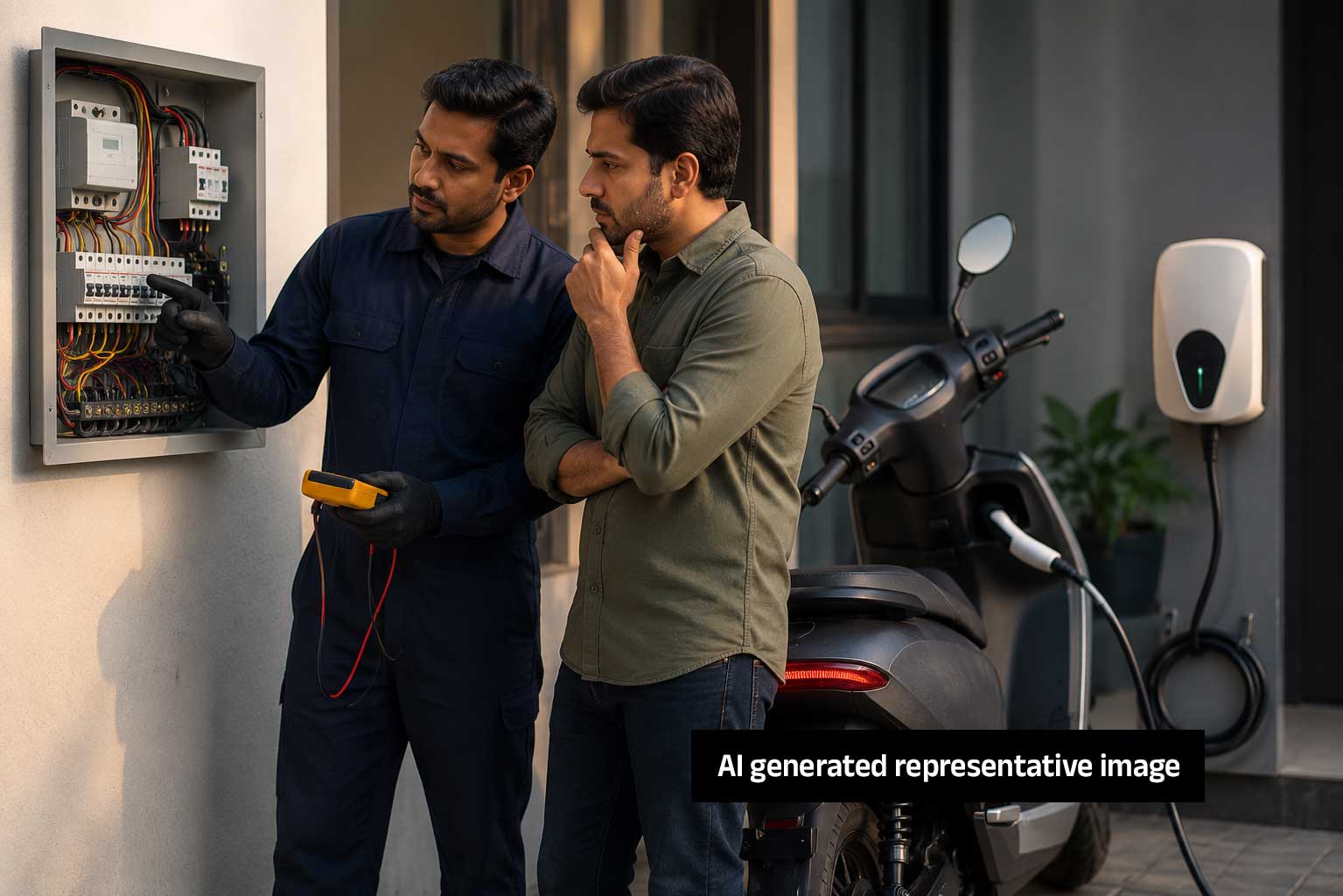
Before charging an EV at home, verify that your electrical connection can handle the load. Charging on a low-load connection significantly increases the risk of accidents. Experts strongly recommend consulting an electrician before setting up a home charging point.
- 3/6
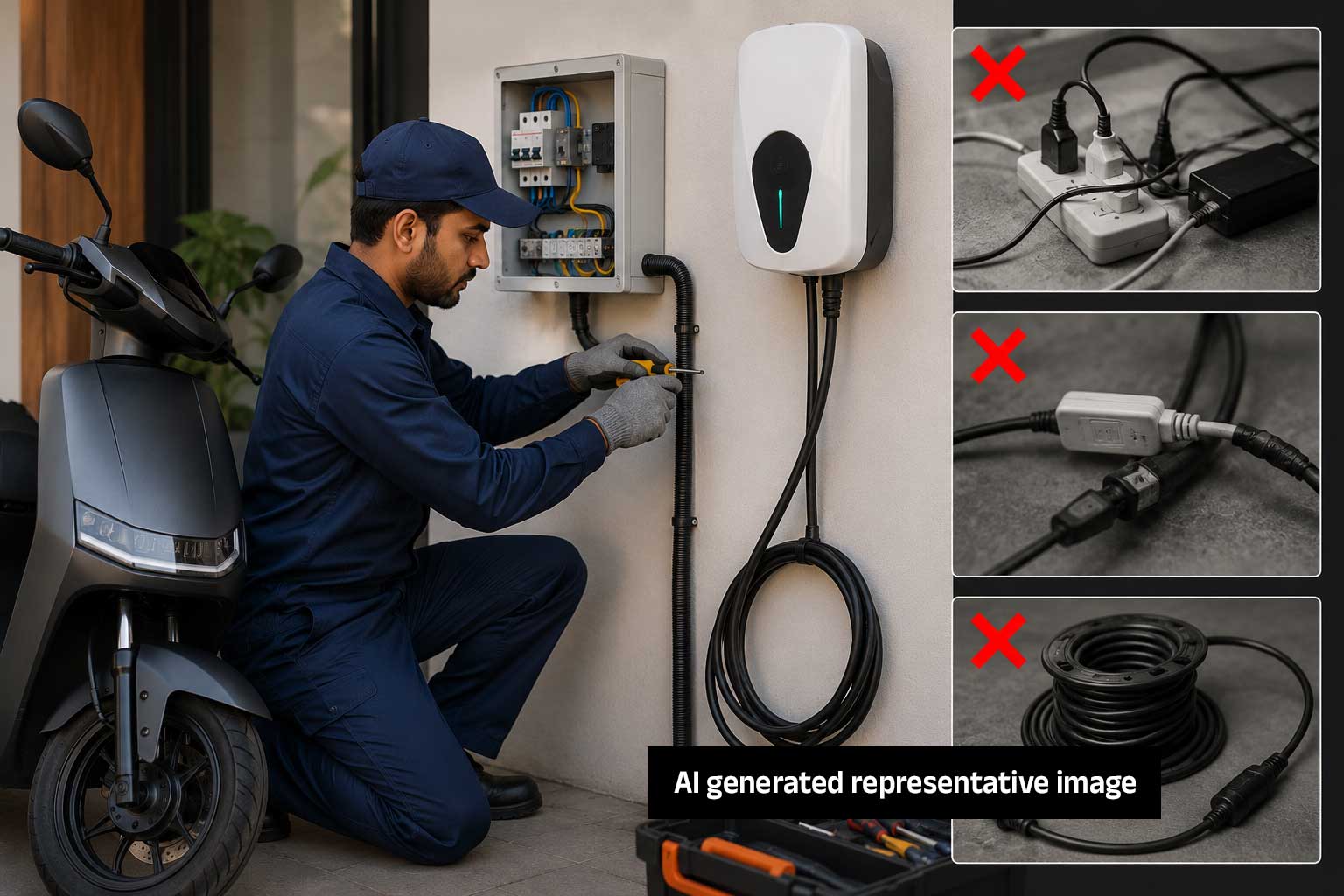
Experts state that home chargers must be installed by trained technicians and connected to a dedicated electrical circuit. Using extension cords, makeshift wiring or adapters for EV chargers dramatically increases fire risk and should be strictly avoided.
- 4/6
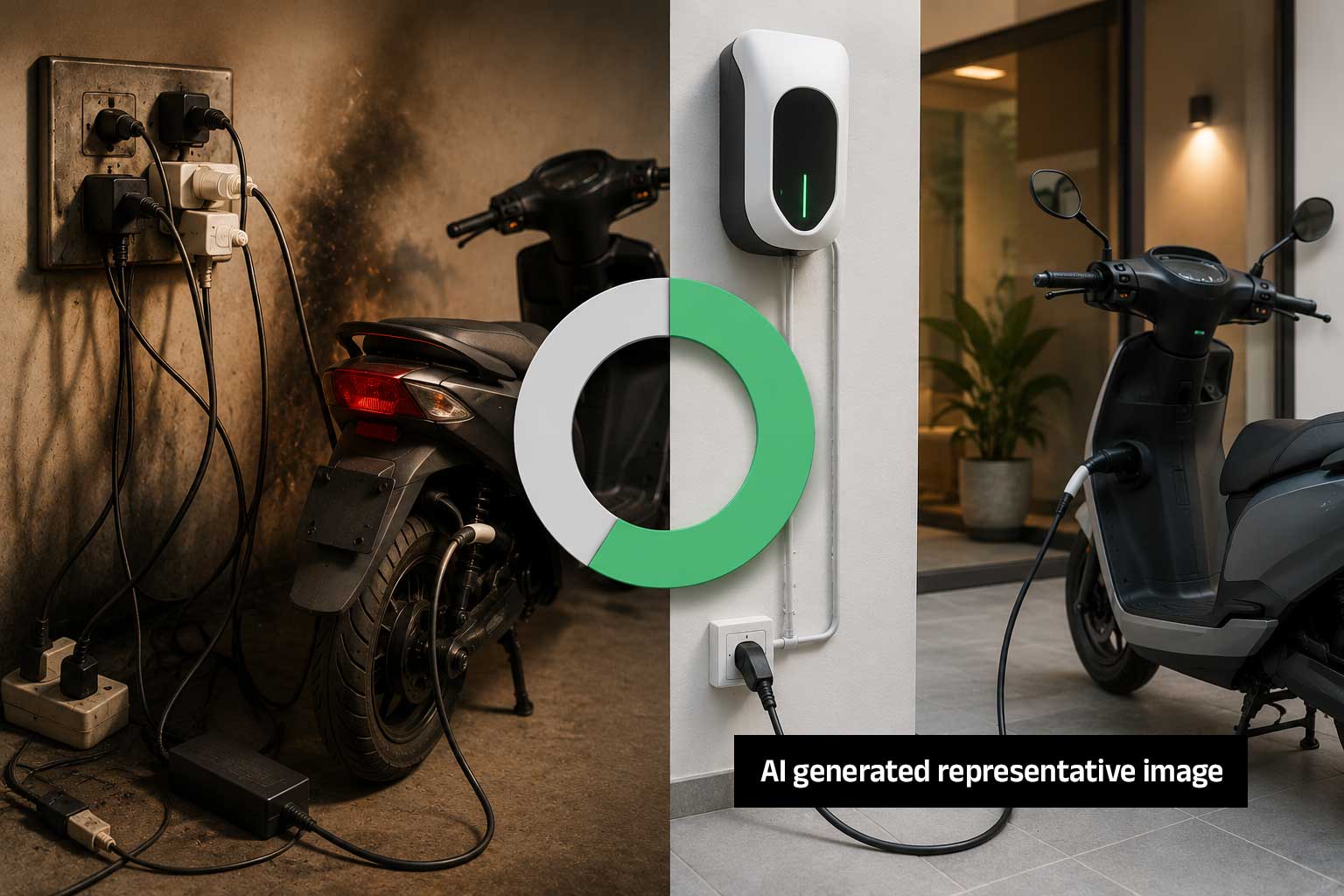
According to experts, only 55% of EV owners in India have a proper charging setup installed at home. This is a key reason why charging-related accidents continue to occur — with many riders using inadequate electrical infrastructure for high-load charging equipment.
- 5/6
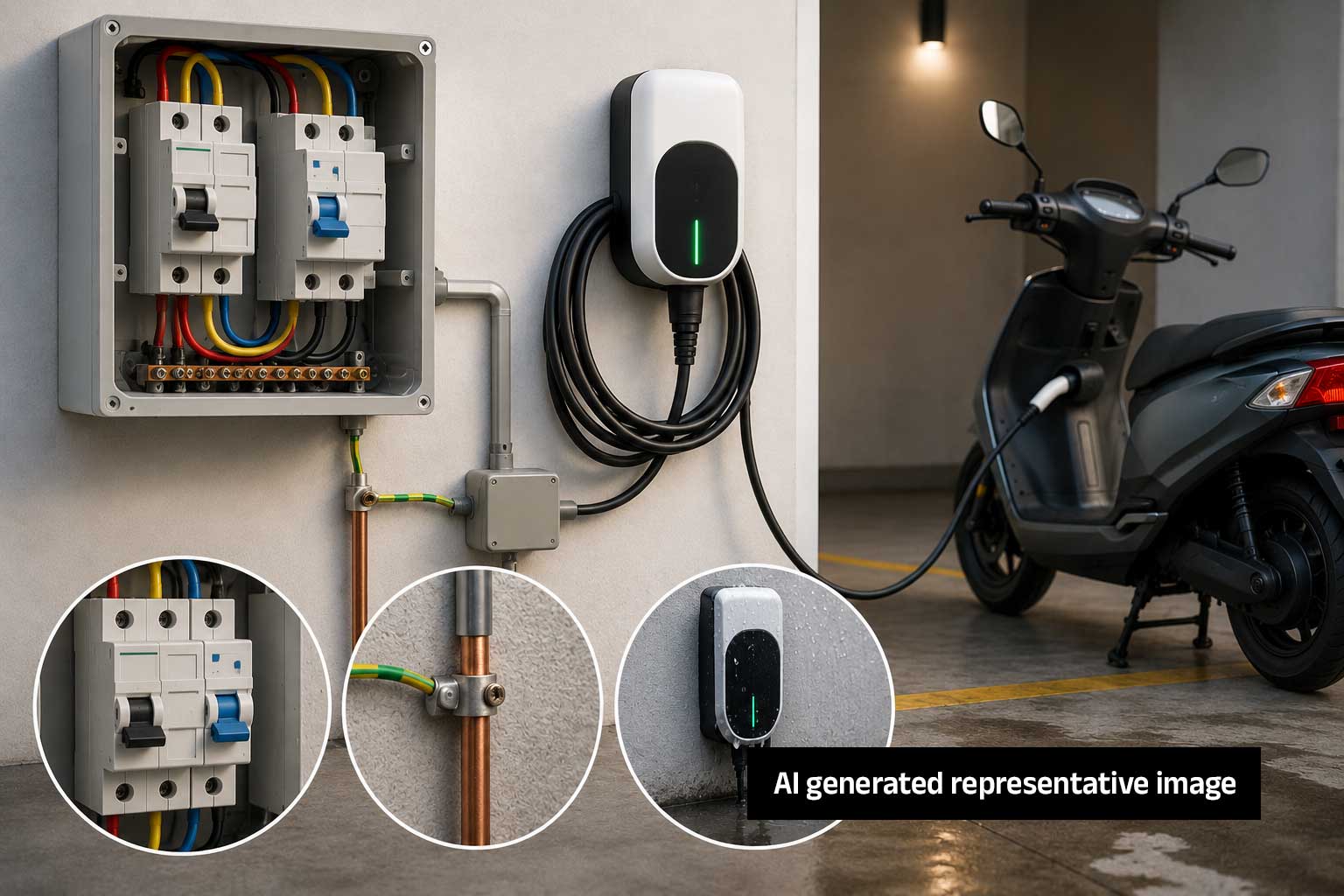
A proper EV charging setup requires a Miniature Circuit Breaker (MCB) and a Residual Current Circuit Breaker (RCCB). Proper earthing is also essential, and the charger must be installed in a location free from moisture and any risk of water accumulation.
- 6/6
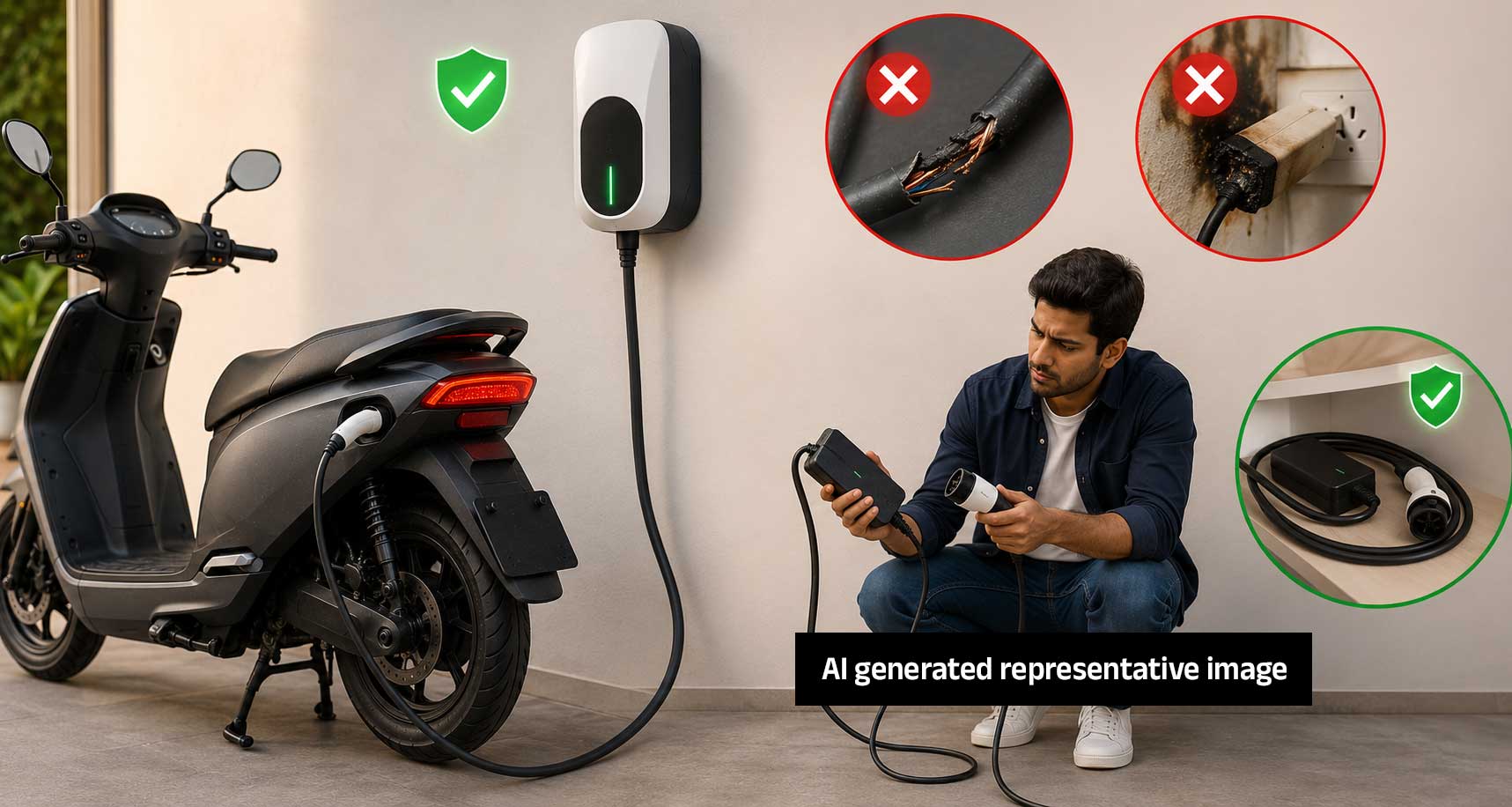
Vehicle owners should always use the charger provided by the manufacturer. If you notice any burning smell, cable damage or wiring issues during charging, stop immediately and contact a technician or the company's customer service before using the charger again.