
Before ice cream, these traditional Indian coolers beat the summer. Did you have any?
As temperatures continue to soar across India, many of these traditional summer treats are experiencing a revival, driven by growing interest in natural ingredients, regional cuisines and heritage foods.
- May 30, 2026,
- Updated May 30, 2026 2:57 PM IST
Long before ice cream became a household favorite, India had already developed a rich tradition of chilled desserts and cooling beverages designed to tackle the country's intense summers. From dense kulfis sold by street vendors to mango-based treats, yogurt desserts and rose-flavored concoctions, these regional specialties offered more than just sweetness — they helped hydrate, cool, and refresh in an era before refrigeration was widespread.
As temperatures continue to soar across India, many of these traditional summer treats are experiencing a revival, driven by growing interest in natural ingredients, regional cuisines and heritage foods.
India's traditional summer foods were shaped by local climates and centuries of culinary knowledge. Rather than relying solely on freezing, many recipes incorporated ingredients believed to cool the body naturally, support digestion, and replenish fluids lost during extreme heat.
Raw mangoes, curd, coconut water, bael fruit, kokum, rose syrup and seasonal fruits became the foundation of an extensive repertoire of summer refreshments that varied from region to region.
Kulfi: India's original frozen dessert
Perhaps the closest ancestor to modern ice cream is kulfi, a frozen dessert that predates the widespread availability of commercial ice cream in India. Made by slowly simmering milk until it thickens and caramelizes naturally, kulfi develops a dense, creamy texture that melts more slowly than conventional ice cream.
Flavored with saffron, cardamom, pistachios, almonds or mango, kulfi remains one of India's most iconic summer treats and continues to be sold across cities and small towns alike.
Falooda: A dessert and a drink
Another enduring favorite is falooda, a layered concoction that combines rose syrup, vermicelli, milk, basil seeds, and often kulfi or ice cream. Popular across North and West India, the dessert is both hydrating and indulgent, offering multiple textures in a single glass.
The inclusion of sabja (basil) seeds, known for their cooling properties, made falooda particularly popular during peak summer months.
Mango Connection: Aamras and Aam Panna
Few fruits are as closely tied to Indian summers as the mango, and traditional desserts reflect that relationship.
Aamras — essentially sweetened mango pulp served chilled — has long been a staple in Gujarat and Maharashtra. Mango kulfi, mango shrikhand and mango lassi further transformed the king of fruits into cooling seasonal delicacies. These preparations celebrated the fruit's natural sweetness while offering respite from the heat.
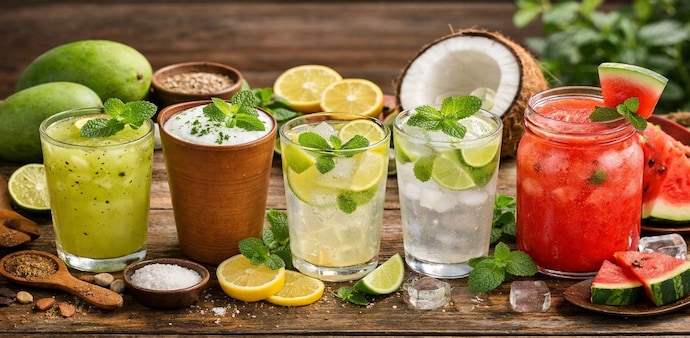
Aam Panna is an Indian drink made from unripe mangoes, cumin, and an assortment of other spices; it is yellow to light green in color. Mint leaves are often added to the drink, enhancing its green color. It quenches thirst and prevents the excessive loss of sodium chloride and iron during summer due to excessive sweating. The drink is mainly consumed in north India and Pakistan is considered beneficial in the treatment of gastrointestinal disorders. It is also a good source of vitamin B1 and B2, niacin, and vitamin C.
Shrikhand and Mishti Doi
Western India's shrikhand and Bengal's mishti doi showcase the country's long-standing reliance on yogurt-based desserts during summer.
Shrikhand is prepared by straining yogurt to create a thick, creamy base that is then flavored with sugar, saffron and cardamom. Mishti doi, meanwhile, combines fermented curd with caramelized sweetness and is traditionally served chilled in earthen pots. Both desserts benefit from yogurt's naturally cooling and probiotic properties.
Phirni, Rasmalai and Rabdi served cold
Several milk-based desserts traditionally associated with festivals also became popular summer indulgences when served chilled. Phirni, a slow-cooked rice pudding, is often refrigerated and served in clay bowls. Rasmalai offers soft cheese dumplings soaked in cold saffron-infused milk, while rabdi's thickened sweet milk becomes particularly refreshing after being chilled. These desserts transformed dairy into a cooling luxury long before modern refrigeration became commonplace.
Drinks that doubled as desserts
India's traditional summer menu extended beyond sweets. Aam panna, lassi, chaas, jaljeera, bael sharbat, kokum sherbet and sattu sharbat were developed to hydrate and cool the body while providing energy and aiding digestion.
Many of these drinks remain staples during heatwaves because they combine fluids with salts, minerals and probiotics that help combat dehydration.
Other regional favorites include Tamil Nadu's Jigarthanda, Kerala's tender coconut-based refreshments, Karnataka's panaka and Odisha's bela pana, highlighting the remarkable diversity of India's cooling food culture.
The resurgence of traditional Indian summer desserts is being driven by a broader consumer shift toward natural ingredients, regional recipes and less-processed foods. Unlike many modern frozen desserts, these recipes often rely on milk, fruits, yogurt, herbs and spices that have been used for generations.
Long before ice cream became a household favorite, India had already developed a rich tradition of chilled desserts and cooling beverages designed to tackle the country's intense summers. From dense kulfis sold by street vendors to mango-based treats, yogurt desserts and rose-flavored concoctions, these regional specialties offered more than just sweetness — they helped hydrate, cool, and refresh in an era before refrigeration was widespread.
As temperatures continue to soar across India, many of these traditional summer treats are experiencing a revival, driven by growing interest in natural ingredients, regional cuisines and heritage foods.
India's traditional summer foods were shaped by local climates and centuries of culinary knowledge. Rather than relying solely on freezing, many recipes incorporated ingredients believed to cool the body naturally, support digestion, and replenish fluids lost during extreme heat.
Raw mangoes, curd, coconut water, bael fruit, kokum, rose syrup and seasonal fruits became the foundation of an extensive repertoire of summer refreshments that varied from region to region.
Kulfi: India's original frozen dessert
Perhaps the closest ancestor to modern ice cream is kulfi, a frozen dessert that predates the widespread availability of commercial ice cream in India. Made by slowly simmering milk until it thickens and caramelizes naturally, kulfi develops a dense, creamy texture that melts more slowly than conventional ice cream.
Flavored with saffron, cardamom, pistachios, almonds or mango, kulfi remains one of India's most iconic summer treats and continues to be sold across cities and small towns alike.
Falooda: A dessert and a drink
Another enduring favorite is falooda, a layered concoction that combines rose syrup, vermicelli, milk, basil seeds, and often kulfi or ice cream. Popular across North and West India, the dessert is both hydrating and indulgent, offering multiple textures in a single glass.
The inclusion of sabja (basil) seeds, known for their cooling properties, made falooda particularly popular during peak summer months.
Mango Connection: Aamras and Aam Panna
Few fruits are as closely tied to Indian summers as the mango, and traditional desserts reflect that relationship.
Aamras — essentially sweetened mango pulp served chilled — has long been a staple in Gujarat and Maharashtra. Mango kulfi, mango shrikhand and mango lassi further transformed the king of fruits into cooling seasonal delicacies. These preparations celebrated the fruit's natural sweetness while offering respite from the heat.
Aam Panna is an Indian drink made from unripe mangoes, cumin, and an assortment of other spices; it is yellow to light green in color. Mint leaves are often added to the drink, enhancing its green color. It quenches thirst and prevents the excessive loss of sodium chloride and iron during summer due to excessive sweating. The drink is mainly consumed in north India and Pakistan is considered beneficial in the treatment of gastrointestinal disorders. It is also a good source of vitamin B1 and B2, niacin, and vitamin C.
Shrikhand and Mishti Doi
Western India's shrikhand and Bengal's mishti doi showcase the country's long-standing reliance on yogurt-based desserts during summer.
Shrikhand is prepared by straining yogurt to create a thick, creamy base that is then flavored with sugar, saffron and cardamom. Mishti doi, meanwhile, combines fermented curd with caramelized sweetness and is traditionally served chilled in earthen pots. Both desserts benefit from yogurt's naturally cooling and probiotic properties.
Phirni, Rasmalai and Rabdi served cold
Several milk-based desserts traditionally associated with festivals also became popular summer indulgences when served chilled. Phirni, a slow-cooked rice pudding, is often refrigerated and served in clay bowls. Rasmalai offers soft cheese dumplings soaked in cold saffron-infused milk, while rabdi's thickened sweet milk becomes particularly refreshing after being chilled. These desserts transformed dairy into a cooling luxury long before modern refrigeration became commonplace.
Drinks that doubled as desserts
India's traditional summer menu extended beyond sweets. Aam panna, lassi, chaas, jaljeera, bael sharbat, kokum sherbet and sattu sharbat were developed to hydrate and cool the body while providing energy and aiding digestion.
Many of these drinks remain staples during heatwaves because they combine fluids with salts, minerals and probiotics that help combat dehydration.
Other regional favorites include Tamil Nadu's Jigarthanda, Kerala's tender coconut-based refreshments, Karnataka's panaka and Odisha's bela pana, highlighting the remarkable diversity of India's cooling food culture.
The resurgence of traditional Indian summer desserts is being driven by a broader consumer shift toward natural ingredients, regional recipes and less-processed foods. Unlike many modern frozen desserts, these recipes often rely on milk, fruits, yogurt, herbs and spices that have been used for generations.