
Business wisdom of the day: 'An inch of time is an inch of gold...'
In the modern corporate world, this proverb translates directly to opportunity cost and operational velocity. In 2026's hyper-paced market, treating time as a finite currency is a competitive necessity.
- Jun 19, 2026,
- Updated Jun 19, 2026 12:06 PM IST
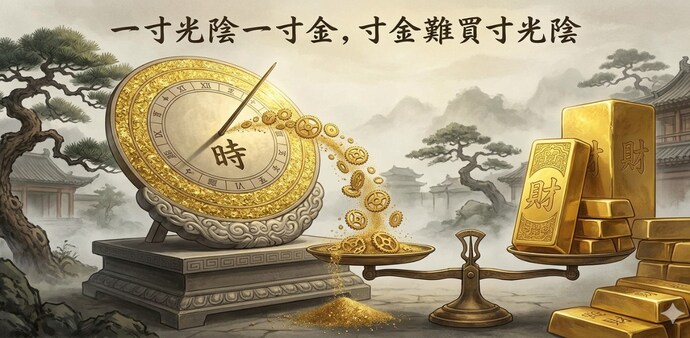
"An inch of time is an inch of gold, but an inch of gold cannot buy an inch of time." — a classic Chinese proverb (a great reminder that instead of wondering where your hours go, evaluate whether your daily activities align with your core goals and values.).
It is one of the most elegant ways to describe the absolute scarcity of time. Unlike money, energy, or resources, time is the one asset that cannot be mined, manufactured, or recycled.
What the proverb means
At its core, the proverb contrasts a highly valuable material commodity (gold) with an invaluable existential asset (time).
- Illusion of Equivalency: The first half of the phrase ("an inch of time is an inch of gold") establishes that time has immense value. It suggests that every passing moment holds the potential for wealth, growth, or achievement.
- Absolute Limit: The second half ("an inch of gold cannot buy an inch of time") completely shatters that equivalency. It highlights that time is non-negotiable. Wealth can buy comfort, labor, and tools, but it cannot purchase a single extra second once a day is spent.
The reference to an "inch" comes from historical Chinese sun dials, where the movement of the sun’s shadow across an inch of the dial marked the passing of a specific block of time.
How the proverb applies for businesses today
In the modern corporate world, this proverb translates directly to opportunity cost and operational velocity. In 2026's hyper-paced market, treating time as a finite currency is a competitive necessity.
- Speed to Market vs Perfect Products: A business can have massive capital reserves (gold), but if it takes two years to launch a product that a leaner competitor launches in six months, the market window closes. The capital cannot buy back the lost first-mover advantage.
- Time Poverty and Focus: Modern professionals face a paradox: they have access to incredible automation tools, yet they suffer from extreme "time poverty" due to constant meetings, emails, and context switching. Smart businesses evaluate their "Time ROI." Instead of asking, "Can we afford this project?" they ask, "Is this project the absolute best use of our team's limited hours?"
- Buying Back Time (Delegation & Automation): While you cannot literally buy more time, businesses can buy back capacity. Investing in efficient software, hiring specialized talent, or outsourcing non-core tasks are modern ways of using "gold" to reclaim "inches of time" for strategic growth.
Why it remains timeless
The reason this proverb resonates just as deeply today as it did centuries ago comes down to human nature and the physics of life. No matter how much the world changes, technology evolves, or wealth gaps widen, time remains perfectly democratic. A billionaire and a entry-level intern both get exactly 24 hours in a day.
Humans have a natural tendency to mistake activity for productivity. The proverb acts as a constant forcing function, nudging us away from mindless "busy-ness" and toward intentional living. The proverb is a stark reminder that time only flows in one direction. It carries an inherent warning against procrastination, urging people to align their daily schedules with what they actually care about before the dial runs out.
"An inch of time is an inch of gold, but an inch of gold cannot buy an inch of time." — a classic Chinese proverb (a great reminder that instead of wondering where your hours go, evaluate whether your daily activities align with your core goals and values.).
It is one of the most elegant ways to describe the absolute scarcity of time. Unlike money, energy, or resources, time is the one asset that cannot be mined, manufactured, or recycled.
What the proverb means
At its core, the proverb contrasts a highly valuable material commodity (gold) with an invaluable existential asset (time).
- Illusion of Equivalency: The first half of the phrase ("an inch of time is an inch of gold") establishes that time has immense value. It suggests that every passing moment holds the potential for wealth, growth, or achievement.
- Absolute Limit: The second half ("an inch of gold cannot buy an inch of time") completely shatters that equivalency. It highlights that time is non-negotiable. Wealth can buy comfort, labor, and tools, but it cannot purchase a single extra second once a day is spent.
The reference to an "inch" comes from historical Chinese sun dials, where the movement of the sun’s shadow across an inch of the dial marked the passing of a specific block of time.
How the proverb applies for businesses today
In the modern corporate world, this proverb translates directly to opportunity cost and operational velocity. In 2026's hyper-paced market, treating time as a finite currency is a competitive necessity.
- Speed to Market vs Perfect Products: A business can have massive capital reserves (gold), but if it takes two years to launch a product that a leaner competitor launches in six months, the market window closes. The capital cannot buy back the lost first-mover advantage.
- Time Poverty and Focus: Modern professionals face a paradox: they have access to incredible automation tools, yet they suffer from extreme "time poverty" due to constant meetings, emails, and context switching. Smart businesses evaluate their "Time ROI." Instead of asking, "Can we afford this project?" they ask, "Is this project the absolute best use of our team's limited hours?"
- Buying Back Time (Delegation & Automation): While you cannot literally buy more time, businesses can buy back capacity. Investing in efficient software, hiring specialized talent, or outsourcing non-core tasks are modern ways of using "gold" to reclaim "inches of time" for strategic growth.
Why it remains timeless
The reason this proverb resonates just as deeply today as it did centuries ago comes down to human nature and the physics of life. No matter how much the world changes, technology evolves, or wealth gaps widen, time remains perfectly democratic. A billionaire and a entry-level intern both get exactly 24 hours in a day.
Humans have a natural tendency to mistake activity for productivity. The proverb acts as a constant forcing function, nudging us away from mindless "busy-ness" and toward intentional living. The proverb is a stark reminder that time only flows in one direction. It carries an inherent warning against procrastination, urging people to align their daily schedules with what they actually care about before the dial runs out.