
Can AI create art? How the world’s first AI art museum is redefining creativity
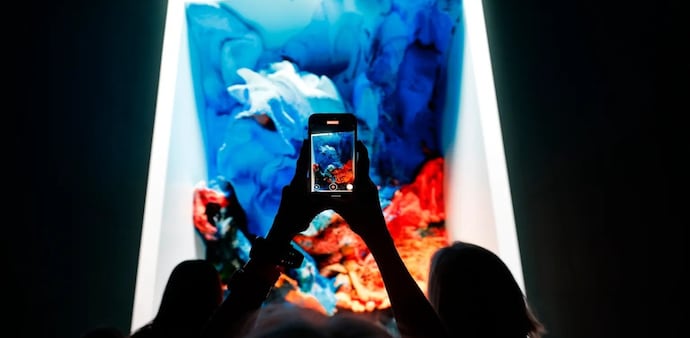
Located in downtown Los Angeles, Dataland spans roughly 25,000 sq feet and features a series of multisensory galleries where visitors can experience artworks generated through AI systems trained on vast environmental and scientific datasets.
- Jun 21, 2026,
- Updated Jun 21, 2026 5:41 PM IST
Los Angeles has become home to what is being billed as the world’s first museum dedicated entirely to artificial intelligence-generated art, marking a significant moment in the growing intersection of technology, creativity and cultural institutions. The new museum, called Dataland, opened to the public on June 20 and aims to showcase how AI is reshaping artistic expression through immersive, data-driven experiences.
Located in downtown Los Angeles within the Frank Gehry-designed Grand LA complex, Dataland spans roughly 25,000 square feet and features a series of multisensory galleries where visitors can experience artworks generated through AI systems trained on vast environmental and scientific datasets.
The museum has been positioned alongside some of the city’s most prominent cultural landmarks, including the Museum of Contemporary Art and The Broad.
At the heart of the project is Turkish-American media artist Refik Anadol, whose large-scale AI-generated installations have attracted international attention in recent years. Anadol has described the museum as an effort to explore the relationship between human imagination and machine intelligence, while creating a permanent home for AI-driven artistic experimentation.
A museum built around AI
Dataland’s inaugural exhibition, Machine Dreams: Rainforest, draws on millions of images, sounds and environmental data points collected from nature. The artworks continuously evolve through AI systems, creating experiences that can change in real time rather than remaining static like traditional paintings or sculptures.
The museum's technology is powered by what Anadol calls the “Large Nature Model,” an AI framework trained on extensive datasets sourced from environmental and scientific organizations. The resulting installations combine visual projections, soundscapes, lighting effects and other sensory elements to immerse visitors in digitally generated interpretations of the natural world.
Supporters argue that such projects demonstrate how AI can become a new artistic medium rather than merely a tool for automation. Researchers and artists increasingly view generative AI as a technology capable of transforming creative workflows and expanding artistic possibilities, much as photography and digital design once did.
Art world divided over AI
The museum's opening arrives amid continuing debate about AI’s role in creative industries. While AI-generated artworks have gained popularity among audiences and collectors, critics have questioned issues ranging from originality and authorship to the use of copyrighted training data.
Anadol has sought to address some of those concerns by emphasizing the use of licensed and ethically sourced datasets, as well as transparency around energy consumption. Previous statements by the artist have highlighted a commitment to renewable-energy-powered computing infrastructure and what he describes as “ethical AI” practices.
The controversy surrounding AI art reflects broader discussions taking place across entertainment, publishing and design sectors, where generative AI tools are increasingly influencing creative production. Critics worry about the potential displacement of human artists, while supporters argue that AI can serve as a collaborative medium rather than a replacement for human creativity.
Dataland's arrival also signals how museums themselves are evolving. Unlike conventional institutions built around permanent collections, the AI museum presents artworks that can continuously change based on data inputs and machine learning processes. The concept challenges traditional definitions of artistic creation, curation and audience participation.
Los Angeles has become home to what is being billed as the world’s first museum dedicated entirely to artificial intelligence-generated art, marking a significant moment in the growing intersection of technology, creativity and cultural institutions. The new museum, called Dataland, opened to the public on June 20 and aims to showcase how AI is reshaping artistic expression through immersive, data-driven experiences.
Located in downtown Los Angeles within the Frank Gehry-designed Grand LA complex, Dataland spans roughly 25,000 square feet and features a series of multisensory galleries where visitors can experience artworks generated through AI systems trained on vast environmental and scientific datasets.
The museum has been positioned alongside some of the city’s most prominent cultural landmarks, including the Museum of Contemporary Art and The Broad.
At the heart of the project is Turkish-American media artist Refik Anadol, whose large-scale AI-generated installations have attracted international attention in recent years. Anadol has described the museum as an effort to explore the relationship between human imagination and machine intelligence, while creating a permanent home for AI-driven artistic experimentation.
A museum built around AI
Dataland’s inaugural exhibition, Machine Dreams: Rainforest, draws on millions of images, sounds and environmental data points collected from nature. The artworks continuously evolve through AI systems, creating experiences that can change in real time rather than remaining static like traditional paintings or sculptures.
The museum's technology is powered by what Anadol calls the “Large Nature Model,” an AI framework trained on extensive datasets sourced from environmental and scientific organizations. The resulting installations combine visual projections, soundscapes, lighting effects and other sensory elements to immerse visitors in digitally generated interpretations of the natural world.
Supporters argue that such projects demonstrate how AI can become a new artistic medium rather than merely a tool for automation. Researchers and artists increasingly view generative AI as a technology capable of transforming creative workflows and expanding artistic possibilities, much as photography and digital design once did.
Art world divided over AI
The museum's opening arrives amid continuing debate about AI’s role in creative industries. While AI-generated artworks have gained popularity among audiences and collectors, critics have questioned issues ranging from originality and authorship to the use of copyrighted training data.
Anadol has sought to address some of those concerns by emphasizing the use of licensed and ethically sourced datasets, as well as transparency around energy consumption. Previous statements by the artist have highlighted a commitment to renewable-energy-powered computing infrastructure and what he describes as “ethical AI” practices.
The controversy surrounding AI art reflects broader discussions taking place across entertainment, publishing and design sectors, where generative AI tools are increasingly influencing creative production. Critics worry about the potential displacement of human artists, while supporters argue that AI can serve as a collaborative medium rather than a replacement for human creativity.
Dataland's arrival also signals how museums themselves are evolving. Unlike conventional institutions built around permanent collections, the AI museum presents artworks that can continuously change based on data inputs and machine learning processes. The concept challenges traditional definitions of artistic creation, curation and audience participation.