
Dirty windscreen during monsoon? Here’s how you kitchen vinegar can remove stubborn grime
The kitchen staple is often used to remove grime, mineral deposits and stubborn watermarks from glass. But does it actually work, and is it safe for your car?
- Aug 11, 2026,
- Updated Aug 11, 2026 4:00 AM IST
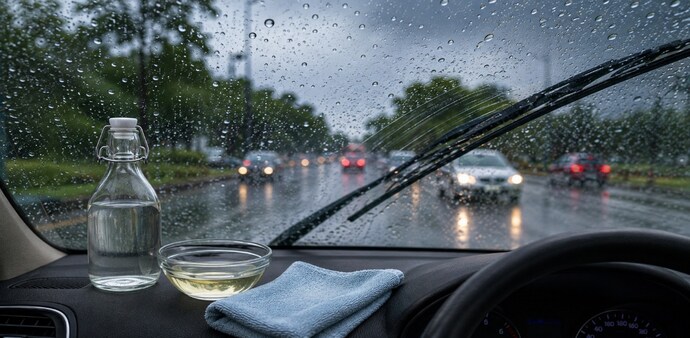
A clean windscreen is more than a matter of keeping your car looking good, especially during the monsoon. Heavy rain, road spray, oily grime and water spots can quickly turn a windscreen into a hazy surface, reducing visibility when drivers need it most. With roads already difficult to navigate in downpours, even a thin layer of residue can make headlights and streetlights produce distracting glare.
That is why a simple household cleaning hack involving vinegar has attracted attention among motorists. The kitchen staple is often used to remove grime, mineral deposits and stubborn watermarks from glass. But does it actually work, and is it safe for your car?
Why vinegar works on windscreen grime
Vinegar contains acetic acid, which can help break down mineral deposits and some of the grime that builds up on glass. When rainwater dries on a windscreen, it can leave behind minerals that gradually create spots or a cloudy film.
Diluted white vinegar can help dissolve these deposits, making it a low-cost alternative for occasional windscreen cleaning.
However, it is not a miracle solution for every type of dirt. Oily films, heavy road grime and other contaminants may require a dedicated automotive glass cleaner.
How to use vinegar correctly
The key is dilution. Rather than pouring or spraying concentrated vinegar directly onto the windscreen, mix white vinegar with water.
A roughly 1:1 mixture of vinegar and water can be used for routine cleaning. Apply the solution carefully to the glass, preferably using a clean microfibre cloth, and wipe the surface thoroughly.
Follow it with a dry microfibre cloth to remove remaining moisture and prevent streaks.
It is also important to clean the inside of the windscreen. During monsoon, humidity and interior residue can contribute to fogging and glare, making a dirty inner surface particularly troublesome at night.
Can vinegar prevent rain-related visibility problems? Only to an extent.
Vinegar can remove deposits that make glass appear hazy, but it cannot prevent rain itself from obstructing visibility. Nor is it a substitute for functioning windscreen wipers.
Worn-out wiper blades can smear water across the glass instead of clearing it, creating dangerous streaks and glare. Keeping the glass clean and replacing damaged or ineffective wipers are therefore equally important during the rainy season.
What about fogging?
Vinegar is sometimes promoted online as a solution for windscreen condensation. But fogging is primarily caused by moisture and temperature differences between the inside and outside of the vehicle.
A clean windscreen can certainly improve clarity, but the car's defogger, air-conditioning system and proper ventilation remain the more effective ways to clear condensation.
Could vinegar damage the car? This is where caution matters.
While diluted vinegar can be useful on glass, concentrated vinegar should not be allowed to sit on painted surfaces, rubber seals, trim or other parts of the vehicle. Its acidity can potentially affect some materials with repeated or prolonged exposure.
Drivers should also be cautious if their windscreen has a specialised coating or aftermarket film. In such cases, checking the manufacturer's recommendations before using a DIY cleaning solution is the safer option.
Is vinegar better than a commercial glass cleaner?
Not necessarily. Vinegar has one major advantage: it is cheap and readily available. It can be effective against mineral deposits and certain types of residue.
But automotive glass cleaners are specifically formulated for vehicle surfaces and may be a better choice for regular cleaning or for tackling oily road films and stubborn grime.
For monsoon driving, the bigger priority is not which product is used but whether the windscreen is clear, streak-free and free of residue.
A clean windscreen, effective wipers and properly functioning defogging system can make a significant difference when visibility suddenly drops in heavy rain.
So, yes, vinegar can work as a DIY windscreen cleaner—but it is best viewed as a simple cleaning aid, not a magic monsoon driving solution.
A clean windscreen is more than a matter of keeping your car looking good, especially during the monsoon. Heavy rain, road spray, oily grime and water spots can quickly turn a windscreen into a hazy surface, reducing visibility when drivers need it most. With roads already difficult to navigate in downpours, even a thin layer of residue can make headlights and streetlights produce distracting glare.
That is why a simple household cleaning hack involving vinegar has attracted attention among motorists. The kitchen staple is often used to remove grime, mineral deposits and stubborn watermarks from glass. But does it actually work, and is it safe for your car?
Why vinegar works on windscreen grime
Vinegar contains acetic acid, which can help break down mineral deposits and some of the grime that builds up on glass. When rainwater dries on a windscreen, it can leave behind minerals that gradually create spots or a cloudy film.
Diluted white vinegar can help dissolve these deposits, making it a low-cost alternative for occasional windscreen cleaning.
However, it is not a miracle solution for every type of dirt. Oily films, heavy road grime and other contaminants may require a dedicated automotive glass cleaner.
How to use vinegar correctly
The key is dilution. Rather than pouring or spraying concentrated vinegar directly onto the windscreen, mix white vinegar with water.
A roughly 1:1 mixture of vinegar and water can be used for routine cleaning. Apply the solution carefully to the glass, preferably using a clean microfibre cloth, and wipe the surface thoroughly.
Follow it with a dry microfibre cloth to remove remaining moisture and prevent streaks.
It is also important to clean the inside of the windscreen. During monsoon, humidity and interior residue can contribute to fogging and glare, making a dirty inner surface particularly troublesome at night.
Can vinegar prevent rain-related visibility problems? Only to an extent.
Vinegar can remove deposits that make glass appear hazy, but it cannot prevent rain itself from obstructing visibility. Nor is it a substitute for functioning windscreen wipers.
Worn-out wiper blades can smear water across the glass instead of clearing it, creating dangerous streaks and glare. Keeping the glass clean and replacing damaged or ineffective wipers are therefore equally important during the rainy season.
What about fogging?
Vinegar is sometimes promoted online as a solution for windscreen condensation. But fogging is primarily caused by moisture and temperature differences between the inside and outside of the vehicle.
A clean windscreen can certainly improve clarity, but the car's defogger, air-conditioning system and proper ventilation remain the more effective ways to clear condensation.
Could vinegar damage the car? This is where caution matters.
While diluted vinegar can be useful on glass, concentrated vinegar should not be allowed to sit on painted surfaces, rubber seals, trim or other parts of the vehicle. Its acidity can potentially affect some materials with repeated or prolonged exposure.
Drivers should also be cautious if their windscreen has a specialised coating or aftermarket film. In such cases, checking the manufacturer's recommendations before using a DIY cleaning solution is the safer option.
Is vinegar better than a commercial glass cleaner?
Not necessarily. Vinegar has one major advantage: it is cheap and readily available. It can be effective against mineral deposits and certain types of residue.
But automotive glass cleaners are specifically formulated for vehicle surfaces and may be a better choice for regular cleaning or for tackling oily road films and stubborn grime.
For monsoon driving, the bigger priority is not which product is used but whether the windscreen is clear, streak-free and free of residue.
A clean windscreen, effective wipers and properly functioning defogging system can make a significant difference when visibility suddenly drops in heavy rain.
So, yes, vinegar can work as a DIY windscreen cleaner—but it is best viewed as a simple cleaning aid, not a magic monsoon driving solution.