
Europe’s new eco-friendly plate is coming from India’s forest communities
Handmade by tribal communities, these biodegradable plates are turning a forest tradition into a global green business
- Jul 29, 2026,
- Updated Jul 29, 2026 8:00 AM IST
The next time you eat at an eco-conscious restaurant in Europe, your plate could have travelled thousands of kilometres from the forests of eastern India.
A simple leaf plate once used at Indian weddings, roadside food stalls and community feasts is now getting global attention
For years, sal leaf plates were a familiar part of everyday life in many Indian homes and street food stalls. From serving phuchka and snacks to being used during weddings and community meals, these hand-stitched plates were once everywhere. But as plastic slowly replaced traditional alternatives, the humble leaf plate began disappearing from many Indian markets.
Now, the same plates are finding a new audience abroad.
As Europe searches for alternatives to single-use plastic, restaurants, hotels and environmentally conscious consumers are turning towards biodegradable tableware made by tribal communities in India’s forest regions.
Don't Miss: Visa plans 2,600 job cuts as payments giant reduces workforce by 7%
Unlike plastic or thermocol plates that remain in the environment for years, sal leaf plates naturally break down within weeks. They require no chemical processing, are compostable and, after use, can even be fed to cattle.
Tradition in India had long before sustainability became a trend
The global popularity of leaf plates may look like a new sustainability movement, but for tribal communities in Jharkhand, Odisha and Chhattisgarh, it has been a part of life for generations.
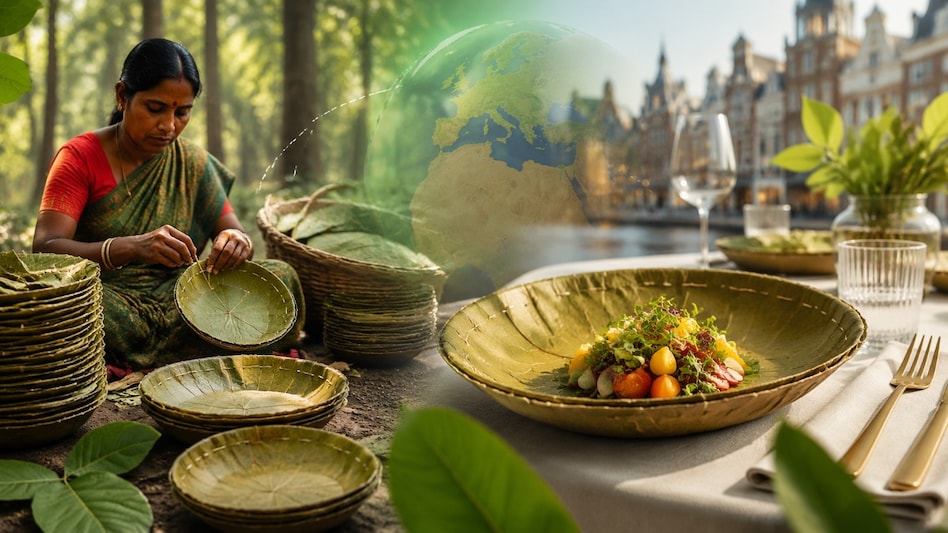
Women from forest communities have traditionally collected fallen sal and siali leaves, carefully selected them without harming trees, and stitched them together using thin bamboo sticks to make plates and bowls.
Known as pattals, patravalis and donas, these leaf products have been used for centuries during religious gatherings, weddings, community feasts and everyday meals.
The practice even finds mention in the Charaka Samhita, one of India’s oldest Ayurvedic texts. According to Acharya Charaka, eating with one's hands from a leaf plate enhances sparsh, or touch, creating a richer sensory experience during meals.
Today, what was once considered a simple village practice is being recognised as a sustainable alternative by global consumers.
Why are Europeans choosing Indian leaf plates?
The appeal is simple: they are natural, handmade and environmentally friendly.
When German startup Leaf Republic launched leaf tableware in 2016, its products gained international attention for creating disposable plates without plastic, glue or chemicals. The concept attracted global interest, although the company later shut down after supply-chain disruptions affected sourcing from India, according to a report by The Better India.
But demand for leaf-based tableware continued.
Several European companies now sell biodegradable leaf products, while online marketplaces feature handcrafted sal leaf plates sourced from India.
The Better India reviewed marketplaces such as Etsy and Tapari, where a pack of handcrafted sal leaf plates sells for about €31.96 (roughly Rs 3,500).
Customers are not only buying a plate — they are buying a product linked to traditional craftsmanship. Each plate is slightly different because every leaf has its own shape and texture.
The plates are sturdy, water-resistant, chemical-free, meet European food safety standards and decompose completely within about 28 days.
A greener choice that could help India’s forest communities
The growing demand for these plates comes at a time when India continues to deal with rising plastic waste.
According to the Ministry of Housing and Urban Affairs' 2019 report on plastic waste management, India generates around 9.4 million tonnes of plastic waste every year, or about 26,000 tonnes each day.
Around 5.6 million tonnes are recycled, while the remaining 3.8 million tonnes are left uncollected or end up polluting the environment.
More than 43% of plastic waste comes from single-use products that are thrown away almost immediately.
Replacing even a portion of these products with biodegradable alternatives like sal and siali leaf plates could reduce plastic waste while creating new income sources for communities that depend on forests.
For many Adivasi families, these leaves are not just raw material. They represent a livelihood, a tradition and a connection with the forest.
From handmade plates to better incomes
The rising demand is already creating opportunities for tribal women.
In Odisha’s Kandhamal district, the Integrated Tribal Development Agency recently provided sal leaf plate-making machines to a Van Dhan Vikas Kendra in Phulbani.
Earlier, a woman could manually stitch around 100 plates a day. Each machine can now produce nearly 2,000 plates daily, laminating them with food-grade paper to improve durability and market value. Officials told The Times of India that women's earnings are expected to nearly triple.
In 2019, Odisha’s Keonjhar district administration also replaced plastic tableware in government offices with locally made sal leaf alternatives and encouraged tribal women’s groups to produce them.
In neighbouring Jharkhand, communities including the Santhals, Mundas and Oraons have long relied on sal leaves as a source of additional income. Women collect, stitch and sell the plates through local markets and cooperatives.
A leaf plate’s journey from Indian forests to European restaurants
A plate stitched by hand in a forest village in India can now reach a restaurant in Berlin, Amsterdam or Copenhagen.
Its popularity is not because of flashy packaging or modern branding. It comes from something much older — a traditional practice that used natural resources carefully and created a product with almost no waste.
For many Indians who remember eating snacks from sal leaf bowls, the surprising part is not that Europe has embraced them.
It is that a simple tradition from India’s forests is now becoming part of the global fight against plastic waste — while bringing new opportunities to the communities that protected this craft for generations.
The next time you eat at an eco-conscious restaurant in Europe, your plate could have travelled thousands of kilometres from the forests of eastern India.
A simple leaf plate once used at Indian weddings, roadside food stalls and community feasts is now getting global attention
For years, sal leaf plates were a familiar part of everyday life in many Indian homes and street food stalls. From serving phuchka and snacks to being used during weddings and community meals, these hand-stitched plates were once everywhere. But as plastic slowly replaced traditional alternatives, the humble leaf plate began disappearing from many Indian markets.
Now, the same plates are finding a new audience abroad.
As Europe searches for alternatives to single-use plastic, restaurants, hotels and environmentally conscious consumers are turning towards biodegradable tableware made by tribal communities in India’s forest regions.
Don't Miss: Visa plans 2,600 job cuts as payments giant reduces workforce by 7%
Unlike plastic or thermocol plates that remain in the environment for years, sal leaf plates naturally break down within weeks. They require no chemical processing, are compostable and, after use, can even be fed to cattle.
Tradition in India had long before sustainability became a trend
The global popularity of leaf plates may look like a new sustainability movement, but for tribal communities in Jharkhand, Odisha and Chhattisgarh, it has been a part of life for generations.
Women from forest communities have traditionally collected fallen sal and siali leaves, carefully selected them without harming trees, and stitched them together using thin bamboo sticks to make plates and bowls.
Known as pattals, patravalis and donas, these leaf products have been used for centuries during religious gatherings, weddings, community feasts and everyday meals.
The practice even finds mention in the Charaka Samhita, one of India’s oldest Ayurvedic texts. According to Acharya Charaka, eating with one's hands from a leaf plate enhances sparsh, or touch, creating a richer sensory experience during meals.
Today, what was once considered a simple village practice is being recognised as a sustainable alternative by global consumers.
Why are Europeans choosing Indian leaf plates?
The appeal is simple: they are natural, handmade and environmentally friendly.
When German startup Leaf Republic launched leaf tableware in 2016, its products gained international attention for creating disposable plates without plastic, glue or chemicals. The concept attracted global interest, although the company later shut down after supply-chain disruptions affected sourcing from India, according to a report by The Better India.
But demand for leaf-based tableware continued.
Several European companies now sell biodegradable leaf products, while online marketplaces feature handcrafted sal leaf plates sourced from India.
The Better India reviewed marketplaces such as Etsy and Tapari, where a pack of handcrafted sal leaf plates sells for about €31.96 (roughly Rs 3,500).
Customers are not only buying a plate — they are buying a product linked to traditional craftsmanship. Each plate is slightly different because every leaf has its own shape and texture.
The plates are sturdy, water-resistant, chemical-free, meet European food safety standards and decompose completely within about 28 days.
A greener choice that could help India’s forest communities
The growing demand for these plates comes at a time when India continues to deal with rising plastic waste.
According to the Ministry of Housing and Urban Affairs' 2019 report on plastic waste management, India generates around 9.4 million tonnes of plastic waste every year, or about 26,000 tonnes each day.
Around 5.6 million tonnes are recycled, while the remaining 3.8 million tonnes are left uncollected or end up polluting the environment.
More than 43% of plastic waste comes from single-use products that are thrown away almost immediately.
Replacing even a portion of these products with biodegradable alternatives like sal and siali leaf plates could reduce plastic waste while creating new income sources for communities that depend on forests.
For many Adivasi families, these leaves are not just raw material. They represent a livelihood, a tradition and a connection with the forest.
From handmade plates to better incomes
The rising demand is already creating opportunities for tribal women.
In Odisha’s Kandhamal district, the Integrated Tribal Development Agency recently provided sal leaf plate-making machines to a Van Dhan Vikas Kendra in Phulbani.
Earlier, a woman could manually stitch around 100 plates a day. Each machine can now produce nearly 2,000 plates daily, laminating them with food-grade paper to improve durability and market value. Officials told The Times of India that women's earnings are expected to nearly triple.
In 2019, Odisha’s Keonjhar district administration also replaced plastic tableware in government offices with locally made sal leaf alternatives and encouraged tribal women’s groups to produce them.
In neighbouring Jharkhand, communities including the Santhals, Mundas and Oraons have long relied on sal leaves as a source of additional income. Women collect, stitch and sell the plates through local markets and cooperatives.
A leaf plate’s journey from Indian forests to European restaurants
A plate stitched by hand in a forest village in India can now reach a restaurant in Berlin, Amsterdam or Copenhagen.
Its popularity is not because of flashy packaging or modern branding. It comes from something much older — a traditional practice that used natural resources carefully and created a product with almost no waste.
For many Indians who remember eating snacks from sal leaf bowls, the surprising part is not that Europe has embraced them.
It is that a simple tradition from India’s forests is now becoming part of the global fight against plastic waste — while bringing new opportunities to the communities that protected this craft for generations.