
India's new road trip map: Mumbai-Pune busiest road trip route but Tier-2 routes are growing fastest - Report
Mumbai to Pune, Delhi to Agra, Bengaluru to Mysuru, Lucknow to Kanpur, and Ahmedabad to Vadodara remained India's highest-volume intercity corridors during the quarter
- Jul 23, 2026,
- Updated Jul 23, 2026 3:51 PM IST
India is hitting the road, and not just between major cities. Data from Uber's Intercity Travel Index for April to June 2026 shows that while metro-to-metro routes remain the busiest corridors, the fastest growth is coming from regional routes connecting Tier-2 cities and leisure destinations, driven by improved highway infrastructure and a growing appetite for experience-led travel.
The most popular and fastest-growing routes
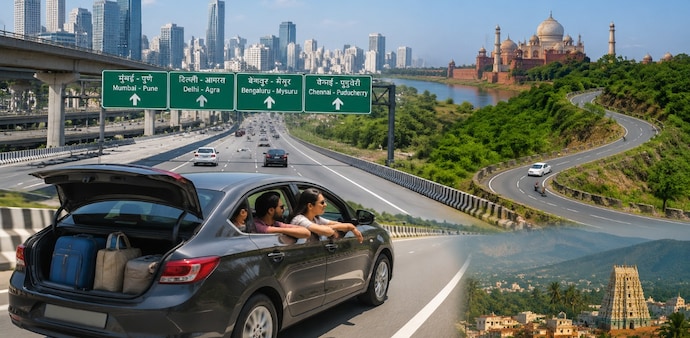
Mumbai to Pune, Delhi to Agra, Bengaluru to Mysuru, Lucknow to Kanpur, and Ahmedabad to Vadodara remained India's highest-volume intercity corridors during the quarter. On the growth side, the fastest-rising routes year on year were Ahmedabad to Vadodara, Bengaluru to Mysuru, Delhi to Dehradun, Delhi to Chandigarh, and Chennai to Puducherry, all reflecting rising demand for regional road travel beyond the traditional metro axis.
Shiva Shailendran, Director, Revenue and Category Management at Uber India and South Asia, described the trend as structural. "A combination of safer intercity travel options like Uber Intercity along with an expanding and improved road infrastructure is driving road trips across India, not just between major cities, but increasingly across regional corridors and to destinations that offer unique cultural, spiritual and leisure experiences. This edition of the Uber Intercity Travel Index reflects how travel behaviour is evolving, with increased volume of road trips, new emerging intercity routes, and continued demand," he said.
Long weekends and leisure driving demand
The data also captures a clear shift toward planned leisure travel built around long weekends. Uber Intercity saw demand spikes around May Day (May 1) and Bakrid (May 28). Some riders completed close to 30 intercity trips over the three-month period, while others covered nearly 1,500 kilometres in intercity travel, numbers that point to road trips becoming a regular rather than occasional habit for a segment of Indian travellers.
Weekend getaway routes that saw strong demand included Mumbai to Nashik and Aurangabad, Delhi to Dehradun and Agra, and Chennai to Puducherry. Heritage and pilgrimage destinations, Agra, Mysuru, Prayagraj, Ajmer, and Udaipur, also saw consistent demand through the summer season.
Tier-2 corridors leading emerging growth
Some of the most telling data points come from smaller city pairs. Thrissur to Kochi, Indore to Ujjain, Kanpur to Lucknow, and Ranchi to Jamshedpur all emerged as growing Tier-2 intercity corridors, suggesting that road travel appetite is spreading well beyond the country's largest urban centres.
Round trip bookings also revealed interesting patterns. In Hyderabad, the most booked return routes were to Yadagirigutta and Kurnool. Around Delhi, Agra and Sikar led the round trip list. Bengaluru riders favoured Nandi Hills, Magadi, Dharmapuri, and Mandya for day or weekend returns, while Pune travellers most commonly booked round trips to Ahmednagar and Satara.
India is hitting the road, and not just between major cities. Data from Uber's Intercity Travel Index for April to June 2026 shows that while metro-to-metro routes remain the busiest corridors, the fastest growth is coming from regional routes connecting Tier-2 cities and leisure destinations, driven by improved highway infrastructure and a growing appetite for experience-led travel.
The most popular and fastest-growing routes
Mumbai to Pune, Delhi to Agra, Bengaluru to Mysuru, Lucknow to Kanpur, and Ahmedabad to Vadodara remained India's highest-volume intercity corridors during the quarter. On the growth side, the fastest-rising routes year on year were Ahmedabad to Vadodara, Bengaluru to Mysuru, Delhi to Dehradun, Delhi to Chandigarh, and Chennai to Puducherry, all reflecting rising demand for regional road travel beyond the traditional metro axis.
Shiva Shailendran, Director, Revenue and Category Management at Uber India and South Asia, described the trend as structural. "A combination of safer intercity travel options like Uber Intercity along with an expanding and improved road infrastructure is driving road trips across India, not just between major cities, but increasingly across regional corridors and to destinations that offer unique cultural, spiritual and leisure experiences. This edition of the Uber Intercity Travel Index reflects how travel behaviour is evolving, with increased volume of road trips, new emerging intercity routes, and continued demand," he said.
Long weekends and leisure driving demand
The data also captures a clear shift toward planned leisure travel built around long weekends. Uber Intercity saw demand spikes around May Day (May 1) and Bakrid (May 28). Some riders completed close to 30 intercity trips over the three-month period, while others covered nearly 1,500 kilometres in intercity travel, numbers that point to road trips becoming a regular rather than occasional habit for a segment of Indian travellers.
Weekend getaway routes that saw strong demand included Mumbai to Nashik and Aurangabad, Delhi to Dehradun and Agra, and Chennai to Puducherry. Heritage and pilgrimage destinations, Agra, Mysuru, Prayagraj, Ajmer, and Udaipur, also saw consistent demand through the summer season.
Tier-2 corridors leading emerging growth
Some of the most telling data points come from smaller city pairs. Thrissur to Kochi, Indore to Ujjain, Kanpur to Lucknow, and Ranchi to Jamshedpur all emerged as growing Tier-2 intercity corridors, suggesting that road travel appetite is spreading well beyond the country's largest urban centres.
Round trip bookings also revealed interesting patterns. In Hyderabad, the most booked return routes were to Yadagirigutta and Kurnool. Around Delhi, Agra and Sikar led the round trip list. Bengaluru riders favoured Nandi Hills, Magadi, Dharmapuri, and Mandya for day or weekend returns, while Pune travellers most commonly booked round trips to Ahmednagar and Satara.