
'It is a simple test...': Sanjeev Sanyal counters US man on why Indians eat using their hands
Sanyal pressed the point further in a follow-up comment, noting that the same critic “will eat pizza, doughnuts, bread, burgers, etc. with his hands.”
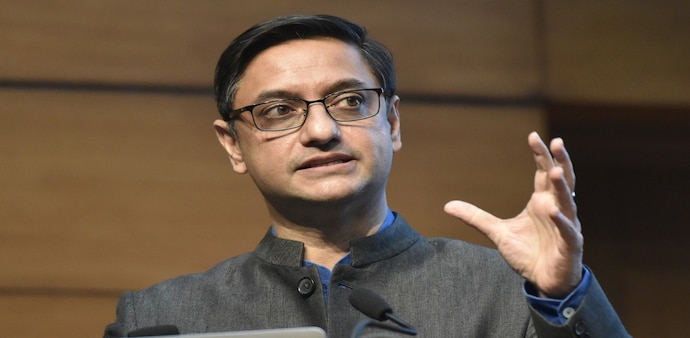
- Sep 6, 2026,
- Updated Sep 6, 2026 11:20 AM IST
A video of an American man questioning why Indians eat with their hands resurfaced on social media, igniting a sharp debate over culture, hygiene, and global double standards.
Member of the Prime Minister’s Economic Advisory Council, Sanjeev Sanyal, stepped in to defend the age-old practice with a blunt reality check. Responding to the user on X (formally twitter), who asked, "Seriously, question, why do they all eat with their hands?”, Sanyal offered a swift counter.
“It is a simple test… if you cannot bear to touch it and need metal instruments, then it is probably a bad idea to put it in your mouth,” he wrote.
Sanyal pressed the point further in a follow-up comment, noting that the same critic “will eat pizza, doughnuts, bread, burgers, etc. with his hands.” He argued that the skepticism stems not from genuine hygiene concerns, but from an unfamiliarity with how Indians mix various dishes together on a single plate using their fingers.
Eating with hands remains a deeply rooted tradition across India, particularly during meals served on banana leaves or classic thalis. Beyond custom, the practice is tied to sensory connection, mindful portion control, and the seamless tactile experience of combining rice, lentils, curries, and side dishes.
DO CHECKOUT | Why Indians eat with hands: And why the West might be wrong, explained
The exchange quickly triggered a wider online conversation about etiquette and cross-cultural biases. Indian social media users rallied around Sanyal, agreeing that the custom is completely natural and hygienic when hands are washed properly. Many pointed out the obvious hypocrisy, noting that global staples like sandwiches, tacos, sushi, and kebabs are universally eaten by hand without a second thought.
Supporters praised Sanyal’s logic as "solid" and "simple," with one commenter noting, “This is the best explanation I’ve seen,” while another insisted, “Indian food just tastes better this way.”
Others highlighted the environmental benefits of the tradition, with one user writing: “Eating with hands on a banana leaf = 0 cutlery, 0 detergent, 0 plastic, 100% biodegradable.” Capturing the nuance of the practice, another added, "It's just more enjoyable to eat with your hand with some food. It's not like all Indian cuisine is eaten by hands.”
A video of an American man questioning why Indians eat with their hands resurfaced on social media, igniting a sharp debate over culture, hygiene, and global double standards.
Member of the Prime Minister’s Economic Advisory Council, Sanjeev Sanyal, stepped in to defend the age-old practice with a blunt reality check. Responding to the user on X (formally twitter), who asked, "Seriously, question, why do they all eat with their hands?”, Sanyal offered a swift counter.
“It is a simple test… if you cannot bear to touch it and need metal instruments, then it is probably a bad idea to put it in your mouth,” he wrote.
Sanyal pressed the point further in a follow-up comment, noting that the same critic “will eat pizza, doughnuts, bread, burgers, etc. with his hands.” He argued that the skepticism stems not from genuine hygiene concerns, but from an unfamiliarity with how Indians mix various dishes together on a single plate using their fingers.
Eating with hands remains a deeply rooted tradition across India, particularly during meals served on banana leaves or classic thalis. Beyond custom, the practice is tied to sensory connection, mindful portion control, and the seamless tactile experience of combining rice, lentils, curries, and side dishes.
DO CHECKOUT | Why Indians eat with hands: And why the West might be wrong, explained
The exchange quickly triggered a wider online conversation about etiquette and cross-cultural biases. Indian social media users rallied around Sanyal, agreeing that the custom is completely natural and hygienic when hands are washed properly. Many pointed out the obvious hypocrisy, noting that global staples like sandwiches, tacos, sushi, and kebabs are universally eaten by hand without a second thought.
Supporters praised Sanyal’s logic as "solid" and "simple," with one commenter noting, “This is the best explanation I’ve seen,” while another insisted, “Indian food just tastes better this way.”
Others highlighted the environmental benefits of the tradition, with one user writing: “Eating with hands on a banana leaf = 0 cutlery, 0 detergent, 0 plastic, 100% biodegradable.” Capturing the nuance of the practice, another added, "It's just more enjoyable to eat with your hand with some food. It's not like all Indian cuisine is eaten by hands.”