
Swiss luxury watch industry under pressure as Gen Z shifts away from traditional status symbols
The changing preferences of younger consumers are emerging as one of the biggest challenges for traditional watchmakers
- Sep 6, 2026,
- Updated Sep 6, 2026 1:20 AM IST
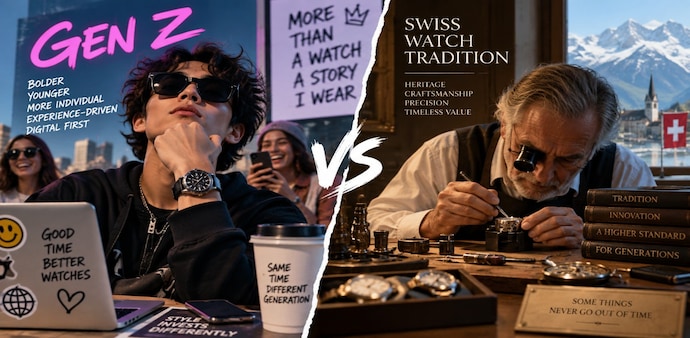
The luxury watch industry is confronting a major shift in consumer behaviour as Gen Z and younger millennials increasingly challenge the traditional ideas of status, exclusivity and brand loyalty that have long supported Swiss watchmaking.
According to a Bloomberg report, luxury watchmakers are being pushed to move beyond a strategy centred on selling fewer watches at increasingly higher prices. Industry executives gathered in Geneva this week warned that attracting younger consumers will require more creativity, emotional appeal and experimentation.
“Today, that’s the main challenge of the industry,” Jean-Christophe Babin, president of Geneva Watch Days and chairman of Bulgari, told Bloomberg.
The warning comes as Swiss watch exports have declined sharply. Switzerland exported 14.6 million watches last year, compared with 25.4 million in 2016, according to the Federation of the Swiss Watch Industry.
Gen Z prioritises emotion over status
The changing preferences of younger consumers are emerging as one of the biggest challenges for traditional watchmakers. Babin said Gen Z and young millennials are less focused on status and established brand names and instead seek “excitement, emotion, discovery,” according to Bloomberg.
That shift is particularly significant for brands operating in the middle of the market. While ultra-luxury names such as Rolex, Patek Philippe and Cartier continue to benefit from strong collector demand and loyal followings, mid-market brands are facing greater pressure.
Rodolfo Festa-Bianchet, chief executive and co-founder of Bianchet, said the ultra-high-end segment continues to attract “collector interest” but described the market as tougher for companies positioned in the middle.
Resale market adds more pressure
Younger buyers are also increasingly comfortable purchasing pre-owned and vintage watches online. The secondary market allows consumers to avoid waiting lists, find discontinued models and obtain watches immediately.
This trend is challenging the traditional luxury model, in which scarcity, long waiting periods and brand prestige have historically helped drive demand.
DO READ: Gen Z may never buy a home: Here's how India’s housing market could change
Asian competition is growing
Swiss watchmakers are also facing growing competition from Japanese and Chinese brands, particularly in the mid-price segment. Oliver Müller, founder of industry advisory firm LuxeConsult, said, “Gen Z probably gives less weight to the Swiss-made hallmark.”
Chinese manufacturers are increasingly producing mechanical watches and selling them globally through online channels, while Japanese brands such as Seiko, Citizen and Casio continue to perform strongly.
For Swiss watchmakers, Bloomberg reported, the challenge is no longer simply raising prices. The industry must find ways to make watches exciting and culturally relevant to a generation that values discovery, individuality and emotional connection over traditional luxury credentials.
ALSO READ: No more 'personal reasons': How Gen Z is breaking workplace taboos on mental health
The luxury watch industry is confronting a major shift in consumer behaviour as Gen Z and younger millennials increasingly challenge the traditional ideas of status, exclusivity and brand loyalty that have long supported Swiss watchmaking.
According to a Bloomberg report, luxury watchmakers are being pushed to move beyond a strategy centred on selling fewer watches at increasingly higher prices. Industry executives gathered in Geneva this week warned that attracting younger consumers will require more creativity, emotional appeal and experimentation.
“Today, that’s the main challenge of the industry,” Jean-Christophe Babin, president of Geneva Watch Days and chairman of Bulgari, told Bloomberg.
The warning comes as Swiss watch exports have declined sharply. Switzerland exported 14.6 million watches last year, compared with 25.4 million in 2016, according to the Federation of the Swiss Watch Industry.
Gen Z prioritises emotion over status
The changing preferences of younger consumers are emerging as one of the biggest challenges for traditional watchmakers. Babin said Gen Z and young millennials are less focused on status and established brand names and instead seek “excitement, emotion, discovery,” according to Bloomberg.
That shift is particularly significant for brands operating in the middle of the market. While ultra-luxury names such as Rolex, Patek Philippe and Cartier continue to benefit from strong collector demand and loyal followings, mid-market brands are facing greater pressure.
Rodolfo Festa-Bianchet, chief executive and co-founder of Bianchet, said the ultra-high-end segment continues to attract “collector interest” but described the market as tougher for companies positioned in the middle.
Resale market adds more pressure
Younger buyers are also increasingly comfortable purchasing pre-owned and vintage watches online. The secondary market allows consumers to avoid waiting lists, find discontinued models and obtain watches immediately.
This trend is challenging the traditional luxury model, in which scarcity, long waiting periods and brand prestige have historically helped drive demand.
DO READ: Gen Z may never buy a home: Here's how India’s housing market could change
Asian competition is growing
Swiss watchmakers are also facing growing competition from Japanese and Chinese brands, particularly in the mid-price segment. Oliver Müller, founder of industry advisory firm LuxeConsult, said, “Gen Z probably gives less weight to the Swiss-made hallmark.”
Chinese manufacturers are increasingly producing mechanical watches and selling them globally through online channels, while Japanese brands such as Seiko, Citizen and Casio continue to perform strongly.
For Swiss watchmakers, Bloomberg reported, the challenge is no longer simply raising prices. The industry must find ways to make watches exciting and culturally relevant to a generation that values discovery, individuality and emotional connection over traditional luxury credentials.
ALSO READ: No more 'personal reasons': How Gen Z is breaking workplace taboos on mental health