
When gods ruled empires: 4 forgotten religions that shaped civilizations and then vanished
The ancient world was home to thousands of belief systems, many of which dominated entire regions before slipping into obscurity. Yet while their followers disappeared, many of their myths, monuments, and traditions continue to intrigue historians and archaeologists today.
- Aug 2, 2026,
- Updated Aug 2, 2026 3:02 PM IST
Long before today's major religions shaped civilizations, vast empires bowed before entirely different gods. Kings built towering temples, priests performed elaborate rituals, and millions believed their deities controlled everything from harvests to war.
Then, over centuries, these faiths faded — overtaken by political upheaval, conquest, and the rise of new religions. Yet while their followers disappeared, many of their myths, monuments, and traditions continue to intrigue historians and archaeologists today.
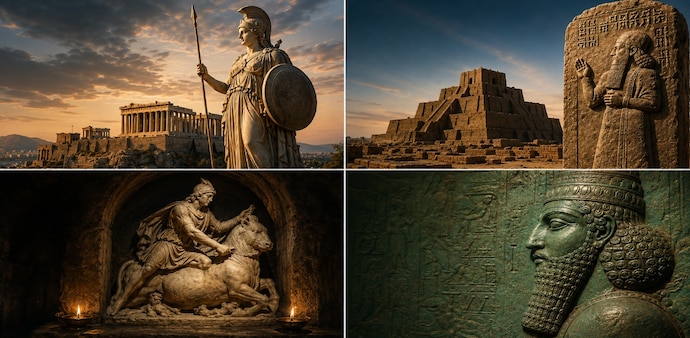
The ancient world was home to thousands of belief systems, many of which dominated entire regions before slipping into obscurity. Among the most influential were the Hellenic religion of ancient Greece, Sumerian polytheism in Mesopotamia, the mysterious Roman cult of Mithras, and the Elamite religion of present-day Iran.
Hellenic religion: The age of the Olympian gods
For centuries, the people of ancient Greece worshipped the Twelve Olympian gods, including Zeus, Athena, Apollo and Poseidon. Believed to reside atop Mount Olympus, these deities governed every aspect of life, from justice and warfare to the seas and the skies.
Worship involved animal sacrifices, prayers, festivals and offerings intended to secure divine favour. The religion flourished during the Hellenistic era before gradually declining as Christianity spread across the Roman Empire, fundamentally transforming the region's spiritual landscape.
Sumerian polytheism: One of humanity's earliest organised faiths
Dating back to around 4500 BCE, Sumerian religion emerged in ancient Mesopotamia, making it one of the world's oldest known organized belief systems.
The Sumerians believed powerful deities governed every force of nature. An ruled the heavens, Enlil controlled the wind, while Inanna represented both love and war. Every city had its own patron deity, and priests conducted ceremonies in monumental temple complexes known as ziggurats.
Their mythology also reflected their understanding of the universe, including the belief that Earth was a disc floating upon a cosmic sea.
Mithraism: Rome's secretive brotherhood
Unlike many public religions of the ancient world, Mithraism was built around secrecy.
Popular across the Roman Empire between the first and fourth centuries CE, the cult worshipped Mithras, a deity associated with justice and war. Membership was largely restricted to men, particularly soldiers and members of the elite.
Followers gathered inside underground temples called mithraea, where they held communal meals and initiation ceremonies hidden from outsiders. One of the religion's defining symbols depicted Mithras slaying a sacred bull, an image known as the tauroctony, whose precise meaning remains debated by scholars.
Elamite religion: A forgotten faith from ancient Iran
Less widely known than its Mesopotamian neighbours, the Elamite religion flourished across parts of present-day Iran.
Its pantheon included more than 200 deities, with gods and goddesses overseeing different aspects of nature and society. Temples formed the centre of religious life, and monumental structures such as Chogha Zanbil remain among the best-preserved examples of Elamite architecture.
Over time, shifting political powers and changing religious traditions led to the decline of the faith, leaving behind archaeological sites that continue to provide clues about one of the ancient world's least understood civilizations.
Although these religions no longer command followers, they continue to influence modern scholarship. Their myths inspired later literature, their rituals offer insights into the social and political structures of ancient societies, and their temples remain enduring reminders of civilizations that once believed their gods governed the fate of humanity.
Long before today's major religions shaped civilizations, vast empires bowed before entirely different gods. Kings built towering temples, priests performed elaborate rituals, and millions believed their deities controlled everything from harvests to war.
Then, over centuries, these faiths faded — overtaken by political upheaval, conquest, and the rise of new religions. Yet while their followers disappeared, many of their myths, monuments, and traditions continue to intrigue historians and archaeologists today.
The ancient world was home to thousands of belief systems, many of which dominated entire regions before slipping into obscurity. Among the most influential were the Hellenic religion of ancient Greece, Sumerian polytheism in Mesopotamia, the mysterious Roman cult of Mithras, and the Elamite religion of present-day Iran.
Hellenic religion: The age of the Olympian gods
For centuries, the people of ancient Greece worshipped the Twelve Olympian gods, including Zeus, Athena, Apollo and Poseidon. Believed to reside atop Mount Olympus, these deities governed every aspect of life, from justice and warfare to the seas and the skies.
Worship involved animal sacrifices, prayers, festivals and offerings intended to secure divine favour. The religion flourished during the Hellenistic era before gradually declining as Christianity spread across the Roman Empire, fundamentally transforming the region's spiritual landscape.
Sumerian polytheism: One of humanity's earliest organised faiths
Dating back to around 4500 BCE, Sumerian religion emerged in ancient Mesopotamia, making it one of the world's oldest known organized belief systems.
The Sumerians believed powerful deities governed every force of nature. An ruled the heavens, Enlil controlled the wind, while Inanna represented both love and war. Every city had its own patron deity, and priests conducted ceremonies in monumental temple complexes known as ziggurats.
Their mythology also reflected their understanding of the universe, including the belief that Earth was a disc floating upon a cosmic sea.
Mithraism: Rome's secretive brotherhood
Unlike many public religions of the ancient world, Mithraism was built around secrecy.
Popular across the Roman Empire between the first and fourth centuries CE, the cult worshipped Mithras, a deity associated with justice and war. Membership was largely restricted to men, particularly soldiers and members of the elite.
Followers gathered inside underground temples called mithraea, where they held communal meals and initiation ceremonies hidden from outsiders. One of the religion's defining symbols depicted Mithras slaying a sacred bull, an image known as the tauroctony, whose precise meaning remains debated by scholars.
Elamite religion: A forgotten faith from ancient Iran
Less widely known than its Mesopotamian neighbours, the Elamite religion flourished across parts of present-day Iran.
Its pantheon included more than 200 deities, with gods and goddesses overseeing different aspects of nature and society. Temples formed the centre of religious life, and monumental structures such as Chogha Zanbil remain among the best-preserved examples of Elamite architecture.
Over time, shifting political powers and changing religious traditions led to the decline of the faith, leaving behind archaeological sites that continue to provide clues about one of the ancient world's least understood civilizations.
Although these religions no longer command followers, they continue to influence modern scholarship. Their myths inspired later literature, their rituals offer insights into the social and political structures of ancient societies, and their temples remain enduring reminders of civilizations that once believed their gods governed the fate of humanity.