
Iran installs cameras in public places to identify, penalise women without hijab
The police announced on Saturday that cameras would be installed in public places and thoroughfares to identify and penalize women who are not wearing the hijab, or veil
- Apr 8, 2023,
- Updated Apr 8, 2023 6:07 PM IST
In Iran, authorities are taking new measures to control the increasing number of women who are defying the compulsory dress code. The police announced on Saturday that cameras would be installed in public places and thoroughfares to identify and penalize women who are not wearing the hijab, or veil.
The violators will receive warning text messages as to the consequences of their actions. The authorities aim to prevent resistance against the hijab law, which they assert damages the country's spiritual image and causes insecurity. To this end, the police have urged business owners to diligently monitor compliance with societal norms through regular inspections. This means that they are expected to play a part in enforcing the hijab law and reporting any violations to the authorities.
Since the death of a 22-year-old Kurdish woman, Mahsa Amini, who was detained for violating the hijab rule and died in custody last September, more and more Iranian women have been ditching their veils. The security forces responded violently to the resulting revolt, but women are still widely seen unveiled in malls, restaurants, shops, and streets around the country. Videos of unveiled women resisting the morality police have flooded social media.
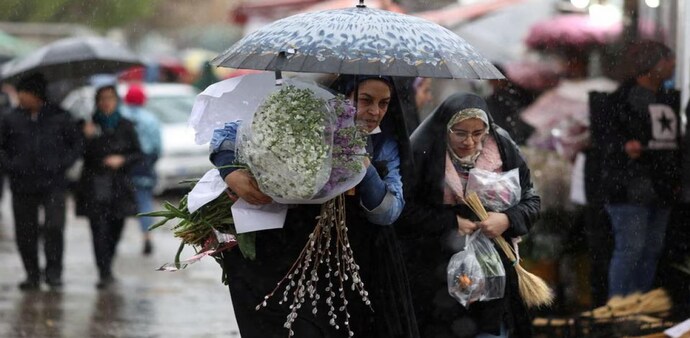
In adherence to Iran's Islamic Sharia law, which was enforced after the 1979 revolution, women are required to cover their hair and wear long, loose-fitting clothing to conceal themselves. Those who violate this law may face public condemnation, fines, or arrest.
Despite the authorities' efforts to enforce the dress code, some Iranians see the veil as a symbol of oppression and resist it. Others see it as a necessary part of their faith and culture.
An Interior Ministry statement on March 30 described the veil as "one of the civilizational foundations of the Iranian nation" and "one of the practical principles of the Islamic Republic." It urged citizens to confront unveiled women. Such directives have in past decades emboldened hardliners to attack women.
(With Agency inputs)
In Iran, authorities are taking new measures to control the increasing number of women who are defying the compulsory dress code. The police announced on Saturday that cameras would be installed in public places and thoroughfares to identify and penalize women who are not wearing the hijab, or veil.
The violators will receive warning text messages as to the consequences of their actions. The authorities aim to prevent resistance against the hijab law, which they assert damages the country's spiritual image and causes insecurity. To this end, the police have urged business owners to diligently monitor compliance with societal norms through regular inspections. This means that they are expected to play a part in enforcing the hijab law and reporting any violations to the authorities.
Since the death of a 22-year-old Kurdish woman, Mahsa Amini, who was detained for violating the hijab rule and died in custody last September, more and more Iranian women have been ditching their veils. The security forces responded violently to the resulting revolt, but women are still widely seen unveiled in malls, restaurants, shops, and streets around the country. Videos of unveiled women resisting the morality police have flooded social media.
In adherence to Iran's Islamic Sharia law, which was enforced after the 1979 revolution, women are required to cover their hair and wear long, loose-fitting clothing to conceal themselves. Those who violate this law may face public condemnation, fines, or arrest.
Despite the authorities' efforts to enforce the dress code, some Iranians see the veil as a symbol of oppression and resist it. Others see it as a necessary part of their faith and culture.
An Interior Ministry statement on March 30 described the veil as "one of the civilizational foundations of the Iranian nation" and "one of the practical principles of the Islamic Republic." It urged citizens to confront unveiled women. Such directives have in past decades emboldened hardliners to attack women.
(With Agency inputs)