
Monkeypox cases spotted in Europe, North America: 10 things you should know
Portugal has logged five confirmed cases, and Spain is testing 23 potential cases. Notably, neither country has reported cases before.
- May 19, 2022,
- Updated May 19, 2022 6:50 PM IST
Over the past few days, several cases of monkeypox have been reported in parts of the world, especially in Europe and North America. Itay reported its first monkeypox case earlier today.
Several cases have also been reported or are suspected in the United Kingdom, Portugal and Spain. Portugal has logged five confirmed cases, and Spain is testing 23 potential cases. Notably, neither country has reported cases before.
Further, monkeypox cases have also been reported in North America. In fact, yesterday, the US reported its first confirmed case of the virus. The outbreaks are raising alarm because the disease mostly occurs in West and Central Africa, and only very occasionally spreads elsewhere. Here are ten things you should know about the recent Monkeypox outbreak:
- Monkeypox is a virus that causes fever symptoms as well as a distinctive bumpy rash. It is usually mild.
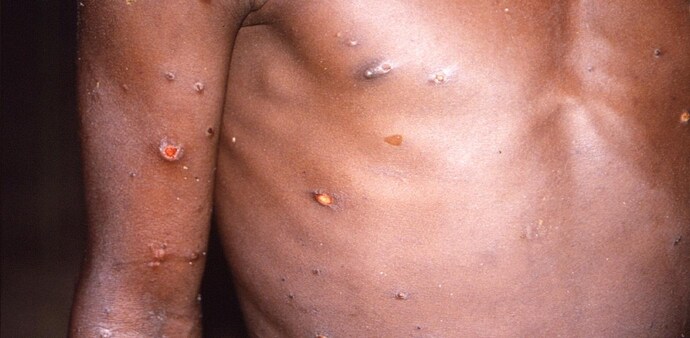
- A rash can develop, often beginning on the face, then spreading to other parts of the body including the genitals. The rash changes and goes through different stages, and can look like chickenpox or syphilis, before finally forming a scab, which later falls off.
- There are two main strains: the Congo strain, which is more severe with up to 10 per cent mortality and the West African strain, which has a fatality rate of more like 1 per cent of cases. The UK cases have been reported as the West African strain.
- The first-ever recorded occurrence of the monkeypox virus in the UK was in 2018, and since then a handful of cases have been confirmed by health authorities.
- The virus spreads through close contact, both in spillovers from animal hosts and, less commonly, between humans. It was first found in monkeys in 1958, hence the name, although rodents are now seen as the main source of transmission
- Transmission this time is puzzling experts, because a number of the cases in the United Kingdom - nine as of May 18 - have no known connection with each other. Only the first case reported on May 6 had recently travelled to Nigeria.
- European health authorities are monitoring any outbreak of the disease since Britain reported its first case on May 7 and has found six more in the country since then.
- The UK Health Security Agency's alert has highlighted that the recent cases were predominantly among men who self-identified as gay, bisexual or men who have sex with men, and advised those groups to be alert.
- The health authorities are urging anyone with concerns that they could be infected with monkeypox to make contact with clinics ahead of their visit, reiterating that their discussion will be treated "sensitively and confidentially".
- Monkeypox puts virologists on the alert because it is in the smallpox family, although it causes less serious illness.
(With agency inputs)
Also read: Monkeypox: Italy reports first case of infection, two more suspected
Over the past few days, several cases of monkeypox have been reported in parts of the world, especially in Europe and North America. Itay reported its first monkeypox case earlier today.
Several cases have also been reported or are suspected in the United Kingdom, Portugal and Spain. Portugal has logged five confirmed cases, and Spain is testing 23 potential cases. Notably, neither country has reported cases before.
Further, monkeypox cases have also been reported in North America. In fact, yesterday, the US reported its first confirmed case of the virus. The outbreaks are raising alarm because the disease mostly occurs in West and Central Africa, and only very occasionally spreads elsewhere. Here are ten things you should know about the recent Monkeypox outbreak:
- Monkeypox is a virus that causes fever symptoms as well as a distinctive bumpy rash. It is usually mild.
- A rash can develop, often beginning on the face, then spreading to other parts of the body including the genitals. The rash changes and goes through different stages, and can look like chickenpox or syphilis, before finally forming a scab, which later falls off.
- There are two main strains: the Congo strain, which is more severe with up to 10 per cent mortality and the West African strain, which has a fatality rate of more like 1 per cent of cases. The UK cases have been reported as the West African strain.
- The first-ever recorded occurrence of the monkeypox virus in the UK was in 2018, and since then a handful of cases have been confirmed by health authorities.
- The virus spreads through close contact, both in spillovers from animal hosts and, less commonly, between humans. It was first found in monkeys in 1958, hence the name, although rodents are now seen as the main source of transmission
- Transmission this time is puzzling experts, because a number of the cases in the United Kingdom - nine as of May 18 - have no known connection with each other. Only the first case reported on May 6 had recently travelled to Nigeria.
- European health authorities are monitoring any outbreak of the disease since Britain reported its first case on May 7 and has found six more in the country since then.
- The UK Health Security Agency's alert has highlighted that the recent cases were predominantly among men who self-identified as gay, bisexual or men who have sex with men, and advised those groups to be alert.
- The health authorities are urging anyone with concerns that they could be infected with monkeypox to make contact with clinics ahead of their visit, reiterating that their discussion will be treated "sensitively and confidentially".
- Monkeypox puts virologists on the alert because it is in the smallpox family, although it causes less serious illness.
(With agency inputs)
Also read: Monkeypox: Italy reports first case of infection, two more suspected