
WHO warns of 'biological risk' in Sudan as fighters seize laboratory holding pathogens
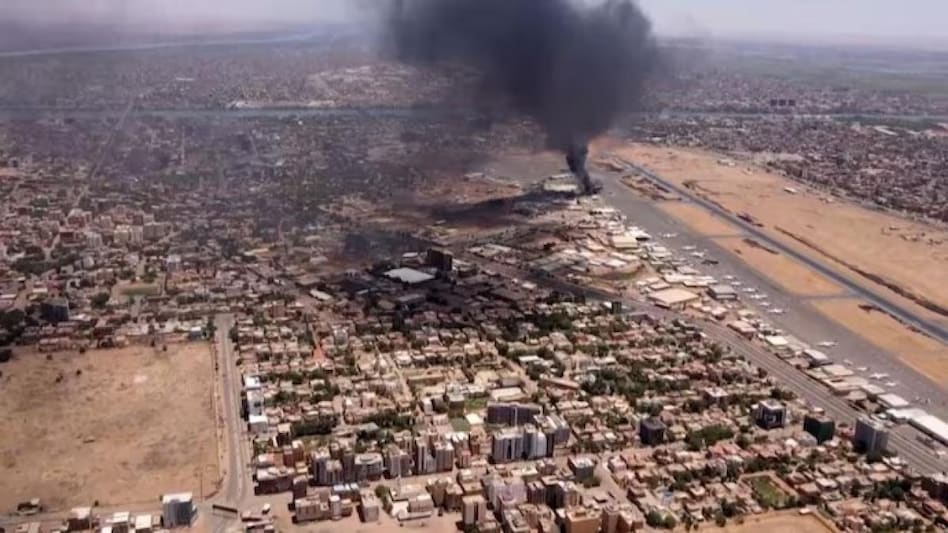
Sudan has descended into crisis after a war erupted between the army and the Rapid Support Forces (RSF) paramilitaries on April 15. The residential areas have turned into war zones, with at least 459 deaths and over 4,000, injured in the conflict so far.
- Apr 25, 2023,
- Updated Apr 25, 2023 7:44 PM IST
The World Health Organisation (WHO) has warned of a "high risk of biological hazard" in Sudan's capital city Khartoum as one of the warring parties has seized a national laboratory holding measles and cholera pathogens, Reuters reported on Tuesday. The fighters have also ejected the technicians from the laboratory, the news agency said.
Sudan has descended into crisis after a war erupted between the army and the Rapid Support Forces (RSF) paramilitaries on April 15. The residential areas have turned into war zones, with at least 459 deaths and over 4,000, injured in the conflict so far. The violence has cut supplies of water, power, and food. Foreign countries have airlifted embassy staff out of Khartoum, after several attacks on diplomats, including the killing of an Egyptian attache shot on his way to work. India has started evacuating its nationals from the country. Today, the first batch of Indians stranded there left for India.
Earlier in the day, Britain launched a large-scale evacuation of its nationals on military flights from an airfield north of Khartoum. France and Germany said they had each evacuated more than 500 people of various nationalities, and that a French commando had been hit by crossfire during the operation.
Last Thursday, WHO's Regional Director described the situation as "horrific" and said almost 330 people had died and almost 3200 more injured as a result of fighting in Khartoum and a number of other states, including the Darfur States.
Movement in Khartoum was restricted due to the insecurity, creating challenges for doctors, nurses, patients, and ambulances to reach health facilities, and putting the lives of those who need urgent medical care at risk. People who required regular care for chronic diseases were unable to access treatment, and mental health and psychosocial needs, especially among children, were increasing, the WHO official said.
"Widespread blackouts continued and lack of electricity in certain areas and hospitals place patients at high risk. There are acute water and fuel shortages in health facilities, and a number of water stations in Khartoum have gone out of service. In hospitals, there are severe shortages of specialized medical staff, oxygen supplies, and blood bags."
(With inputs from Reuters)
The World Health Organisation (WHO) has warned of a "high risk of biological hazard" in Sudan's capital city Khartoum as one of the warring parties has seized a national laboratory holding measles and cholera pathogens, Reuters reported on Tuesday. The fighters have also ejected the technicians from the laboratory, the news agency said.
Sudan has descended into crisis after a war erupted between the army and the Rapid Support Forces (RSF) paramilitaries on April 15. The residential areas have turned into war zones, with at least 459 deaths and over 4,000, injured in the conflict so far. The violence has cut supplies of water, power, and food. Foreign countries have airlifted embassy staff out of Khartoum, after several attacks on diplomats, including the killing of an Egyptian attache shot on his way to work. India has started evacuating its nationals from the country. Today, the first batch of Indians stranded there left for India.
Earlier in the day, Britain launched a large-scale evacuation of its nationals on military flights from an airfield north of Khartoum. France and Germany said they had each evacuated more than 500 people of various nationalities, and that a French commando had been hit by crossfire during the operation.
Last Thursday, WHO's Regional Director described the situation as "horrific" and said almost 330 people had died and almost 3200 more injured as a result of fighting in Khartoum and a number of other states, including the Darfur States.
Movement in Khartoum was restricted due to the insecurity, creating challenges for doctors, nurses, patients, and ambulances to reach health facilities, and putting the lives of those who need urgent medical care at risk. People who required regular care for chronic diseases were unable to access treatment, and mental health and psychosocial needs, especially among children, were increasing, the WHO official said.
"Widespread blackouts continued and lack of electricity in certain areas and hospitals place patients at high risk. There are acute water and fuel shortages in health facilities, and a number of water stations in Khartoum have gone out of service. In hospitals, there are severe shortages of specialized medical staff, oxygen supplies, and blood bags."
(With inputs from Reuters)