
Bags worth ₹1.25 lakh+ sold out! Luxury's bejewelled chapter unfolds as Judith Leiber Couture debuts in India, brings its iconic minaudières to Delhi
At its first India store at The Chanakya in New Delhi, Judith Leiber Couture brought together globally recognised silhouettes and a tailored edit for the Indian luxury consumer.
- Apr 29, 2026,
- Updated Apr 29, 2026 4:43 PM IST
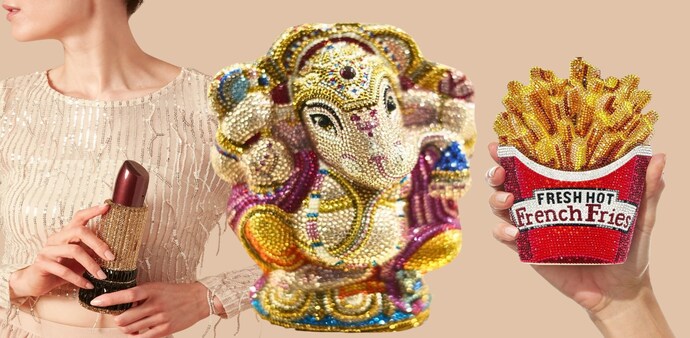
India’s luxury consumer is evolving from logo-led buying to more identity-driven purchases. For Judith Leiber Couture, whose bags sit at the intersection of fashion, craftsmanship and collectible design, that shift creates a clear opportunity in India’s statement accessory market. The luxury brand has opened its first India store at The Chanakya in New Delhi. The India launch brought together globally recognised silhouettes and a tailored edit for the Indian luxury consumer, including statement pieces such as the Ganesha, Elephant Majestic, Red Rose Belle and Parrot Scarlet. Chandni Agarwal, CMD and Founder of Sparsh India Couture, the retail wing of Sparsh Industries and parent entity to Little Tags Luxury; and the India Spokesperson for Judith Leiber Couture, says the brand sees a gap in India for occasion-driven accessories that function as artistic, collectible pieces, especially in a market shaped by weddings, celebrations and red-carpet dressing. Edited excerpts from the interview:-
What made this the right moment for the brand to formally enter India, and why was Delhi chosen as the first store location?
CA: I feel India is now at a pivotal moment in its luxury journey. A lot of international brands are looking towards the Indian market now, especially with the geopolitical shifts.
The market is projected to reach about $200 billion by 2030, but more importantly, we are seeing a clear shift from a more logo-driven consumption to a more mature luxury market, which focuses more on identity-driven purchases. That evolution aligns perfectly with Judith Leiber, which has always stood for individuality and artistic expression.
Delhi felt like a natural starting point, as it has the most mature luxury audience in the country, which is strongly occasion-led. The customer here is confident to make bold choices more than any other city. People really put in efforts to get dressed up in Delhi, even for smaller occasions, they put in effort into what bag, what outfit they will be wearing. That enthusiasm towards fashion is very high in Delhi.
With India’s luxury market expanding but also becoming competitive, what gives you confidence that Judith Leiber can build strong demand here? What price points will resonate?
CA: I feel there is a clear white space in India for statement, occasion-driven accessories. There are a lot of luxury handbags, but something like Judith Leiber, which is really like an artistic piece, like a little jewel box you carry, that segment is non-existent right now.
There are very few brands that cater to weddings and celebrations in that way. So this is the space we would like to play in.
From a price point perspective, our starting point is about ₹1.25 lakh, which got sold out on the first day itself. There is also a mature market now that is very comfortable in the ₹3–10 lakh range, if the piece is really special. The shift is towards buying less, but buying more investment pieces.
Do you offer customization, given the craftsmanship-led positioning of the brand?
CA: Craftsmanship is the core of Judith Leiber. There are customizable bags where you can put your initials, your company’s name, or something personal. There are novelty bags as well as ones that have more basic shapes.
We are also in talks to do something more India-specific in design. Earlier, there was a Ganesha piece that did really well for the brand and continues to do well, so we are exploring similar ideas. We were displaying Ganesha on the day of the launch as well but luckily, it got sold out.
The Chanakya has become a key address for luxury retail in India. What role does the right retail environment play in shaping a brand launch like this?
CA: It plays the most important role. For Judith Leiber, the environment is critical. The brand thrives on storytelling and visual impact.
The Chanakya has positioned itself as more than just a retail space. It is a curated luxury destination. The consumer who comes here is already looking to discover and engage.
The mall is compact, but entirely focused on luxury, with brands like Chanel and others, which makes the curation perfect for us.
How important is localization for a luxury brand entering India today?
CA: Localization today is less about changing the product and more about understanding the context in which it lives.
Judith Leiber’s design language is already very ornamental, celebratory, and detailed, which resonates strongly with Indian sensibilities.
So the focus is more on positioning the brand within Indian occasions rather than altering its core identity.
Where are the bags manufactured, and what defines their craftsmanship? Are there India-specific designs that you expect to perform well?
CA: There is only one manufacturer for these bags globally, and they come from Milan.
Each bag takes a lot of time to make. It is very intricate work, and even the molds are not easy to create. It is highly specialised craftsmanship. Not everyone can do it.
Pieces like Ganesha and the Majestic Elephant, which they call the Maharaja, are very India-specific. There is also a design called Shere Khan. But even beyond that, most designs with ornamental detailing work very well with Indian wear.
Who is the core Judith Leiber customer in India today? Do you see that audience expanding to include younger luxury buyers such as Gen Z?
CA: The current Leiber customer is globally aware, well-travelled, deeply engaged with fashion, and values craftsmanship. At the same time, they are open to bold and playful designs.
Gen Z represents a significant opportunity. They are entering luxury earlier and are far more experimental. Our bags designed as playful mics and phones hold much appeal for such consumers. Judith Leiber’s strong visual identity and cultural relevance resonate well with this audience as their spending power grows.
What are the biggest shifts you are seeing in luxury handbag preferences?
CA: There is a clear shift from logo-centric fashion to quieter, more artistic pieces.
Consumers today want something that stands out rather than blending in with big monograms.
Over the next few years, what will success in India look like for the brand, and where do you see your next store opening?
CA: In the early years, success will be about building desirability and relevance for the brand in India.
People already know the brand in the right circles, but we want to expand that and become a natural choice for weddings, red carpets, and celebrations.
Establishing a strong brand recall among luxury customers will be our aim for the first few years and from there on the growth will be deliberate and very measured.
We will expand to other cities, but not at the cost of exclusivity. We wanted to establish the brand in Delhi first, and we are already seeing a very positive response, so I think within the next 12 to 18 months, we are eyeing Bombay as well.
How important is celebrity placement or influencer association in building Judith Leiber’s desirability in India? Who would best represent the brand in this market? CA: It’s very important. Someone like Sonam Kapoor stands out. She is experimental and has a global fashion voice and this makes her an absolute fit for Judith Leiber.
Shalini Passi has a very strong association with the brand already. She's very big into art. and also has an affinity towards collectibles, making her someone the brand definitely resonates with. When it comes to newer Bollywood faces, Janhvi Kapoor and Shanaya Kapoor fit well with the luxury positioning. Janhvi is already associated with a plethora of luxury brands.
Even someone like Jai Madaan, who connects strongly with the mature luxury audience and whose fashion is always on point, could be among those who could represent Judith Leiber well.
Sustainability is becoming a bigger conversation in luxury globally. How is Judith Leiber thinking about craftsmanship, longevity and responsible luxury in today’s market?
CA: Longevity is not even a discussion here. I have a piece that is over 15 years old and still intact. Sustainability, in that sense, comes naturally from longevity and emotional value.
Each piece is crafted with care and designed to last. These are not seasonal purchases. They are collectible, heirloom pieces that can be passed on to the next generation.
What makes India a compelling long-term market for global luxury brands?
CA: India offers a rare combination of scale, cultural depth, and a rapidly evolving mindset.
The number of high-net-worth individuals is expected to grow significantly, and consumers today are globally exposed. So more than brand awareness, it's just about being in the right place at the right moment now.
Additionally, the celebration economy is also very big in India with luxury gifting, weddings, and celebrations being major growth drivers. All these factors together make India a very strong long-term opportunity.
India’s luxury consumer is evolving from logo-led buying to more identity-driven purchases. For Judith Leiber Couture, whose bags sit at the intersection of fashion, craftsmanship and collectible design, that shift creates a clear opportunity in India’s statement accessory market. The luxury brand has opened its first India store at The Chanakya in New Delhi. The India launch brought together globally recognised silhouettes and a tailored edit for the Indian luxury consumer, including statement pieces such as the Ganesha, Elephant Majestic, Red Rose Belle and Parrot Scarlet. Chandni Agarwal, CMD and Founder of Sparsh India Couture, the retail wing of Sparsh Industries and parent entity to Little Tags Luxury; and the India Spokesperson for Judith Leiber Couture, says the brand sees a gap in India for occasion-driven accessories that function as artistic, collectible pieces, especially in a market shaped by weddings, celebrations and red-carpet dressing. Edited excerpts from the interview:-
What made this the right moment for the brand to formally enter India, and why was Delhi chosen as the first store location?
CA: I feel India is now at a pivotal moment in its luxury journey. A lot of international brands are looking towards the Indian market now, especially with the geopolitical shifts.
The market is projected to reach about $200 billion by 2030, but more importantly, we are seeing a clear shift from a more logo-driven consumption to a more mature luxury market, which focuses more on identity-driven purchases. That evolution aligns perfectly with Judith Leiber, which has always stood for individuality and artistic expression.
Delhi felt like a natural starting point, as it has the most mature luxury audience in the country, which is strongly occasion-led. The customer here is confident to make bold choices more than any other city. People really put in efforts to get dressed up in Delhi, even for smaller occasions, they put in effort into what bag, what outfit they will be wearing. That enthusiasm towards fashion is very high in Delhi.
With India’s luxury market expanding but also becoming competitive, what gives you confidence that Judith Leiber can build strong demand here? What price points will resonate?
CA: I feel there is a clear white space in India for statement, occasion-driven accessories. There are a lot of luxury handbags, but something like Judith Leiber, which is really like an artistic piece, like a little jewel box you carry, that segment is non-existent right now.
There are very few brands that cater to weddings and celebrations in that way. So this is the space we would like to play in.
From a price point perspective, our starting point is about ₹1.25 lakh, which got sold out on the first day itself. There is also a mature market now that is very comfortable in the ₹3–10 lakh range, if the piece is really special. The shift is towards buying less, but buying more investment pieces.
Do you offer customization, given the craftsmanship-led positioning of the brand?
CA: Craftsmanship is the core of Judith Leiber. There are customizable bags where you can put your initials, your company’s name, or something personal. There are novelty bags as well as ones that have more basic shapes.
We are also in talks to do something more India-specific in design. Earlier, there was a Ganesha piece that did really well for the brand and continues to do well, so we are exploring similar ideas. We were displaying Ganesha on the day of the launch as well but luckily, it got sold out.
The Chanakya has become a key address for luxury retail in India. What role does the right retail environment play in shaping a brand launch like this?
CA: It plays the most important role. For Judith Leiber, the environment is critical. The brand thrives on storytelling and visual impact.
The Chanakya has positioned itself as more than just a retail space. It is a curated luxury destination. The consumer who comes here is already looking to discover and engage.
The mall is compact, but entirely focused on luxury, with brands like Chanel and others, which makes the curation perfect for us.
How important is localization for a luxury brand entering India today?
CA: Localization today is less about changing the product and more about understanding the context in which it lives.
Judith Leiber’s design language is already very ornamental, celebratory, and detailed, which resonates strongly with Indian sensibilities.
So the focus is more on positioning the brand within Indian occasions rather than altering its core identity.
Where are the bags manufactured, and what defines their craftsmanship? Are there India-specific designs that you expect to perform well?
CA: There is only one manufacturer for these bags globally, and they come from Milan.
Each bag takes a lot of time to make. It is very intricate work, and even the molds are not easy to create. It is highly specialised craftsmanship. Not everyone can do it.
Pieces like Ganesha and the Majestic Elephant, which they call the Maharaja, are very India-specific. There is also a design called Shere Khan. But even beyond that, most designs with ornamental detailing work very well with Indian wear.
Who is the core Judith Leiber customer in India today? Do you see that audience expanding to include younger luxury buyers such as Gen Z?
CA: The current Leiber customer is globally aware, well-travelled, deeply engaged with fashion, and values craftsmanship. At the same time, they are open to bold and playful designs.
Gen Z represents a significant opportunity. They are entering luxury earlier and are far more experimental. Our bags designed as playful mics and phones hold much appeal for such consumers. Judith Leiber’s strong visual identity and cultural relevance resonate well with this audience as their spending power grows.
What are the biggest shifts you are seeing in luxury handbag preferences?
CA: There is a clear shift from logo-centric fashion to quieter, more artistic pieces.
Consumers today want something that stands out rather than blending in with big monograms.
Over the next few years, what will success in India look like for the brand, and where do you see your next store opening?
CA: In the early years, success will be about building desirability and relevance for the brand in India.
People already know the brand in the right circles, but we want to expand that and become a natural choice for weddings, red carpets, and celebrations.
Establishing a strong brand recall among luxury customers will be our aim for the first few years and from there on the growth will be deliberate and very measured.
We will expand to other cities, but not at the cost of exclusivity. We wanted to establish the brand in Delhi first, and we are already seeing a very positive response, so I think within the next 12 to 18 months, we are eyeing Bombay as well.
How important is celebrity placement or influencer association in building Judith Leiber’s desirability in India? Who would best represent the brand in this market? CA: It’s very important. Someone like Sonam Kapoor stands out. She is experimental and has a global fashion voice and this makes her an absolute fit for Judith Leiber.
Shalini Passi has a very strong association with the brand already. She's very big into art. and also has an affinity towards collectibles, making her someone the brand definitely resonates with. When it comes to newer Bollywood faces, Janhvi Kapoor and Shanaya Kapoor fit well with the luxury positioning. Janhvi is already associated with a plethora of luxury brands.
Even someone like Jai Madaan, who connects strongly with the mature luxury audience and whose fashion is always on point, could be among those who could represent Judith Leiber well.
Sustainability is becoming a bigger conversation in luxury globally. How is Judith Leiber thinking about craftsmanship, longevity and responsible luxury in today’s market?
CA: Longevity is not even a discussion here. I have a piece that is over 15 years old and still intact. Sustainability, in that sense, comes naturally from longevity and emotional value.
Each piece is crafted with care and designed to last. These are not seasonal purchases. They are collectible, heirloom pieces that can be passed on to the next generation.
What makes India a compelling long-term market for global luxury brands?
CA: India offers a rare combination of scale, cultural depth, and a rapidly evolving mindset.
The number of high-net-worth individuals is expected to grow significantly, and consumers today are globally exposed. So more than brand awareness, it's just about being in the right place at the right moment now.
Additionally, the celebration economy is also very big in India with luxury gifting, weddings, and celebrations being major growth drivers. All these factors together make India a very strong long-term opportunity.