
Premium everyday wear is no longer secondary; it is becoming central: Amit Aggarwal on India's shifting fashion priorities
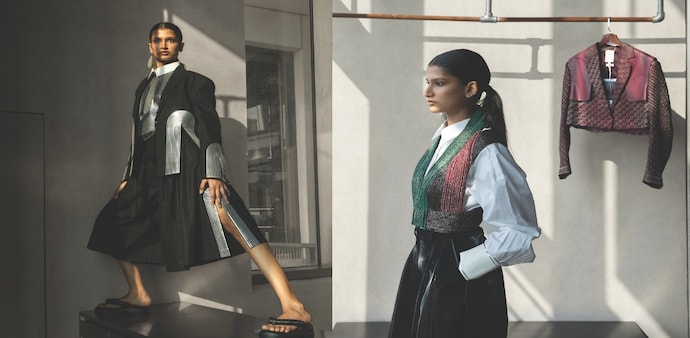
Amit Aggarwal’s 'AM:IT' steps into the space of contemporary pret wear, bridging his signature, concept-led design language with clothing built for routine, movement, and repeat wear.
- Feb 26, 2026,
- Updated Feb 26, 2026 10:06 AM IST
India’s fashion market is shifting. Culturally and commercially, occasion wear still matters but there’s a clear rise in demand for premium pieces that work for everyday life. Noted Indian fashion designer Amit Aggarwal’s 'AM:IT' steps into that space, bridging his signature, concept-led design language with clothing built for routine, movement, and repeat wear. Known for his material innovation, Aggarwal unpacks the changing consumer taste in India, why premium daily wear is gaining ground, and the balancing act of expansion, where craft, authorship, and quality is kept intact even as technology supports scale.
When you decided to bring your couture language into everyday dressing, what was the hardest part to translate without losing the “Amit Aggarwal” point of view? Couture allows for extended exploration of material, form, and process. With AM:IT, the same ideas have to exist within rhythm, repetition, and movement. The challenge was not to simplify the language, but to distil it. The goal was to find a way for the garments to feel intuitive and effortless while still carrying the depth, structure and material intelligence that defines our work.
Where is the Indian fashion market actually growing right now? Is occasion wear getting bigger or is everyday premium finally becoming the main story? Occasion wear will always remain important in India. It is deeply tied to our cultural and social fabric. But what is clearly growing now is the desire for elevated everyday dressing. People are investing more thoughtfully in pieces they can return to repeatedly. There is a growing appreciation for quality, construction, and longevity. Premium everyday wear is no longer secondary; it is becoming central to how people build their wardrobes.
Premium pret is a crowded space now. What’s the clearest reason someone should choose your brand over everything else available? Our work is rooted in material transformation and construction. Every piece begins with a process of questioning how fabric can behave differently, how form can be reimagined. What we offer is a design language developed over years of research and experimentation, translated into clothing that is meant to be lived in. For someone who values evolution of craft, originality, and quality, that distinction becomes meaningful.
What are the price points for AM:IT? Who would be a typical customer and what gap in their wardrobe are you trying to solve? AM:IT is positioned for a customer who is increasingly looking for long-term value rather than seasonal consumption. They are design-aware, globally informed, and conscious of how their wardrobe supports their daily life. This is someone who invests in pieces that offer adaptability, durability and relevance over time. From a business standpoint, we are addressing the gap between high-concept design and everyday usability. There is a clear demand for clothing that carries a strong point of view, yet functions seamlessly across work, travel, and social settings. AM:IT is designed to meet that need by offering pieces that can be worn, adapted, and returned to over time.
Upcycling is central to your process. Practically speaking, what does scaling look like with regards to sourcing, consistency, and quality control, especially when each material has its own history? Upcycling, for us, is not a visual gesture, it is a foundational and structured practice. It requires rigorous systems of sourcing, grading, testing, and redevelopment. We study and re-engineer each textile before it enters production. Scaling in this context is not about speed; it is about building processes that respect variation while maintaining quality. It demands patience, training, and long-term relationships with suppliers and artisans.
What do you think has changed most in the Indian customer in the last 5 years? The Indian customer today is far more informed and self-assured. There is greater awareness of craftsmanship, consious buying and design integrity. People are less driven by logos and more by personal relevance. Looking ahead to 2026, I see a move towards modular dressing and fluid, easier silhouettes. Clothing will increasingly be about adaptability and individuality rather than seasonal statements.
If you look at fashion in India right now, what are some of the big trends you foresee in 2026? I think fashion will move further away from overt trend cycles and closer to personal systems of dressing. We are already seeing a shift towards longevity, modularity, and thoughtful wardrobe building. Consumers are becoming more invested in pieces that can adapt across occasions rather than serve a single moment. There will also be a deeper appreciation for material intelligence; where the value of a garment lies not only in how it looks, but in how it is constructed, sourced, and sustained over time. Craft will remain central, but it will be interpreted through more contemporary, functional lenses.
Over the next few years, where do you think tech will genuinely change fashion in India? In India especially, where scale and diversity are complex, technology has the potential to strengthen craft ecosystems rather than replace them, creating systems where age-old traditions and innovation can coexist more sustainably. I think, technology will have its most meaningful impact behind the scenes rather than at the surface level. I hope to see stronger integration in areas like material development, supply chain transparency, and production efficiency.
India’s creative and cultural industries are expanding rapidly. What needs to change for Indian designer brands to scale internationally while still protecting craft, authorship, and margin? It is an encouraging and necessary moment. For a long time, many creative disciplines in India existed in silos. Today, there is a stronger dialogue between fashion, art, architecture, film, and technology. This creates richer ecosystems for ideas to grow. It allows designers to think more holistically and to position their work within a larger cultural narrative rather than only within commerce.
India’s fashion market is shifting. Culturally and commercially, occasion wear still matters but there’s a clear rise in demand for premium pieces that work for everyday life. Noted Indian fashion designer Amit Aggarwal’s 'AM:IT' steps into that space, bridging his signature, concept-led design language with clothing built for routine, movement, and repeat wear. Known for his material innovation, Aggarwal unpacks the changing consumer taste in India, why premium daily wear is gaining ground, and the balancing act of expansion, where craft, authorship, and quality is kept intact even as technology supports scale.
When you decided to bring your couture language into everyday dressing, what was the hardest part to translate without losing the “Amit Aggarwal” point of view? Couture allows for extended exploration of material, form, and process. With AM:IT, the same ideas have to exist within rhythm, repetition, and movement. The challenge was not to simplify the language, but to distil it. The goal was to find a way for the garments to feel intuitive and effortless while still carrying the depth, structure and material intelligence that defines our work.
Where is the Indian fashion market actually growing right now? Is occasion wear getting bigger or is everyday premium finally becoming the main story? Occasion wear will always remain important in India. It is deeply tied to our cultural and social fabric. But what is clearly growing now is the desire for elevated everyday dressing. People are investing more thoughtfully in pieces they can return to repeatedly. There is a growing appreciation for quality, construction, and longevity. Premium everyday wear is no longer secondary; it is becoming central to how people build their wardrobes.
Premium pret is a crowded space now. What’s the clearest reason someone should choose your brand over everything else available? Our work is rooted in material transformation and construction. Every piece begins with a process of questioning how fabric can behave differently, how form can be reimagined. What we offer is a design language developed over years of research and experimentation, translated into clothing that is meant to be lived in. For someone who values evolution of craft, originality, and quality, that distinction becomes meaningful.
What are the price points for AM:IT? Who would be a typical customer and what gap in their wardrobe are you trying to solve? AM:IT is positioned for a customer who is increasingly looking for long-term value rather than seasonal consumption. They are design-aware, globally informed, and conscious of how their wardrobe supports their daily life. This is someone who invests in pieces that offer adaptability, durability and relevance over time. From a business standpoint, we are addressing the gap between high-concept design and everyday usability. There is a clear demand for clothing that carries a strong point of view, yet functions seamlessly across work, travel, and social settings. AM:IT is designed to meet that need by offering pieces that can be worn, adapted, and returned to over time.
Upcycling is central to your process. Practically speaking, what does scaling look like with regards to sourcing, consistency, and quality control, especially when each material has its own history? Upcycling, for us, is not a visual gesture, it is a foundational and structured practice. It requires rigorous systems of sourcing, grading, testing, and redevelopment. We study and re-engineer each textile before it enters production. Scaling in this context is not about speed; it is about building processes that respect variation while maintaining quality. It demands patience, training, and long-term relationships with suppliers and artisans.
What do you think has changed most in the Indian customer in the last 5 years? The Indian customer today is far more informed and self-assured. There is greater awareness of craftsmanship, consious buying and design integrity. People are less driven by logos and more by personal relevance. Looking ahead to 2026, I see a move towards modular dressing and fluid, easier silhouettes. Clothing will increasingly be about adaptability and individuality rather than seasonal statements.
If you look at fashion in India right now, what are some of the big trends you foresee in 2026? I think fashion will move further away from overt trend cycles and closer to personal systems of dressing. We are already seeing a shift towards longevity, modularity, and thoughtful wardrobe building. Consumers are becoming more invested in pieces that can adapt across occasions rather than serve a single moment. There will also be a deeper appreciation for material intelligence; where the value of a garment lies not only in how it looks, but in how it is constructed, sourced, and sustained over time. Craft will remain central, but it will be interpreted through more contemporary, functional lenses.
Over the next few years, where do you think tech will genuinely change fashion in India? In India especially, where scale and diversity are complex, technology has the potential to strengthen craft ecosystems rather than replace them, creating systems where age-old traditions and innovation can coexist more sustainably. I think, technology will have its most meaningful impact behind the scenes rather than at the surface level. I hope to see stronger integration in areas like material development, supply chain transparency, and production efficiency.
India’s creative and cultural industries are expanding rapidly. What needs to change for Indian designer brands to scale internationally while still protecting craft, authorship, and margin? It is an encouraging and necessary moment. For a long time, many creative disciplines in India existed in silos. Today, there is a stronger dialogue between fashion, art, architecture, film, and technology. This creates richer ecosystems for ideas to grow. It allows designers to think more holistically and to position their work within a larger cultural narrative rather than only within commerce.