
Jaipur’s quiet coffee revolution: Inside Dushyant Singh’s culinary empire
Jaipur itself is quietly remaking itself. The food and beverage landscape is growing more ambitious.
- Sep 17, 2025,
- Updated Sep 17, 2025 4:03 PM IST
Jaipur in 2025 feels like a city slowly exhaling. The desert sun softens into rose-gold in the mornings, the ochre walls of havelis catch the twilight, and with every passing hour, there seems to be a rising sense of possibility in the air. It is a city that once defined itself by palaces, by royal lineage and sandstone, but lately it is being defined in new ways by taste, by texture, by aroma.
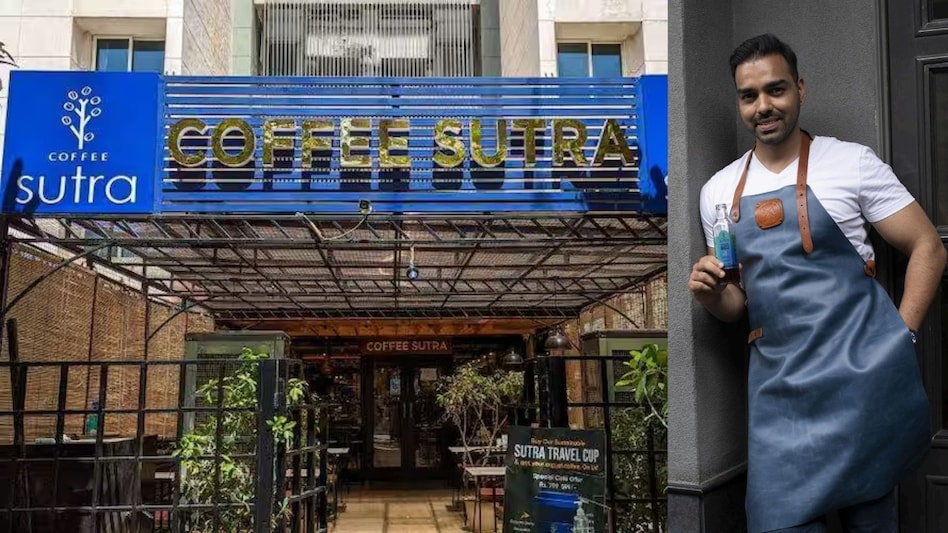
In the heart of this transformation is Dushyant Singh. Behind names like On The House, Rustic, The Lama, and now the third Coffee Sutra roastery-café, Dushyant has quietly engineered a shift: what speciality coffee, global gastronomic ideas, and thoughtful design can look like in a Tier II Indian city.
The Genesis: Roots in Jaipur, Eyes on the Globe
Meeting Dushyant is like being handed a cup that’s already warm, there’s immediate comfort, but also expectation. He speaks of his early years in hospitality with the fondness of someone who remembers every late night, every imperfect brew, every small victory. Over fifteen years ago, when café culture in Jaipur still meant filtered chai and street-side samosas, he opened On The House, one of the city’s first roastery-cafés with an international outlook. That, he says, set the pattern.
Over time, his interests spread: Rustic, a restaurant celebrating Indian gastronomic traditions; The Lama, with its pan-Asian sensibility; each brand a different facet of a larger vision. But the connective thread has always been craft, integrity, and place: the idea that flavour is inseparable from origin, not only in the coffee bean, but in what the land, the people, the climate contribute.
Coffee Sutra: Beyond the Cup
The newest Coffee Sutra outlet conforms to no predictable café template. It is part roastery, part immersive experience, part artefact-lab for taste. Beans are traced back to award-winning farms in South India. Farmer partnerships are not just ethical bullet points; they are operational pillars: decisions about roast profiles, supply chain, and even packaging are made with those far upstream (literally) in mind.
Walking through the roastery, you’ll feel that each space is calibrated to lighting, to acoustics, to the hum of machinery. There are leather chairs, but there are also raw materials: burlap sacks, wooden pallets, weight scales, and big ovens. You see origin, you smell fire, you taste soil and altitude. But always there is comfort. The third outlet feels less like a temple of coffee and more like a gathering place: for conversation, for study, for lingering.
Jaipur as Canvas: Tier II Taste and Silent Reinvention
This is not just Dushyant’s story. Jaipur itself is quietly remaking itself. The food and beverage (F&B) landscape is growing more ambitious. Younger diners expect provenance, global cuisines, interiors that are Instagrammed, but meals that still feel honest. Traditional favourites like daal-baati or laal maas are being reimagined, sometimes with subtlety, sometimes with bold modern touches.
Entrepreneurs are less tethered to the idea that the only way to succeed is in Delhi, Mumbai or Bengaluru. Tier II cities are no longer stopping points; they are being seen as fertile ground: lower real-estate costs, increasingly cosmopolitan consumers, fewer preconceived notions about what “premium” should look like. Jaipur is not the exception, but a signal.
Building Without Losing
One of the most striking parts of Dushyant’s approach is how much he seems to care not just about growth, but about identity. Every restaurant, every café, is distinct, yet they feel of a kind. The Lama might carry pan-Asian flavours, but there’s a Jaipur sensitivity to timing, to spice, to hospitality. Rustic invokes India’s regional past, but via modern plating and storytelling. Coffee Sutra doesn’t mimic Western roastery-cafés; it translates them into Jaipur light, Jaipur pace, Jaipur soil.
It’s not franchising, at least not in the usual sense. His model seems to lean more on partnerships with farmers, with designers, with local craftspeople. This may limit rolling out 100 branches in five years, but it also protects something harder to scale: context, soul, quality.
Design as Storytelling
Inside Coffee Sutra, design is quiet but intentional. Natural materials; muted tones that echo Jaipur stone; lighting that makes the space warm but not dim. At The Lama, plates are theatre but not spectacle: textures placed so that chopsticks and forks both look equally natural, sauces that pool just so.
It’s branding that travels without leaving home. The cafés are not clones of Instagram dreams in the West. Their narratives of Rajasthan, of Indian specialities, of coffee farmer lives are woven into every surface.
What This Movement Means
What Dushyant is doing and many others in Jaipur alongside him is more than expanding appetites. It’s reframing what a Tier II city can be: not a recipient of filtered global culture, but a creator. This has implications:
• Soft power: when Indian-origin beans are being roasted with transparency and exported, when a pan-Asian meal in Jaipur is more than imitation but adaptation, that’s cultural work.
• Local value chains: ethical sourcing means income stays upstream; design and craft means opportunities for local artisans.
• New models of scale: growth that doesn’t sacrifice personality, that resists the clone-franchise trap.
Over a Cup
Sitting in one of the newest Coffee Sutra cafés with Dushyant, I watch people drifting in: a student with a laptop, a group of friends sharing waffles and conversation, an older couple quietly reading. The café isn’t loud. It’s odd to say, but it feels considered: every menu item, every roast, every chair seems chosen to open up a moment of calm. It strikes me: there’s a humility here, even amid ambition.
In a city that has long been admired for its forts, its textiles, its architecture, Dushyant is helping Jaipur build another legacy, one that tastes like progress, smells like roasted beans and wood, looks like artisanship, and feels like home.
Jaipur in 2025 feels like a city slowly exhaling. The desert sun softens into rose-gold in the mornings, the ochre walls of havelis catch the twilight, and with every passing hour, there seems to be a rising sense of possibility in the air. It is a city that once defined itself by palaces, by royal lineage and sandstone, but lately it is being defined in new ways by taste, by texture, by aroma.
In the heart of this transformation is Dushyant Singh. Behind names like On The House, Rustic, The Lama, and now the third Coffee Sutra roastery-café, Dushyant has quietly engineered a shift: what speciality coffee, global gastronomic ideas, and thoughtful design can look like in a Tier II Indian city.
The Genesis: Roots in Jaipur, Eyes on the Globe
Meeting Dushyant is like being handed a cup that’s already warm, there’s immediate comfort, but also expectation. He speaks of his early years in hospitality with the fondness of someone who remembers every late night, every imperfect brew, every small victory. Over fifteen years ago, when café culture in Jaipur still meant filtered chai and street-side samosas, he opened On The House, one of the city’s first roastery-cafés with an international outlook. That, he says, set the pattern.
Over time, his interests spread: Rustic, a restaurant celebrating Indian gastronomic traditions; The Lama, with its pan-Asian sensibility; each brand a different facet of a larger vision. But the connective thread has always been craft, integrity, and place: the idea that flavour is inseparable from origin, not only in the coffee bean, but in what the land, the people, the climate contribute.
Coffee Sutra: Beyond the Cup
The newest Coffee Sutra outlet conforms to no predictable café template. It is part roastery, part immersive experience, part artefact-lab for taste. Beans are traced back to award-winning farms in South India. Farmer partnerships are not just ethical bullet points; they are operational pillars: decisions about roast profiles, supply chain, and even packaging are made with those far upstream (literally) in mind.
Walking through the roastery, you’ll feel that each space is calibrated to lighting, to acoustics, to the hum of machinery. There are leather chairs, but there are also raw materials: burlap sacks, wooden pallets, weight scales, and big ovens. You see origin, you smell fire, you taste soil and altitude. But always there is comfort. The third outlet feels less like a temple of coffee and more like a gathering place: for conversation, for study, for lingering.
Jaipur as Canvas: Tier II Taste and Silent Reinvention
This is not just Dushyant’s story. Jaipur itself is quietly remaking itself. The food and beverage (F&B) landscape is growing more ambitious. Younger diners expect provenance, global cuisines, interiors that are Instagrammed, but meals that still feel honest. Traditional favourites like daal-baati or laal maas are being reimagined, sometimes with subtlety, sometimes with bold modern touches.
Entrepreneurs are less tethered to the idea that the only way to succeed is in Delhi, Mumbai or Bengaluru. Tier II cities are no longer stopping points; they are being seen as fertile ground: lower real-estate costs, increasingly cosmopolitan consumers, fewer preconceived notions about what “premium” should look like. Jaipur is not the exception, but a signal.
Building Without Losing
One of the most striking parts of Dushyant’s approach is how much he seems to care not just about growth, but about identity. Every restaurant, every café, is distinct, yet they feel of a kind. The Lama might carry pan-Asian flavours, but there’s a Jaipur sensitivity to timing, to spice, to hospitality. Rustic invokes India’s regional past, but via modern plating and storytelling. Coffee Sutra doesn’t mimic Western roastery-cafés; it translates them into Jaipur light, Jaipur pace, Jaipur soil.
It’s not franchising, at least not in the usual sense. His model seems to lean more on partnerships with farmers, with designers, with local craftspeople. This may limit rolling out 100 branches in five years, but it also protects something harder to scale: context, soul, quality.
Design as Storytelling
Inside Coffee Sutra, design is quiet but intentional. Natural materials; muted tones that echo Jaipur stone; lighting that makes the space warm but not dim. At The Lama, plates are theatre but not spectacle: textures placed so that chopsticks and forks both look equally natural, sauces that pool just so.
It’s branding that travels without leaving home. The cafés are not clones of Instagram dreams in the West. Their narratives of Rajasthan, of Indian specialities, of coffee farmer lives are woven into every surface.
What This Movement Means
What Dushyant is doing and many others in Jaipur alongside him is more than expanding appetites. It’s reframing what a Tier II city can be: not a recipient of filtered global culture, but a creator. This has implications:
• Soft power: when Indian-origin beans are being roasted with transparency and exported, when a pan-Asian meal in Jaipur is more than imitation but adaptation, that’s cultural work.
• Local value chains: ethical sourcing means income stays upstream; design and craft means opportunities for local artisans.
• New models of scale: growth that doesn’t sacrifice personality, that resists the clone-franchise trap.
Over a Cup
Sitting in one of the newest Coffee Sutra cafés with Dushyant, I watch people drifting in: a student with a laptop, a group of friends sharing waffles and conversation, an older couple quietly reading. The café isn’t loud. It’s odd to say, but it feels considered: every menu item, every roast, every chair seems chosen to open up a moment of calm. It strikes me: there’s a humility here, even amid ambition.
In a city that has long been admired for its forts, its textiles, its architecture, Dushyant is helping Jaipur build another legacy, one that tastes like progress, smells like roasted beans and wood, looks like artisanship, and feels like home.